

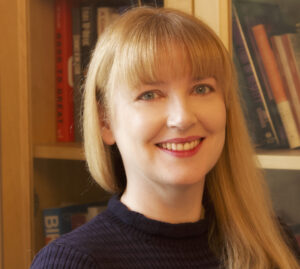
Professor Etain Tansey
Queen’s University Belfast
Etain Tansey is Professor of Physiology and Biomedical Sciences Education and Director of the Centre for Biomedical Sciences Education at Queen’s University Belfast. She is a Senior Fellow of the Higher Education Academy and Fellow of The Physiological Society. She is Education and Teaching Theme co-Lead for the Society and a member of the editorial board of Advances in Physiology Education. She conducts scholarship and pedagogic research to improve physiology teaching practice and to enhance learning and the overall student experience.
We spoke to Etain as part of our 150 voices of physiology series.
Reflections on the 150th Anniversary of the Physiological Society
I have been a proud physiologist for over 20 years and a member of the Physiological Society for all that time (apart from one year when I defected to industry!). It could have been different; I had a keen interest in science at school and studied Natural Sciences at Trinity College Dublin. When I started my degree, physics was a prerequisite to the study of physiology – I did not study physics and therefore had ruled out physiology early on. However, fate would have it that the year I was to choose my moderatorship, the requirement for physics was lifted. Physiology became my number one choice, and I graduated with a first-class BA (Mod) in physiology. My 4th year project supervisor was Professor Chris Bell. That project garnered my first scientific paper. Subsequently, I started my PhD with Chris, who was an active member of the Physiological Society and so began my own relationship with the Society. During my PhD, I was offered the first of Trinity’s physiology teaching studentships and that was the catalyst for a changed focus to the teaching side of academia which is the purposeful direction in which my physiology career developed.
I have had the privilege and pleasure of being formally involved in the Society, first as the Queen’s University Belfast Representative and currently, as one of the co-leads of the Education Theme. As such I’ve been involved in a national report evaluating the contribution of physiology teaching to the UK economy, and supporting, through various funding calls, exciting and innovative physiology research and teaching. My experience of the Society has been that of a vibrant, inclusive community, which has generously supported me all throughout my career with financial support, career development support, and with access to a network of some of the most talented, kind, generous, and fun people you could meet. All of this has undoubtably aided my career progression and my work satisfaction.
Physiology continues to be the foundation of medicine, and an understanding of physiology will remain key to future advancements in healthcare technologies and to addressing complex challenges from ageing and chronic disease to climate change and the next global pandemic. The Society is already a leader in shaping policy as it engages with stakeholders within and outside of Government and I anticipate the need for this work will increase. In the future, I hope that it continues to foster innovation, mentor diverse talent, and champion open science, equity, and lifelong learning.
The future of physiology is in safe hands if my students’ passion to learn how to improve society’s health and wellbeing and to advocate for better health systems is anything to go by. I tell my students to build networks – physiology as a subject can only thrive in a community, stay curious, be persistent and keep learning – the field is evolving rapidly, and we all need to be adaptable.