


Dr Paul Meakin, FHEA, University of Leeds (UK)
Physiological Society member and speaker at our meeting, Microvasculature as a Key Regulator of Health and Disease in the Brain and Beyond
“Over 8 million people in the UK are affected by a cardiometabolic disease, which includes heart attack, stroke, type 2 diabetes, fatty liver disease and hypertension,” states Dr Paul Meakin from University of Leeds (UK). “Despite recent therapeutic advances, cardiometabolic disease remains the leading cause of death and disability in the UK, accounting for around a quarter of all deaths.” Paul explains the critical need for identifying novel drug targets to improve cardiometabolic health. He is particularly interested in the potential of the enzyme BACE1 as a new therapeutic target. We interviewed Paul to learn more about his research uncovering the roles and functions of this enzyme, which began from a serendipitous observation.
Firstly, what inspired your interest in metabolic physiology?
Metabolic physiology sits at the centre of health and disease, influencing virtually every organ system. Dysregulation of metabolic pathways underpins many common conditions, from diabetes and cardiovascular disease to neurodegeneration. What drew me to the field is that discoveries in metabolic physiology often have broad relevance, meaning even a single mechanistic insight can have wide-ranging physiological and clinical implications.
Tell us about BACE1
BACE1, which is short for β-site amyloid precursor protein cleaving enzyme 1, is best known for its role in Alzheimer’s disease. It is the enzyme responsible for initiating the production of β-amyloid peptides, which aggregate to form the amyloid plaques that are a pathological hallmark of the disease. As a result, BACE1 has historically been studied almost exclusively in the context of the brain and neurodegeneration.
Why did you become curious about its role?
Somewhat unexpectedly, my interest in BACE1 arose through serendipity prior to my PhD. While using the global BACE1 knockout mice for drug studies, animal technicians at our collaborator noticed that these mice consistently required lower doses. That observation led us to explore whether BACE1 had an unappreciated role in metabolic regulation. This question ultimately shaped my PhD and has continued to underpin my research ever since.
How are you investigating the role of BACE1?
My lab focuses on understanding the functions of BACE1 outside the brain, where it has traditionally been studied. We use a combination of transgenic mouse models, human patient tissues, and molecular and physiological approaches to define the role of BACE1 in cardiometabolic disease. A key part of our work has been identifying novel substrates of the enzyme, which has helped uncover new biological functions and disease-relevant pathways.
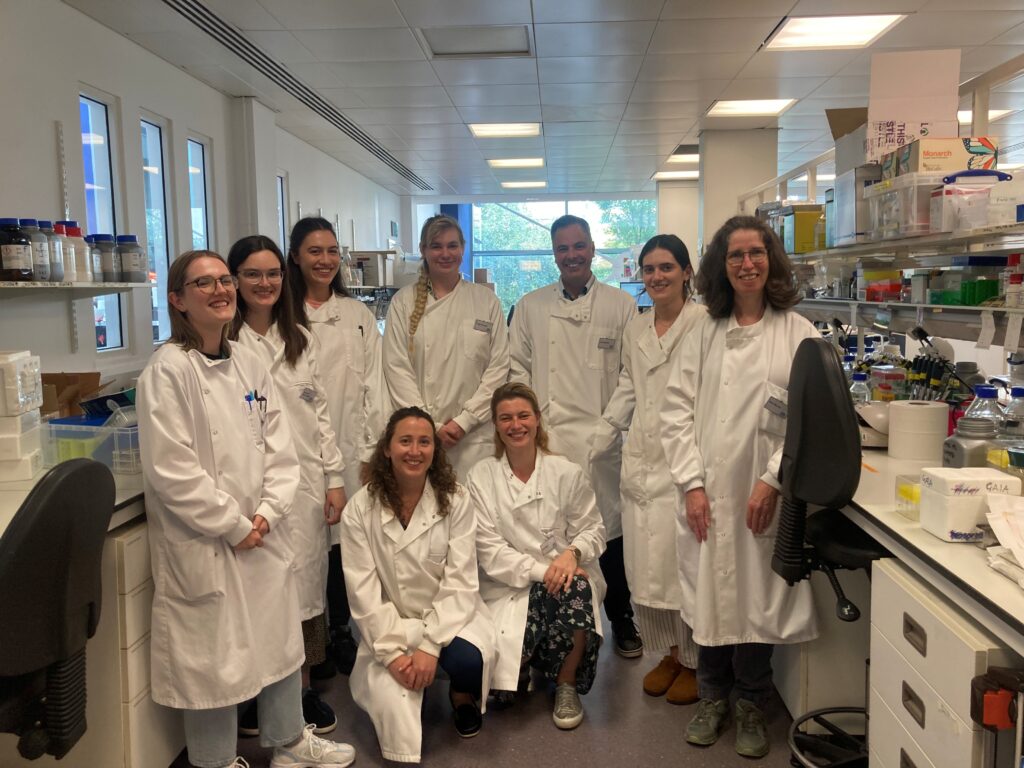
Paul with his lab at University of Leeds
What have you found so far?
Under healthy conditions, BACE1 expression and activity are relatively low in peripheral tissues. However, in several cardiometabolic disease states, both expression and activity increase and appear to contribute to disease progression. This disease-associated upregulation suggests that BACE1 may be an attractive therapeutic target. Inhibiting the enzyme could preferentially affect diseased tissues while minimising off-target effects in healthy cells.
What are you looking forward to at the Microvasculature meeting?
I’m really looking forward to catching up with colleagues, hearing exciting new science, and importantly, forming new collaborations. Meetings like this are invaluable for cross-fertilisation of ideas, particularly in a field as inherently interdisciplinary as the microcirculation.
Hear more about Dr Paul Meakin’s research as he will be presenting, ‘BACE1: A novel regulator of the microcirculation from head to toe’ on 17 April 2026 at Sainsbury Wellcome Centre, London, UK.
Join us on 16-17 April 2026 to discover the dynamics of redox signalling and redox stress in vascular physiology at our meeting, ‘Microvasculature as a Key Regulator of Health and Disease in the Brain and Beyond‘. Register by 26 March 2026 and you can explore the role of the brain-body axis in metabolic and cerebrovascular dysfunction, neuroendocrine regulation of microcirculation, plus the discussions on precision prevention and treatment strategies.