

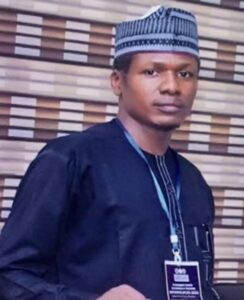
By Dr Basheer Waziri
Dr Basheer Isah Waziri (MBBS, M.Sc, Ph.D)
Senior Lecturer, Department of Human Physiology, Bayero University Kano, Nigeria.
Research Fellow, Kano Independent Research Centre Trust (KIRCT).
Dr Basheer Isah Waziri is a Senior Lecturer in Human Physiology at Bayero University Kano, Nigeria. He holds a PhD in Cardiovascular and Molecular Physiology and an MBBS in Medicine. His research focuses on the molecular and genetic mechanisms underlying non-communicable diseases, particularly cardiovascular disorders. He is a Research Fellow at the Kano Independent Research Centre Trust (KIRCT) and serves as Deputy Director of the Center for Biotechnology Research. Passionate about capacity building, global collaboration, and mentorship, he leads the Climate Resilience Action Group (CRAG), advancing climate-health initiatives and promoting physiology-informed, community-driven resilience strategies to address extreme heat impacts in vulnerable populations.
We interviewed Basheer as part of our 150 voices of physiology series.
What first inspired you to go into physiology?
I first encountered physiology during my undergraduate training in medicine. What began as a required course quickly became an intellectual awakening. I had long been fascinated by simple yet profound questions: Why do we breathe? What mechanisms generate hunger? Physiology transformed those curiosities into structured understanding. It revealed life not as randomness, but as a coordinated symphony of molecular signals, cellular interactions, organ systems, and adaptive responses. That clarity and depth inspired me to pursue human physiology as my career.
Can you share a project you’ve worked on that you’re especially proud of?
One project I am most especially proud of is the Physiology Career Awareness and Training Initiative (PCATI-2025) hosted at Bayero University Kano. Supported by the Physiological Society’s International Development Support Fund, the programme brought together participants from 25 institutions across Nigeria and two institutions outside the country. It focused on strengthening research capacity, modernizing teaching approaches, and guiding career development in LMICs. Conceptualizing the idea, delivering the program and seeing participants leave with renewed confidence and practical skills remains one of the most fulfilling moments of my professional journey.
Why do you think physiology is such an important science today?
Physiology is profoundly important today because it is the science of life. It forms the foundation upon which medicine and health sciences are built. By explaining how normal processes operate, physiology allows us to understand how their disruption leads to disease and how targeted interventions can restore function. In a rapidly evolving world marked by emerging diseases, climate-health challenges and technological advances, physiology provides the integrative framework that connects discovery to clinical and public health solutions.
How did you first get involved with the Physiological Society?
My involvement with the Physiological Society began nearly a decade ago during my master’s training, when a mentor and lecturer (Professor Frank Mojiminiyi from UDUS, Nigeria) encouraged us to join. I registered as an affiliate member, a decision that would profoundly shape my career. Over time, my membership progressed from affiliate to postgraduate, and now full membership. I still remember that moment of encouragement, and I remain deeply grateful for it.
What impact has been part of the Society had on your career?
Tremendous impact. Through the Society, I have connected with physiologists worldwide, presented research internationally, accessed grants and professional development opportunities, and strengthened my ability to mentor students and colleagues. The Society represents more than professional affiliation; it embodies inclusion, collaboration, and collective growth.
Where do you hope to see the field — and the Society — 50 years from now?
Looking ahead, the next 50 years should be defined by greater inclusivity, stronger global collaboration, and expanded opportunities for researchers worldwide including low- and middle-income countries to contribute meaningfully to scientific breakthroughs.
What advice would you give to students or early career researchers starting out in physiology?
To students and early career researchers, I offer simple advice: remain curious, think beyond boundaries, and actively seek connection. Join the Society and engage with professional communities, pursue opportunities boldly, and invest in continuous learning. Physiology is a discipline that connects lives across continents and generations.