

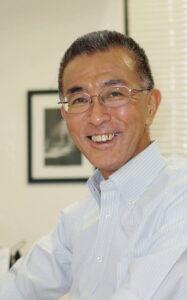
By Professor Yoshihiro Kubo
Yoshihiro Kubo is Professor Emeritus and Specially Appointed Researcher at the National Institute for Physiological Sciences, Japan. He currently serves as President of both the International Union of Physiological Sciences (IUPS) and The Physiological Society of Japan (PSJ). He also serve as a Regional Editor of The Journal of Physiology (JP).
We spoke to Hiro as part of our 150 voices of physiology series, about his career, his hopes for the future of physiology and his work with the Society.
First of all, I would like to extend my heartfelt congratulations to the Physiological Society on the occasion of its 150th anniversary.
What first inspired you to go into physiology or your area of research?
Who or what has inspired you most during your career?
Initially, I planned to pursue clinically oriented research after completing my clinical training. However, I realized that I was much more attracted to fundamental research aimed at understanding the mechanisms that underlie the functions of living systems.
After graduating from the University of Tokyo School of Medicine in 1985, I immediately entered the graduate school at the same university. My PhD mentor was the late Professor Kunitaro Takahashi. Under his supervision, I studied the electrophysiological properties of ion channel expression during the early differentiation of neuronal and muscle cells using pluripotent stem cells. Thanks to his excellent mentorship, I was fortunate to publish four first-author papers in The Journal of Physiology.
As my interests gradually shifted toward the structure–function relationships of ion channels, I joined Professor Lily Jan’s laboratory at the University of California, San Francisco (UCSF), as a postdoctoral fellow in 1991. During my two years at UCSF, I was fortunate to clone, by expression cloning, the cDNAs encoding the inward rectifier potassium channel Kir2.1 and the G protein-gated inward rectifier potassium channel Kir3.1.
After returning to Japan, together with my laboratory members, I continued to investigate the structure–function relationships of a variety of ion channels and receptors, including inward rectifier potassium channels, metabotropic glutamate receptors, the ATP-gated P2X2 receptor channel, the KCNQ1/KCNE1 channel complex, and TPC channels. Throughout these studies, we consistently combined electrophysiological recordings with a variety of optical techniques to directly investigate the dynamic structural rearrangements associated with channel and receptor function.
In March 2026, I reached the mandatory retirement age and retired from the National Institute for Physiological Sciences, where I had served as a Professor for more than 22 years. Looking back, I feel incredibly fortunate to have learned from outstanding and warm-hearted mentors whom I deeply respected not only as scientists but also as human beings. It has also been a great privilege to work with many talented and dedicated laboratory members throughout my career.
How did you first get involved with the Physiological Society?
My involvement with the Physiological Society began through The Journal of Physiology. I began serving as a Reviewing Editor for the journal in 2004 and subsequently served as a Senior Editor and Deputy Editor-in-Chief, holding editorial roles for a total of 14 years until 2018. In 2023, I returned to the Editorial Board as a Regional Editor.
During this period, I had the privilege of working with outstanding Editors-in-Chief, including Professors Stewart Sage, William Large, David Paterson, Kim Barrett, Peter Kohl, and, once again, Kim Barrett. Through these editorial activities, I had many opportunities to attend Editorial Board meetings and the Annual Meetings of the Physiological Society, where I greatly enjoyed interacting with physiologists from around the world.
What do you value most about the Society’s community or its journals?
I have always been impressed by the constructive and intellectually stimulating discussions conducted in a spirit of genuine mutual respect, whether in editorial and strategic meetings or in scientific discussions. I believe this culture has been cultivated through the Society’s long and distinguished history in physiology.
Throughout my involvement with the Physiological Society, I have learned a great deal—not only about scientific publishing and editorial practice, but also about many other aspects of academic leadership. Both as an editor and as an author, I have consistently appreciated the rigorous, constructive, and fair peer review provided by The Journal of Physiology.
As President of PSJ, I would also like to express my gratitude to The Journal of Physiology. PSJ celebrated its 100th Annual Meeting in March 2023. To mark this occasion, under the leadership of Professor Peter Kohl, then Editor-in-Chief of The Journal of Physiology, the journal published a Virtual Issue entitled “The Physiological Society of Japan’s 100th Anniversary”: https://physoc.onlinelibrary.wiley.com/doi/toc/10.1111/(ISSN)1469-7793.japanese-physiology
The issue brought together 40 landmark papers published in The Journal of Physiology by Japanese physiologists. It provided an excellent opportunity to reflect on and celebrate the contributions of Japanese physiologists to the field. We are deeply grateful to The Journal of Physiology and Professor Kohl for providing us with this opportunity.
What does “the future of physiology” mean to you?
Where do you hope to see the field—and the Society—50 years from now?
Physiology seeks to elucidate the mechanisms underlying the functions of living systems and forms one of the fundamental pillars of medicine and the life sciences. For this reason, I firmly believe that physiology will continue to occupy a central position in the life sciences.
Today, science is inherently borderless, and there is no reason for physiology to remain confined within its traditional disciplinary boundaries. To ensure its continued advancement, interdisciplinary research directed toward understanding biological function should also be regarded as an integral part of physiology.
When molecular biology first emerged, there was a tendency to regard molecular biology and physiology as competing disciplines. Later, with the rapid development of structural biology, people often framed the debate as “structure versus function.” However, even after identifying molecules and determining their structures, the fundamental question of how living systems function has remained—and has become even more important. Indeed, physiological science has advanced enormously through the integration of molecular and structural information.
Looking ahead, a wide range of emerging approaches—including computational modelling, quantitative simulation, the use of large-scale biological datasets, and artificial intelligence—will become increasingly important in the life sciences. By embracing a broader range of disciplines and new methodologies, physiology will continue to remain at the centre of the life sciences.
At the same time, I believe it is equally important to preserve the core principles and philosophy of physiology, particularly in the education of future physiologists.
As President of IUPS, I have come to appreciate the importance of promoting physiology on a truly global scale. The world is becoming increasingly uncertain in many respects, making it impossible to predict what the scientific landscape will look like 50 years from now. Every country—including those that are still developing today—has the potential to become a future leader in science, and the same is true for physiology. Supporting the development of physiology worldwide is therefore essential.
I am confident that the Physiological Society, with its unparalleled tradition and distinguished history, will continue to provide international leadership and make an enduring contribution to the global advancement of physiology.