
Climate change-driven extreme heat, occupational health and productivity: A need for human-centred policy in the UK
As the health and safety of workers across the UK is increasingly impacted by extreme heat risk, so is their physical work capacity and productivity, leading to greater knock-on effects to the wider UK workforce and economy. Current UK policy frameworks still treat heat primarily as an infrequent risk to the most vulnerable in society, rather than a system-wide occupational health risk.
On 2 September 2026, we launched our report in Parliament, ‘Climate change-driven extreme heat, occupational health and productivity: A need for human-centred policy in the UK’, recommending human-centred physiologically informed policies to prevent heat-related health impacts on workers and lost productivity.
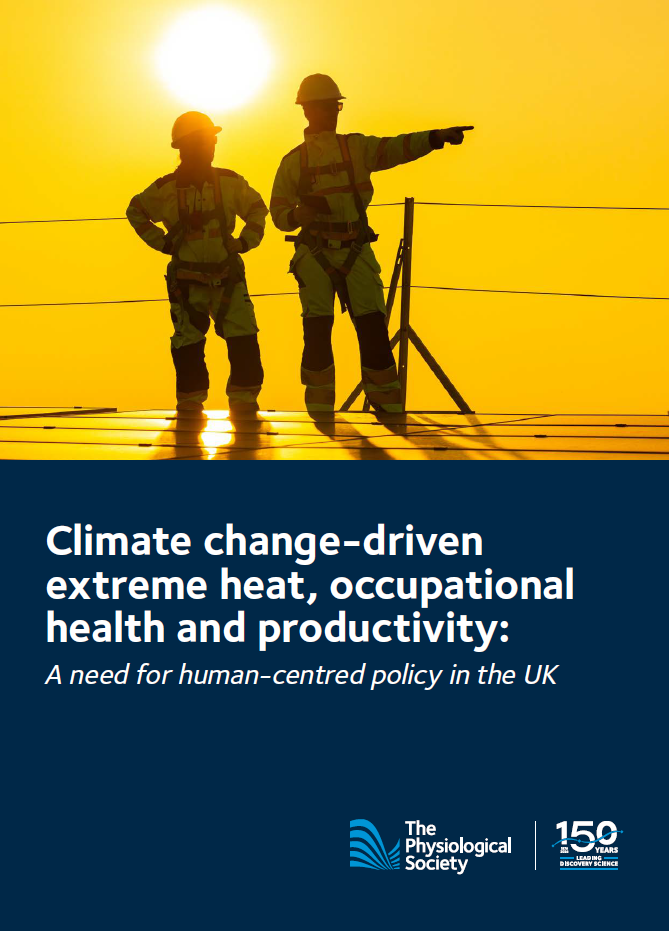
A human-centred policy response to protect the health and productivity of UK workforce
The UK is adapting slower than the climate is warming. This leaves the country and its workforce dangerously underprepared for the immediate and worsening impacts of climate change, with temperatures and heatwaves expected to be more frequent, longer and more intense. Protecting worker productivity and health from these worsening impacts requires policy action that considers physiological and work demand perspectives and, in particular, those living at the intersection of multiple vulnerabilities and risks.
Our report examines the impacts of climate change-driven extreme heat on workers, occupational health and productivity. It has been developed with input from a panel of experts from the UK and abroad, specialising in thermal and occupational physiology, climate change, workforce health and safety, public policy, and other related disciplines.
The Parliamentary event and launch of the report aims for physiologists and physiological evidence to be included in the consultation and decision-making process to ensure the policy response is effectively implemented and human-centred.
Dr Josh Foster (King’s College London, UK), Chair of the Physiological Society’s Extreme Heat in the Workplace Steering Group, says:
“We can only develop effective interventions for all workers if we understand how heat and other factors affect an individual’s ability to remain safe, healthy and productive in hot environments.”
“We have produced a detailed report demonstrating how heat impacts the body and potential solutions to mitigate those effects. It is my hope that the launch of this report acts as a springboard for continued engagement between physiology, policy, and industrial partnerships.”
Key Recommendations
The report sets out a series of recommendations for government and policy makers to better protect people and productivity from the growing risk of extreme heat as the UK climate continues to warm:
- Set targets for extreme heat that consider wider physiological risk factors.
- Update regulations to ensure workers’ productivity and health are legally protected during periods of extreme heat.
- Provide effective and physiologically informed guidance that enables all employers to protect workers from extreme heat risk while enabling them to maintain
- Support further research that will address gaps in understanding of how heat impacts productivity, health and safety.
- Coordinate public health messaging across the four nations to support a wider understanding of the benefits of improving physiological resilience to heat risk for worker productivity and health.
Steering Group Members
We are grateful to the members of the Steering Group who offered their time and expertise to ensure the success of the project.
- Dr Josh Foster, King’s College London (Chair)
- Dr Shouro Dasgupta, Euro-Mediterranean Center on Climate Change (CMCC) and Grantham Research Institute at LSE
- Dr Chris Davis, Institute of Occupational Health and Safety
- Dr Clare Eglin, University of Portsmouth
- Arthy Hartwell, Wellcome
- Professor George Havenith, Loughborough University
- Professor Emma Howard Boyd, National Heat Risk Commission
- Dr Sarah Koch, University of Basel, Switzerland
- Dr Jessica Mee, University of Worcester
- Dr Gemma Milligan, University of Portsmouth
- Dr Rebecca Neal, Bournemouth University
- Professor Madeleine Thomson, Wellcome
- Professor Heidi de Wet, University of Oxford