

Improving knowledge and supporting education
Congratulations to our grant awardees! Samantha Salvage and Matthew Lee have each been awarded our 2026 Research and Knowledge Exchange Award, and Calum Wilson is our 2026 Education and Teaching Awardee. We celebrate them in their commitment to increase health research evidence, and the reproducibility of imaging data, to developing a new freely available educational learning resource. Read more about the awardees and the projects they’ll be working on with the Society grants.
Research and Knowledge Exchange Awardees
The Research and Knowledge Exchange Award is designed to support members wishing to conduct pilot studies, develop a new technique or to finalise a project, as well as supporting activities to promote knowledge transfer and impact.
Improving our understanding of the role of sodium ion channels in health and disease

Samantha Salvage (City St George’s, University of London, UK)
Project title: Exploring the expression and regulation of the cardiac sodium channel and its alternatively spliced variants; roles in the heart, immune system and cancer.
I am delighted to have been awarded the Research and Knowledge Exchange Award by the Physiological Society. Having recently started my first independent academic position, this award comes at a crucial time, supporting the establishment of my lab, generating pilot data for future funding applications, and my development as an independent researcher.
My research focuses on the role of cardiovascular ion channels both within and beyond the heart, particularly the cardiac voltage-gated sodium channel, Nav1.5. While Nav1.5 is best known for its role in regulating heart rhythm, increasing evidence points to functions beyond the heart, including within the immune system and cancer. This project aims to investigate the expression of Nav1.5 and its variants across different biological systems to improve our understanding of their roles in health and disease.
I am grateful to the Physiological Society for their support at this exciting stage of my career.
Developing a standardised approach for calcium imaging data analysis
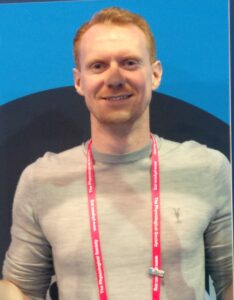
Matthew Lee (University of Strathclyde, UK)
Project title: CalTracker: An Open-Source Software Suite for Standardised Calcium Imaging Analysis
I’m a Chancellor’s Fellow at the Strathclyde Institute of Pharmacy and Biomedical Sciences, where I lead a group working on the endothelium, the single layer of cells lining every blood vessel in the body. We simultaneously image calcium signals in hundreds of these cells in intact blood vessels, which lets us examine how the cells communicate and coordinate their activity, and how that breaks down in disease. Our lab also builds open-source tools for physiological research, including VasoTracker, a pressure myography platform now used by labs internationally.
The Research and Knowledge Exchange Award supports CalTracker, a free, open-source software suite for analysing calcium imaging data. Calcium imaging is one of the most widely used techniques in the life sciences, spanning neuroscience, vascular physiology, immunology, oncology and pharmacology. However, there is no standardised approach for analysing the data. Most labs build their own approach, which is time consuming and makes it far harder to compare the results across studies than it should be.
CalTracker is intended to be free, user-friendly and built specifically around calcium imaging workflows, from region-of-interest selection and signal extraction through to automated comparison across multiple datasets. These parameters become more important as experiments grow in scale, yet no current tools offer this. I’m developing the software tool with Dr Calum Wilson, my co-lead on the VasoTracker projects.
The Award funds the dedicated development hardware we need to build and test CalTracker natively on both Windows and macOS. It also covers the production of example datasets, tutorials and video guides that will make the tool accessible to researchers regardless of their computational background. Everything we produce will be shared freely, as openly available tools enable more reproducible and comparable science.
Education and Teaching Awardee
The Education and Teaching Award is designed to support members wishing to develop new educational resources or conduct a piece of publishable educational research that addresses a key question in physiological education.
Developing an online educational tool to help students learn about neuronal excitability
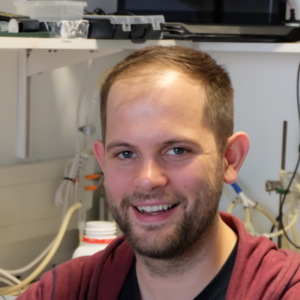
Calum Wilson (University of Strathclyde, UK)
Project title: iLifeSci: Interactive Life Sciences — an open-source simulation platform for physiology education
I’m a Senior Lecturer at the Strathclyde Institute of Pharmacy and Biomedical Sciences, where I teach physiology and pharmacology and run a research group working on calcium signalling in the blood vessel wall. A similar thread runs through both: we build open-source tools and make them freely available for others to use. In the lab that means analysis software other groups can use without buying commercial licenses; in teaching it means building simulations that allow students to replicate experiments they would otherwise only ever read about.
The Education and Teaching Award supports iLifeSci, which stands for Interactive Life Sciences, a free, browser-based simulation platform with physiology teaching at its core. Explicit physiology has been quietly squeezed out of pharmacology, medicine, nursing and allied health curricula. The way back may not be more curriculum time, but treating physiology as the discipline that all other bioscience curricula need in order to make sense.
iLifeSci is built specifically for that. Students are hooked by the pharmacology or the clinical context, and physiology is the underpinning knowledge they need to understand to move forwards with their field of interest. My platform needs no licence, no installation and no specialist hardware, just a browser. iLifeSci simulations are built as scaffolded, guided experiments rather than demonstrations, so students work through the reasoning themselves from physiological first principles.
The Award will let us launch our first full learning pathway, The Electric You, which takes students through neuronal excitability from the Nernst equation to the action potential, and then build a second pathway to show how the framework generalises beyond that topic. I’m working on this with Dr Matthew Lee, and Dr John Dempster, whose Strathclyde Pharmacology Simulations set the precedent for making the resource freely and openly available.
The Award lets us build iLifeSci with people. It will fund the workshops and focus groups with students and educators to shape how the product is made. We can fund a student co-developer to design a second pathway, and the hosting to run the platform independently and sustainably. ILifeSci belongs to everyone who teaches physiology, and that’s how we intend to treat it, everything we produce will be shared freely and openly.
Applications for the 2027 awards will open this autumn. Watch this space for more details.