

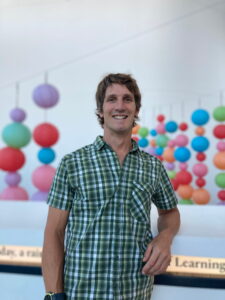
By Professor Samuel Oliver
Sam Oliver is a Professor of Sport and Exercise Science and Director of the Institute for Applied Human Physiology at Bangor University. His research explores how exercise, diet, sleep, and environmental conditions influence human health, wellbeing, and performance.
We spoke to Sam as part of our 150 voices of physiology series, about his career, his hopes for the future of physiology and his work with our Policy Team.
Motivation
What first inspired you to go into physiology or your area of research?
My late teens and early career were driven by a fascination of the limits of human exercise performance. However, I later recognized that human physiological limits can be easily eclipsed by the extraordinary physiological capabilities of other species, such as the thoroughbred racehorse. Nevertheless, I maintain that the human body is the most valid model for understanding our own physiological limits and adaptations. It provides the most appropriate insights into how we navigate acute environmental stressors and adapt in ageing and chronic disease.
Who or what has inspired you most during your career?
My career has been profoundly shaped by the extraordinary mentors and colleagues who ignited and then sustained my passion for human physiology and muscle metabolism. My training and interactions as an early career researcher provided significant intellectual vitality and lit a spark that continues to drive my work today.
Motivation
What first sparked your interest in physiology and inspired you to go into physiology?
My initial interest in physiology stemmed from a love of sport and developed while studying GCSE and A-level Physical Education and Biology. The combination of practical and theoretical learning was educational but, more importantly, enjoyable for someone who was never very good at sitting still. Alongside inspiring undergraduate and postgraduate research supervisors (thank you, Professors Lemmey, Marcora, and Walsh), this approach to learning motivated me to pursue a career in academia and continues to guide my work today.
Can you share a project you’ve worked on that you’re especially proud of?
That’s a difficult question because I’ve been fortunate to work on several memorable projects. These have ranged from partnerships with emergency services and sports organisations to laboratory studies in our environmental chambers and field-based medical research at high altitude with universities from around the world.
One aspect of this work that I am particularly proud of is its contribution to beneficial changes in athlete preparation, military training practices, emergency care procedures, and broader guidance relating to human performance in demanding conditions. Seeing the science move beyond academic journals and into practice is incredibly rewarding.
One lesson that stands out across all these experiences is that progress is rarely achieved alone. I have been fortunate to complete these projects alongside outstanding colleagues, students, and collaborators throughout my career. My greatest professional satisfaction comes from mentoring undergraduate and postgraduate researchers, as well as early-career academics. Watching them grow into confident, independent researchers and practitioners is every bit as rewarding as publishing research papers or securing funding.
Community/Society
How did you first get involved with the Physiological Society and what impact has being part of the Society had on your career?
My first involvement with the Society was attending a human physiology meeting at the University of Cambridge in 2004. It was perfect timing for a first-year PhD student, as the work being discussed was both informative and inspirational, helping to set the bar for my own work. More than 20 years later, the Society continues to set the standard with its premium conferences, journals and policy work.
Could you share more about the projects and work you’ve been involved in with our policy team?
It’s been a privilege to help the Society’s Policy team in focus groups, roundtable discussions, and contributions to reports. These projects have spanned a wide range of topics, including translating UK knowledge and research into impact, the impact of Sport and Exercise Science Education on the UK economy, and exploring physiological considerations for maximum indoor temperatures, climate change and health. Through this work, I have seen first-hand how effectively the Society shines a light on the value of physiology and its contribution to our wider society.
Looking Forward
What makes you most hopeful about the next chapter for physiology?
I believe physiology has a bright future, because whether it’s improving the lives of those living with disease or supporting human endeavours to the Moon and Mars, these and other societal ambitions will be achieved by working with physiologists. Having mentored many excellent individuals through degrees, I’m optimistic these ambitions will be realised, and other societal challenges surmounted, given the talent and dedication of the next generation of scientists.