

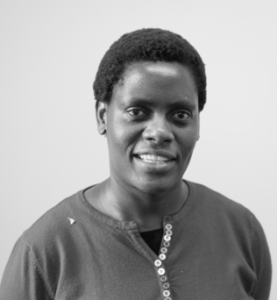
By Dr Priscilla Day-Walsh
Dr Priscilla Day-Walsh is a Next Generation Fellow at the Loke Centre for Trophoblast Research (LCTR) based in the Department of Obstetrics and Gynaecology, University of Cambridge. She is also a Bye-Fellow at Homerton College and a visiting scientist at the Quadram Institute Biosciences (Norwich). Her work integrates developmental microbiome research with advocacy on uterine fibroid awareness to improve pregnancy outcomes and advance equity in reproductive healthcare. She is a Co-founder of the FibroidsFree (Fibroids Focus on Research, Empowerment, and Healthcare Equity) initiative. Through this, she has engaged with stakeholders across research, policymakers, patients and international advocates.
We spoke to Priscilla as part of our 150 voices of physiology series, about her career, her hopes for the future of physiology and her work with our Policy Team.
What first inspired you to go into physiology or your area of research?
Driven by a longstanding curiosity about how biological systems function, I have built my research career around addressing fundamental questions in human health and disease. My research journey began at Anglia Ruskin University and was shaped by a laboratory placement at the University of Cambridge, where I studied an engineered enzyme as a potential therapeutic target for spinal cord injury. This experience inspired me to pursue a PhD investigating the mechanisms underlying pregnancy complications.
My current research aims to define how host-microbial interactions regulate human trophoblast development and placental function. By uncovering the pathways that contribute to adverse pregnancy outcomes, I seek to identify actionable targets for the prediction, prevention, and treatment of pregnancy complications and their associated maternal and neonatal morbidity and mortality.
Can you share a project you’ve worked on that you’re especially proud of?
I have developed novel methodologies to quantify microbial metabolites that are often overlooked in conventional metabolomic analyses, enabling the determination of physiologically relevant concentrations for downstream mechanistic studies. While much of the microbiome field relies on animal models and human studies that are predominantly correlative, with interventions typically occurring after birth in infants affected by pregnancy complications, my research focuses on defining the underlying mechanisms during gestation. This is a critical window of development that shapes both immediate and lifelong maternal and infant health outcomes.
By investigating how host-microbial interactions influence human trophoblast development and placental function, I aim to identify actionable targets for the prediction, prevention, and treatment of pregnancy complications.
While many aspects of placental and endometrial biology continue to require fundamental mechanistic investigation, uterine fibroids represent an area where substantial improvements in women’s health can be achieved through enhanced awareness, earlier diagnosis, optimisation of clinical pathways, and evidence-based policy change. I am proud of my leadership in repositioning uterine fibroids, as a major determinant of women’s reproductive health and a contributor to inequalities in pregnancy outcomes and long-term cardiometabolic disease risk. As part of a multidisciplinary team, we united senior national and international leaders across research, clinical practice, patient advocacy, healthcare, and policymaking. This included support from Lord Simon Woolley, Congresswoman Yvette Clarke, Sateria Venable and Samira Rafaela, to tackle longstanding challenges in fibroid awareness, diagnosis, treatment, and policy. A key achievement was convening influential stakeholders, including Dame Lesley Regan, UK Women’s Health Ambassador, reinforcing the national and international importance of this agenda. This work has catalysed strategic collaborations with organisations including NICE, to advance education, strengthen clinical pathways, and improve understanding of emerging fibroid therapies within regulatory and healthcare frameworks. I am proud to say that the initial scoping efforts were funded by the Physiological Society.
Placental and endometrial health underlie successful pregnancy and lifelong health. I am particularly enthusiastic about this work because of its potential to improve maternal and child health on a global scale in direct alignment with United Nations Sustainable Development Goals to reduce maternal and infant mortality and improve health equity.
Who or what has inspired you most during your career?
Many people have inspired me throughout my career, but the most influential has been Mrs Dorothy Gibson. She demonstrated the power of selfless kindness and generosity, and she opened doors for me by introducing me to friends who provided me with lab experience opportunities at the University of Cambridge. Her belief in me at an early stage of my career has had a lasting impact and helped shape the path I am on today.
The second is Lord Simon Woolley, who opened my eyes to the importance of self-advocacy and the responsibility we have to champion those whose voices are not always heard. His leadership and commitment to equality inspired me to use my own voice “Break the silence about uterine fibroids” and advocate for change.
Dame Elizabeth Anionwu is my role model because she has shown how scientific knowledge, compassionate care, and advocacy can be combined to improve the lives of people affected by chronic health conditions. Through her pioneering work in sickle cell disease and thalassaemia, she established specialist services, promoted patient education, and challenged health inequalities, particularly among underserved communities. Sickle cell disease and thalassaemia are physiological disorders that affect red blood cells and oxygen transport throughout the body leading to health complications. As someone interested in fibroid advocacy, I am inspired by her commitment to raising awareness of conditions that disproportionately affect Black communities and are often overlooked within healthcare systems. Like sickle cell disease, fibroids require both a strong understanding of physiology and effective advocacy to improve diagnosis, treatment, and patient support.
Why do you think physiology is such an important science today?
Physiology is an important science because it helps us understand how our bodies function, what happens when those functions go wrong, and how we can prevent and treat disease. It also allows us to appreciate the impact of sustainability, climate change, and the natural environment on human health and longevity. Physiology underpins many advances in medicine, healthcare, and engineering; without it, many of the scientific discoveries and innovations that improve and save lives today would not have been possible.
How did you first get involved with the Physiological Society?
It was during my first year of my PhD, I was introduced to the Physiological Society which provided funding for me to attend their main conference at the University of Cambridge.
What impact has being part of the Society had on your career?
The Physiological Society has truly been a cornerstone of my academic and professional journey more than a learned society, it has felt like a home. Through its generous funding, I have had invaluable opportunities to attend conferences, workshops, and annual meetings that bring together inspirational scientists. These events not only celebrate the breadth and impact of physiology but also highlight how our discipline meaningfully contributes to wider society. The Society has played a pivotal role in shaping my career trajectory by fostering an inclusive and supportive environment, while also providing access to high profile and impactful initiatives. I have been proud to contribute to important reports, including work on food packaging submitted to inform government policy, and on examining how race influences the experiences and career progression of Black physiologists. Through these opportunities, I have been able to engage with issues of societal importance while developing professionally. The Society has also allowed me to support other early career scientists, including co-hosting and chairing a symposium and helping to produce a follow-up report. These experiences have not only strengthened my own career but have also empowered me to foster inclusion and collaboration within the wider scientific community.
Can you tell us more about the projects and work you’ve been involved in with our policy team?
The Physiological Society introduced me to the importance of engaging policymakers with science. Through the Society, I contributed to its response to the Government’s Front of Pack Labelling consultation and participated in the launch of The Contribution of Physiology to Education and Training and the UK Economy. I also joined the Society at the launch of the joint consensus statement on heat and health, building a Roadmap to Global Heat Health Resilience, held at the Houses of Parliament. These experiences highlighted the vital role that scientists play in shaping policy and improving public health. The Society also funded our advocacy work on uterine fibroids. I am delighted that, in October, I will be joining the Society to showcase our advocacy work on uterine fibroids as part of the Physiological Society’s 150th anniversary event in Parliament.
What do you value most about the Society’s community or its journals?
What I value most about the Physiological Society is its ability to bring together researchers from diverse disciplines and create a community that celebrates the breadth of physiological research. I particularly appreciate the Society’s commitment to fostering collaboration across fields, enabling researchers to share perspectives and tackle complex scientific questions from multiple angles. Beyond research, I value the Society’s integration of education, outreach, and policy into its activities. The community is highly supportive and committed to developing others through workshops, training opportunities, and symposia. This openness to sharing knowledge and expertise creates an inclusive environment that supports researchers at all career stages while advancing physiology as a whole. I also greatly value the Society’s commitment to building a truly global physiology community. The efforts made to engage researchers from around the world and support scientists from developing countries to attend Society meetings help ensure that opportunities for networking, collaboration, and professional development are accessible to a broader range of researchers. By reducing barriers to participation and promoting diverse perspectives, the Society strengthens both the research community and the impact of physiology worldwide.
What does “the future of physiology” mean to you?
It means physiological research and innovation that prioritise equity, ensuring that minoritised and underrepresented groups are included in research and that advances in treatment benefit all communities.
How may this relate to your work relating to our policy team?
My research is driven by a dual commitment to advancing scientific discovery and advocating for more equitable approaches to research, innovation, and clinical care to improve lifelong maternal and infant health. This includes engaging with policymakers, healthcare professionals, patients, and other key stakeholders to ensure investment in equitable women’s healthcare. By improving women’s health outcomes, we can help create healthier lives across generations and reduce long-term health inequalities for all.
Where do you hope to see the field — and the Society — 50 years from now?
While physiology should embrace technological innovation, it is equally important that fundamental physiological research continues to be supported. As new technologies are developed and implemented, we must remain mindful of the racial, ethnic, and socioeconomic biases that can be embedded within datasets, algorithms, and healthcare systems. The interpretation and application of technology-assisted physiological data should therefore be guided by principles of equity and inclusion to ensure that advances benefit all populations. The field should also continue to invest in emerging human-based models, such as organoids, which offer exciting opportunities to improve our understanding of human biology and disease. With continued development, these models have the potential to reduce and, in some areas, eventually replace the reliance on animal models, enabling more accurate and ethically responsible research.
What makes you most hopeful about the next chapter for physiology?
What makes me most hopeful about the next chapter for physiology is the community and the breadth of research across the discipline. Physiologists are increasingly working across traditional boundaries, collaboratively to address some of society’s most pressing challenges, including building resilience to extreme heat, water scarcity, and emerging infectious diseases. I am particularly encouraged by the growing recognition of the links between human health, environmental sustainability, and global health, and by the commitment of the physiology community to translating scientific discoveries into real-world impact for people and populations across the globe.
What advice would you give to students or early career researchers starting out in physiology?
This is advice not only for physiologists, but for anyone, regardless of their profession. Take time to reflect on a few important questions: Does your work give you a sense of belonging within a community? How does your work benefit both you and society, locally and globally? And is what you are doing sustainable for your own mental and physical wellbeing, as well as that of those around you?
We are often pressured to publish, publish, publish. While publication is important, unless your work represents a major breakthrough, the satisfaction of seeing your work in print can be relatively short-lived. Others may read it, cite it, and build upon it, but it is important to remember that academic outputs alone are not the sole measure of impact.
Instead, think about how your research and the activities you undertake alongside it are making a meaningful difference to the people and communities you ultimately aim to serve. This means not only conducting excellent science, but also engaging with patients, policymakers, healthcare professionals, industry, and the wider public to ensure that knowledge is translated into real-world benefit.
Balancing research with engagement and advocacy is not always easy, but it can be immensely rewarding. Build a team that shares your values and goals. During periods when research demands take priority and your capacity for outreach is limited, others can help carry that work forward. By working collaboratively, you can extend the reach and impact of your efforts far beyond what any individual can achieve alone. Ultimately, a fulfilling career is not defined solely by publications or metrics, but by the communities you build, the people you support, and the positive change your work creates.