

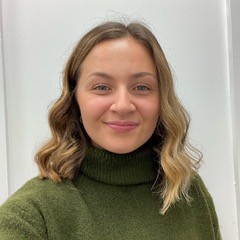
By Dr Lucy Merrell
Dr Lucy Merrell graduated from a BSc in Sport and Exercise Science with Professional Placement from the University of Bath in 2020, and stayed at the University to complete her PhD titled ‘Human Morphology, Energy Balance and Metabolic Health’. Now, as a Postdoctoral Research Associate, Lucy is studying the effect of low dose galactose on glycaemia and glucose kinetics. Alongside this role, Lucy is the Editorial Assistant and Social Media Manager for the International Journal of Sport Nutrition and Exercise Metabolism, and is a co-founder of the Skeletal Dysplasia Nexus community-lead initiative.
Lucy was a 2026 Oral Winner at our Dietary Manipulations for Health and in the Prevention and Management of Disease conference. We spoke to Lucy as part of our 150 voices series.
Joining the Physiological Society was recommended to me from day one of my PhD. I first signed up to the workshop titled ‘Essential Lab Skills and Molecular Biology Techniques: From Theory to the Bench’ in 2022. This course exceeded my expectations in terms of the quality of teaching, facilities available and networking opportunities. Learning these techniques within the walls of one of the most prestigious veterinary colleges in the world was a truly unique experience and the tutors’ standard of teaching was first class. I often fondly look back on this workshop and still remain close to a number of connections made with fellow students then, and colleagues now. In 2024, I was fortunate enough to receive funding from the Society through the Professional Development Award to support my 3-month international placement at the Mary MacKillop Institute for Health Research in Melbourne. This placement changed my life for the better both personally and professionally, and the opportunities for overseas collaboration have since continued with research publications and guest lectures in Bath from colleagues visiting from Australia.
Throughout my PhD and post-doctoral research associate role, I have attended a number of Physiological Society meetings with the most recent Dietary Manipulations Meeting in Manchester being a personal highlight. This was a valuable meeting to share my experiences within the field of physiology as an early career researcher and take to the stage with some of the most prestigious physiologists in history. Given that my research area may be considered niche, it was incredibly rewarding to be awarded an oral presentation to share my data on glycaemic control and substrate oxidation in individuals with extreme morphologies. The Q&A interactive session permitted wider thinking around the current methods of analyses and sparked many conversations in coffee breaks around future research directions and collaborations. Moreover, the facilitation of these meetings to start insightful conversations with like-minded scientists has undoubtedly enhanced the quality of my work and abilities as a scientist. It is also fulfilling to see newer students and scientists join the community and share our love and passion for the topics we get to call ‘work’.
The Physiological Society encapsulates the best parts of our field, with the people at the centre. The variety of disciplines and breadth of support the Society offers to researchers worldwide ensures the mission of advancing physiology remains at the forefront of our field. I hope the Society will be able to continue to adapt and support researchers with networking events, skills workshops and financial grants to keep up with the ever-changing landscape. The future of physiology looks bright to me; it is filled with curiosity, community and commitment to bigger, unanswered questions which will all ultimately lead to the improvement in health and quality of life of individuals for years to come. Whilst we as independent scientists will continue down this path on our own journeys, it is organisations like the Physiological Society which brings us together to work towards shared missions and ultimately create more meaningful change.