
By Isabel Christie
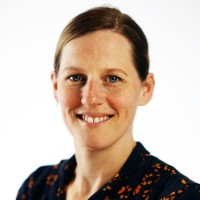
Isabel studied for a BSc at Bristol University finishing in 2008. During her BSc, she spent one summer working in the Dorothy Hodgkin Building in the laboratory of Chris Lowry. She returned to London in 2008 and began studying for a part-time MSc in Neuroscience at University College London, (UCL). During this time she gained some employment as a fly technician the LMCB working in the laboratory of Buzz Baum. She undertook a PhD at the Centre for Advanced Biomedical Imaging (CABI) between 2010-2014 funded by an MRC Capacity Building Studentship. In 2014, she started a post-doctoral research position at the Centre for Cardiovascular and Metabolic Neuroscience (CCMN) which came to an end in 2021. In 2021 she relocated to Sheffield soon after the birth of her third child. She undertook insecure work at the university (short, fixed-term contracts) while applying for independent research funding.
Her research at UCL focused on astrocytes, cerebral perfusion and the autonomic nervous system. She spent her PhD studying the role of astrocytes and purines in neurovascular coupling. During her post-doc the work was focused on hypoxia-evoked vasodilation of cerebral arterioles and the origin of nitric oxide in the brain. She is also interested in the locus coeruleus in the context of ageing and how noradrenaline regulates astrocytic activity throughout the brain. Her research techniques include functional magnetic resonance imaging (fMRI), arterial spin labeling (ASL), optogenetics and two photon laser scanning microscopy. In 2022 she published her first paper studying human MRI perfusion data although she was not involved in the data collection.
Isbael was a meeting organiser and speaker for our UK Glia 2026 conference. We spoke to Isabel as part of our 150 voices series.
How did you first get involved with the Physiological Society?
My PhD supervisor encouraged me to join the Society.
What impact has being part of the Society had on your career?
The Physiological Society has played an important role funding the UK Glia Network meetings, without their support we would not have been able to hold these meetings. Organising the meetings has been a real boost for my career. The UK Glia Network tries to represent the four corners of the United Kingdom, and since I am outside of London, this is especially important to me.
Tell us about the meeting you organised this year.
The UK Glia Network was founded in 2024 when a group of scientists realised that many other countries had glia networks. Our primary goal is to create a community for glia researchers working in the UK and abroad, where we can exchange ideas, tools, communicate our research and foster collaborations. The Society supported the first meeting in 2024 and became the primary supporters in 2026. We hope they will support us in 2028.
What was a highlight of the meeting that you’d like to reflect on?
We had a Q&A session about innovation and tech transfer. The audience seemed a little quiet at first but then the conversation really got going. I hope attendees learnt more about how to transition into industry or how exciting it might be to commercialise their research.
What does “the future of physiology” mean to you?
The future of physiology is about public awareness for me. Society is becoming better educated on numerous topics including ultra processed food, hormone replacement therapy, GLP-1 agonists and the core physiology of life.
Where do you hope to see the field, and the Society, 50 years from now?
I hope to see less ultra processed food, people being less sedentary. I hope to see people using diet and exercise to better manage their mental health and less smartphones.
What makes you most hopeful about the next chapter for physiology?
Renewable energy and active commuting.