

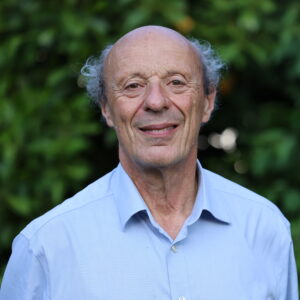
By Professor David Eisner
David Eisner is Professor of Cardiac Physiology at the University of Manchester. As an undergraduate he studied Natural Sciences before obtaining his PhD from Oxford University. His first faculty position was in the Department of Physiology at University College London. In 1990, he moved to the Veterinary Faculty at Liverpool University as Professor of Veterinary Biology, before taking up a BHF Chair at the University of Manchester. He is a Fellow of The Academy of Medical Sciences and an Honorary Fellow of The Royal College of Physicians. He has been awarded honorary doctoral degrees by the Universities of Debrecen and Szeged. He has served as President of both the Physiological Society UK and the Federation of European Physiological Societies.
His research has focused on intracellular calcium signalling with emphasis on cardiac muscle where he has studied both the fundamental mechanisms involved as well as the changes that result in cardiac arrhythmias and heart failure. He demonstrated how stable control of calcium requires that the transporters are functionally integrated to ensure that calcium fluxes are balanced on each heartbeat. He discovered a fundamental, autoregulatory mechanism controlling the calcium content of the sarcoplasmic reticulum, and how this determines cardiac contractility. He showed that this control mechanism sets the minimum (diastolic) calcium concentration between beats, thereby regulating the ability of the heart to relax. Furthermore, disturbances of this autoregulation result in spontaneous release of calcium form the sarcoplasmic reticulum, leading to arrhythmias.
He plays an active role in scientific publishing. He is currently Editor-in-Chief of The Journal of General Physiology and has held similar positions with The Journal of Physiology and The Journal of Molecular and Cellular Cardiology. This experience has given him an interest in scientific reproducibility and the misuse of statistics with the latter resulting in a book published recently with Jakub Tomek (Basic Statistics for Life Scientists a concise handbook of essential techniques, Wiley, 2025).
We spoke to David as part of our 150 voices of physiology series to talk about his physiological career and experiences with the Society.
As a teenager, I was inspired by reading about the physicists of the 19th and early 20th Century and went to Cambridge intending to do physics. I was encouraged to study one biological science unit as well and I chose phsyiology. I was fortunate to have Virgilio (Arieh) Lew as my supervisor, and soon realized that physiology was the application of physics to life. I then moved to Denis Noble’s laboratory in Oxford where I had the good fortune to team up with Jon Lederer and Richard Vaughan-Jones studying sodium pumping in the heart. I also collaborated with a fellow D. Phil student, David Attwell, a future President of the Society. Among the many other people that I had the pleasure of interacting with were Dario DiFrancesco, then beginning his work on pacemaker activity, Julian Jack and Chris Ashley. I am not sure that I ever knew what the original topic of my doctorate was supposed to be and am grateful that I was allowed to follow whatever fascinated me. I do feel sorry for today’s PhD students who live under a system of mandatory deadlines, literature reviews, transfer reports etc.
My time in Oxford was when I first encountered the Physiological Society. I remember rehearsing talks to fit in the ten minute slot and, indeed, am still intolerant of speakers who go over their time. I can also remember the terror of the vote to see if the abstract would be published. While I do not regret the removal of voting, I do think that today the discussion period is often less critical. As long as the question is posed respectfully, I see no problem with suggesting that the presenter’s conclusion may be erroneous. Later, I joined the Society’ Committee and then Council and enjoyed serving as International Secretary and then President. My proudest memory of my time as President was of setting up the Europhysiology series of meetings, a much needed counter to the destructive consequences of Brexit. More needs to be done to foster these European interactions. I have never understood the attitude of people who argue that the Society should always hold its annual main meeting in the UK as opposed to elsewhere in Europe, but regularly attend meetings in the USA.
The Society is less prominent today than when I joined it. “Back in the day” most universities had departments of physiology, and these interacted directly with the Society. Scientific meetings were hosted by departments and heads of department meetings were organized by the Society. Standalone physiology departments have essentially disappeared from the UK. In many of our universities they have been replaced by organ-based grouping: cardiovascular; metabolism; maternal and fetal etc. This structure, often involving clinical as well as basic researchers has been suggested to facilitate interdisciplinary as well as translation research. However, if individual disciplines including physiology are not protected, they will have little to contribute to interdisciplinarity. Although I work on the cardiovascular system, I have much more in common with those who study calcium signalling or cell physiology in other systems than I do with many cardiovascular researchers. I do worry that we will have generations of younger scientists who largely attend organ-based meetings and will not realize the relevance of the physiology of other systems to their work.
Much has, of course, changed for the better over the years. One obvious aspect is the role of women in both the Society and society in general. The Society was founded in 1876 but it was only in 2002 that a woman (Bridget Lumb – Meetings Secretary) became an Officer and as recently as 2013 that a Society Journal had a female Editor-in-Chief (Susan Wray, Physiological Reports). As recently as the 1980s, female authors of communications were required to use their first names whereas men could decide whether to have simply initials. I can remember someone complaining to Annette Dolphin after her presentation that she had omitted her first name. The Annual Review Prize Lecture has been awarded since 1968. For the next 20 years it was never given by a woman, whereas four of the last ten awardees have been female.
Finally (and perhaps self-indulgently), I am indebted to the Society for the role it has played in my life, both in and out of science. It has shaped and published my science, allowed me to participate in its leadership and journals, and given me so many friends, and indeed my wife!