

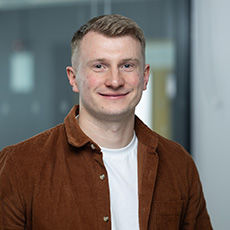
By Dr Nathan Hodson
Dr Nathan Hodson is an Assistant Professor in Exercise Physiology within the School of Sport, Exercise and Rehabilitation Sciences at the University of Birmingham. Prior to this, he undertook postdoctoral training at the University of Toronto and worked as a Senior Lecturer in Musculoskeletal Physiology at Manchester Metropolitan University. Nathan’s research primarily focusses on the cellular mechanisms underpinning alterations in skeletal muscle size and protein metabolism across a range of populations; from athletes to older individuals or those living with muscle-wasting conditions.
Nathan was a meeting organiser for ‘Dietary Manipulations for Health and in the Prevention and Management of Disease’. We spoke to Nathan as part of our 150 voices series.
How did you first get involved with the Physiological Society?
I first got involved with the Physiological Society when I attended the Biomedical Basis of Elite Performance meeting in 2016 during the first year of my PhD. This meeting opened my eyes to the amazing research that can be undertaken in the field of physiology and drove my motivation for a career in academia. I also had the opportunity to meet a variety of researchers at this meeting, some of which I developed friendships and collaborations with that are ongoing today.
What impact has being part of the Society had on your career?
I would say the Physiological Society has had one of the biggest impacts in my career to date. They have provided me with numerous travel/conference attendance grants allowing me to disseminate my work to an international audience, delivered training courses which drastically developed my skillset and offered opportunities for career development including manuscript reviewing and policy contribution. This support has been integral as I have moved through my career from PhD student to postdoctoral researcher and now into my role as an independent investigator. Because of this, I always ensure my trainees now become members of the Physiological Society so they can benefit from its amazing support.
Tell us about the meeting you organised this year.
In April 2026, I had the pleasure of being a part of the organising committee for the ‘Dietary Manipulations for Health and in the Prevention and Management of Disease’ meeting. This was the second iteration of the meeting after we organised the event in 2024 and received extremely positive feedback from the society and attendees. This first event extremely fulfilling to be a part of and provided a setting for researchers of all career stages to interact and share ideas. When the Society then asked us to organise a second iteration, we couldn’t say yes fast enough and worked tirelessly to ensure it was as successful as the first. I would like to think we achieved this to bring a diverse community of physiologists together in a collaborative setting to celebrate that amazing work being conducted in our field!
What was a highlight of the meeting that you’d like to reflect on?
My personal highlight of this meeting was the atmosphere created by all attendees. Senior and experienced attendees were extremely open to interacting with ECRs and providing advice and support to the ‘next generation’. This was exemplified by the career development session where Prof. Ben Wall shared his experiences and advice on how to establish an independent, yet collaborative, research group and Dr. Peter Aldiss introduced his new UKRI-funded early career network. At a time when there are some negative reports regarding the HE sector, this empowering session reinforced the positive and collaborative aspects of our work.
What makes you most hopeful about the next chapter for physiology?
The people. In my opinion, the current ‘crop’ of physiology researchers is the most collaborative, curious and open-minded I have experienced in my career. There is a real sense of altruism and curiosity in the community which makes me confident that we can pose and answer meaningful research questions and ensure we make the greatest impact on society as possible.