

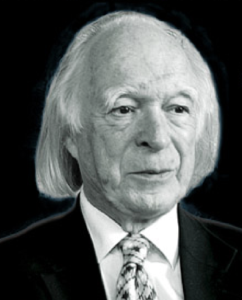
By Denis Noble, Oxford University
Denis Noble was educated at University College London from 1955-1961, where he obtained his PhD under Otto Hutter by developing the first mathematical model of cardiac rhythm. He was Lecturer at UCL until 1963, when he moved to Oxford, where he became a BHF Professor of Cardiovascular Physiology. Since retirement in 2004, he has worked on Evolutionary Biology leading up to his joint book with Raymond Noble, Understanding Living Systems (CUP 2023). His latest book is The Pacemaker Channels of the heart (World Scientific, 2026).
DARWIN WAS A PHYSIOLOGIST!
When the Physiological Society was founded in 1876, Thomas Henry Huxley became one of the earliest members, and Charles Darwin was elected an Honorary Member. Those two most influential evolutionary biologists of the 19th Century were physiologists. To 21st century ears, steeped in The Central Dogma of Francis Crick and Dawkins’s The Selfish Gene, this may seem incongruous. Hasn’t evolutionary biology condemned physiology to a side-line? If evolution is just “preserving genes in a ‘gene pool’” then physiology is irrelevant.
Well, the even bigger surprise is that Darwin himself would not have agreed. On the contrary, he collaborated for the last decade of his life with one of our earliest enthusiasts as one of our founders: Georges Romanes, a student of John Burdon-Sanderson. After Darwin’s death in 1882, Romanes continued their work together and published it posthumously in 1897 with the title Physiological Selection. He placed physiological processes that keep nascent species separate by natural variations in their reproductive physiology at the centre of evolutionary biology.
Darwin’s and Romanes’ idea was that characteristics acquired during the lifetime of individuals could be transmitted to the germline since all cells of the body secrete what today we call extracellular vesicles (Darwin called them gemmules), which, as first shown by Corrado Spadafora around 2 decades ago, can be transmitted to the germ cells. Darwin and Romanes’ concept has therefore been vindicated 150 years later, This alone, but also much else, will ensure that our Society remains relevant in the 50 year run-up to our bicentenary. The Society is 150 years young!