Alzheimer’s disease (AD) is a debilitating neurodegenerative disease that causes progressive neuronal death, reductions in brain volume and memory impairment. In the first description of the AD brain, Alois Alzheimer noted the aberrant accumulation of lipid granules in the glia (Foley, 2010). Since then, various aspects of lipid metabolism – such as cholesterol dyshomeostasis – have been linked to AD development and progression (Delac & Maioli, 2025). Cholesterol itself cannot cross the blood brain barrier, however its metabolism into oxysterols allows the bi-directional flux of these lipids between the brain and peripheries. 27-hydroxycholesterol (27-OHC) is the most abundant oxysterol in the circulation and evidence suggests it can exacerbate AD-related cellular pathology and impact memory and cognition. The APOE gene, which encodes for a multifunctional protein involved in lipid transport and homeostasis, is also highly implicated in AD development (Raulin et al., 2022). APOE is highly expressed in the brain’s astrocyte population, and the isoform present significantly influences AD risk, pathology and outcomes.
This research seeks to understand if 27-OHC exposure influences astrocyte health and metabolism in an APOE isoform-dependent manner, potentially providing insight into isoform-related differences in AD risk.
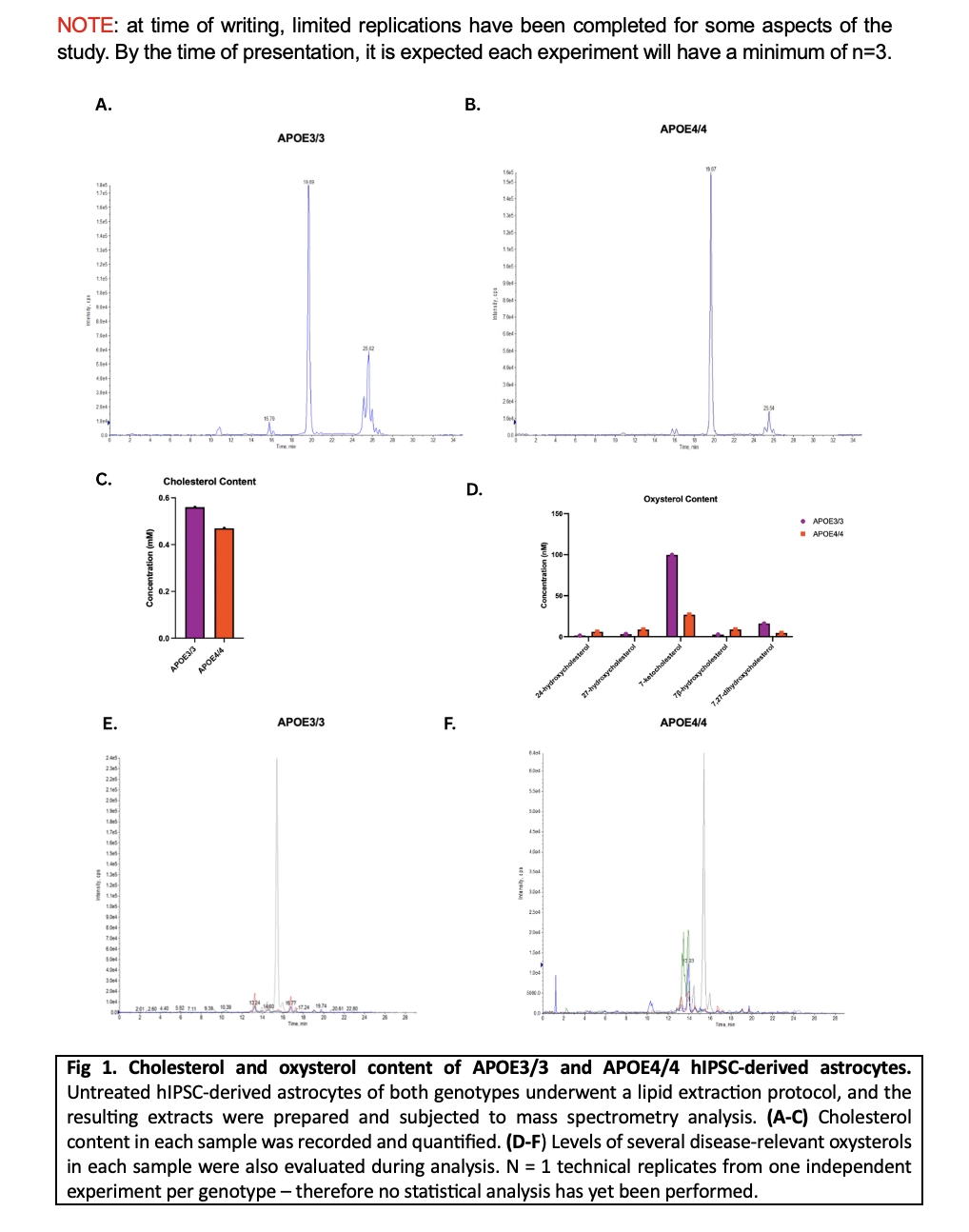
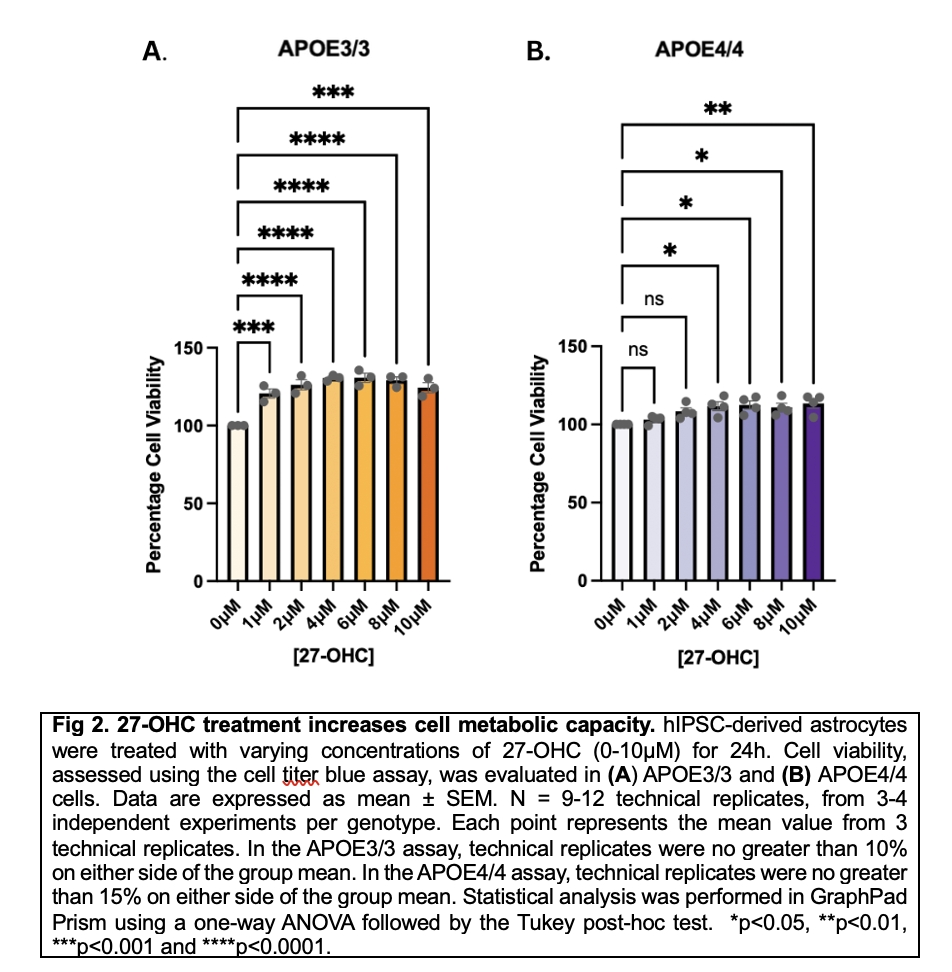
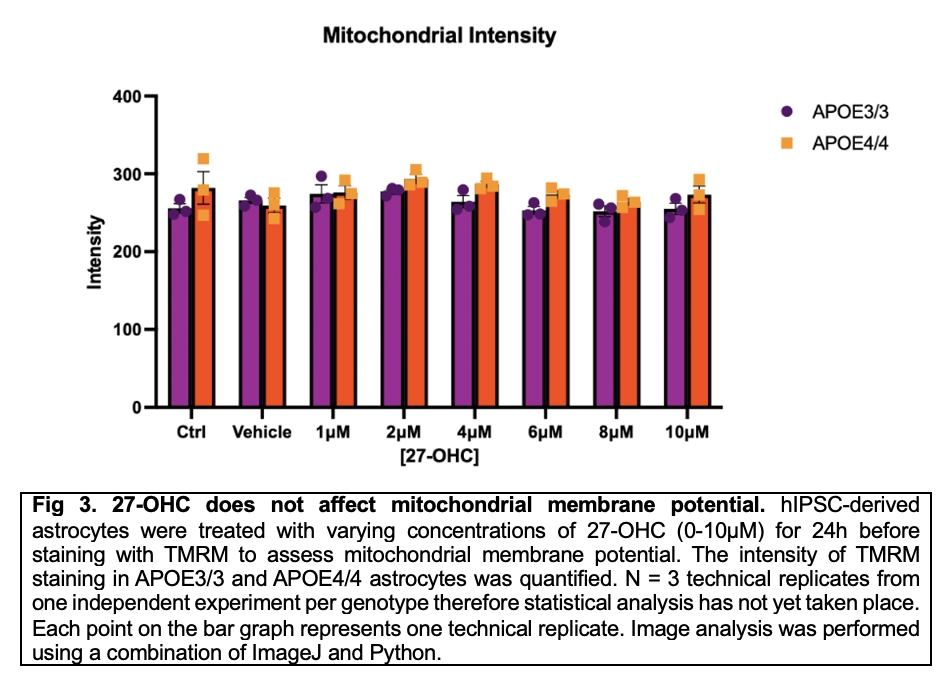
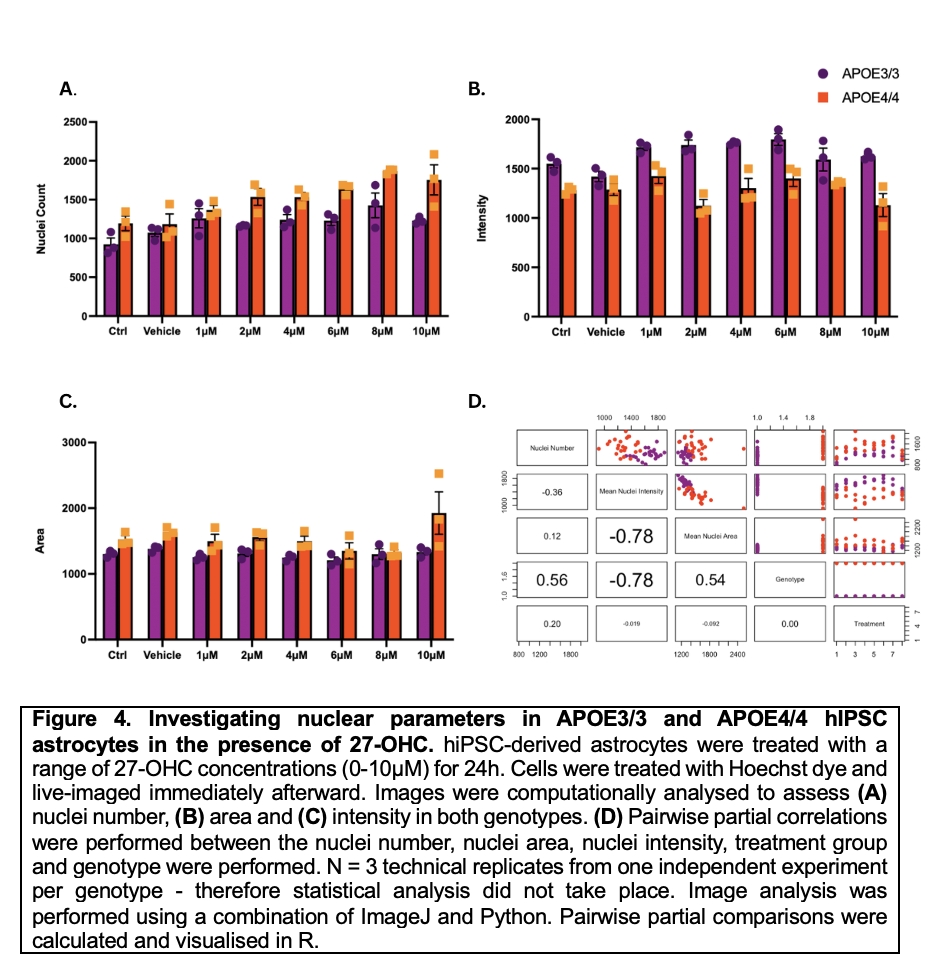
APOE3/3 and APOE4/4 hiPSC-derived astrocytes were used throughout the study; with these genotypes representing the most common, “neutral” risk polymorphism and the rarer, high-risk polymorphism respectively (Raulin et al., 2022). Mass spectrometry analysis was performed to assess the levels of total cholesterol and various oxysterols, including 27-OHC, at baseline levels. Cell metabolic capacity in response to 27-OHC (0-10µM) exposure was recorded in both genotypes using the CellTiter-Blue® assay. Additionally, immunofluorescent staining was used to investigate changes in mitochondrial membrane potential and nuclei-associated parameters.
Mass spectrometry analysis successfully detected 27-OHC in both genotypes, with preliminary results suggesting that APOE4/4 cells contain over two-fold the levels of 27-OHC than their APOE3/3 counterparts (n=1). Our results also indicate that 27-OHC has a proliferative or protective effect on cells of both genotypes (n= 3-4). Furthermore, preliminary evidence suggests that 27-OHC does not affect mitochondrial membrane potential or influence nuclear area or intensity (n=1). However, an upward trend in nuclei number was observed in APOE4/4, but not APOE3/3 cells, upon exposure to increasing concentrations of 27-OHC. This provides further support to the 27-OHC’s potential proliferative/protective role.
Previously, 27-OHC has been evidenced to increase proliferation in other cell types – particularly in cancer cells (Hou et al., 2025). However, to this author’s knowledge, this is the first indication it may exert a proliferative effect on astrocyte populations. Further work must be done to elucidate the mechanisms underlying this effect. Additionally, building on the research of this study will offer insight into potential differences in lipid metabolism and cellular responses between APOE3/3 and APOE4/4 astrocytes. This, in turn, may be able to deepen the field’s understanding of the relationship between lipid metabolism and AD risk.
NOTE: at time of writing, limited replications have been completed for some experiment (clearly stated as preliminary findings). By the time of presentation, it is expected each experiment will have a minimum of n=3.