

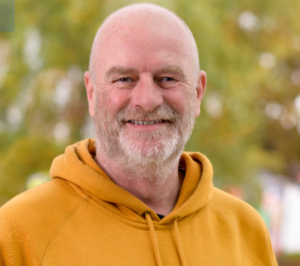
By Professor Cormac Taylor, PhD, MRIA.
Professor of Cellular Physiology, UCD Conway Institute, School of Medicine & Systems Biology Ireland, University College Dublin, Ireland.
After obtaining his PhD in Pharmacology from University College Dublin, Cormac carried out a postdoctoral fellowship at Brigham and Women’s Hospital / Harvard Medical School where he focussed on novel therapeutic approaches to Inflammatory Bowel Disease (IBD). He has published over 120 manuscripts and supervised 23 PhD students. In 2014, Professor Taylor was elected to the Royal Irish Academy. In 2014, he received the Midcareer Mentorship Award from Nature and the 2017 Takeda Distinguished Research Award from the American Physiological Society. Cormac is a passionate advocate for Equality, Diversity and Inclusion (EDI) with a particular emphasis the challenges faced by LGBTQIA+ scientists and the importance of engaging men in EDI initiatives. He recently received the Physiological Society Widening Participation in Physiology Award for “support and advocacy of the LGBTQIA+ community in physiology and biosciences more widely”. He received the FEBS Education National Lecture Award for his lecture Pride in Progress: LGBTQIA+ scientists in STEM. He is currently working on a book entitled Pride in Progress highlighting the contributions that LGBTQIA+ scientists have and continue to make to discoveries that benefit society as a whole.
Cormac Taylor is the 2027 winner of The Widening Participation in Physiology Prize Lecture. We spoke to Cormac as part of our 150 Voices of Physiology series.
What first made you interested in physiology?
When I was a child, I assumed that we were all built differently on the inside. I thought each one of us had our own unique internal workings. What those workings were, I had no idea but I presumed that they were different for each individual. I surmised that all of the diverse people I saw, adults and children, men and women, different shades and sizes also differed greatly on the inside. It was both a shock and a revelation therefore for me to discover early-on in school that, notwithstanding some differences between females and males, we all share the same inner workings. So much diversity on the outside but all the same on the inside. We are equal in our physiology.
Please tell us about your upcoming 2027 prize lecture The Widening Participation in Physiology Prize Lecture
I was awarded the 2027 Widening Participation in Physiology Prize Lecture by the Physiological Society for on my advocacy for underrepresented groups, particularly LGBTQIA+ scientists, who work in Science, Technology, Engineering, and Mathematics (STEM).
A significant body of evidence has shown that STEM subjects are less welcoming of diversity than those in the humanities. In our own discipline, if one were to use the Nobel prizes awarded in Physiology or Medicine as a barometer of equality in our subject, one would deduce that physiologic (or medical) research is largely the preserve of straight white men.
Of the Nobel prizes awarded in Physiology or Medicine, 6.3% have gone to women, 0.0% have gone to Black Scientists and 0.1% have gone to openly LGBT scientists. 93.2% have gone to straight men, the vast majority of them being white.
Of the Nobel prizes awarded in Literature, 15% of prizes have gone to women, 3.4% to Black writers and 5% to openly LGBTQIA+ laureates.
Of the Nobel prizes awarded for Peace, 19.6% have gone to women, 11.2% have gone to black people and 1.9% have gone to openly LGBTQIA+ people.
An openly trans person has never won a Nobel prize in any category. While none of these data reflects the actual diversity of society, prizes awarded in Physiology and Medicine are particularly imbalanced. This does not reflect a situation where Women, LGBTQIA+ and racial minorities do not participate in physiological and medical research. Indeed, many luminary examples of great women and minority scientists include the following:
Rosalind Franklin, the woman responsible for the elucidation of the structure of DNA.
Ben Barres, a trans man who made major contributions to developing our understanding of the interplay between two key cells of the nervous system, neurons and glial cells.
James Barry, a women who lived as a man for all of her life and made huge contributions to surgery and the application of hygiene.
Alan Hart, A trans man who pioneered the use of X-ray technology for the early detection of TB, allowing for early life-saving treatment of the infected and the isolation of sufferers thereby reducing the spread of the disease through the population.
Alice Bell, a black female chemist who developed a method (termed the Ball Method) which was vital in the development of drugs to treat leprosy.
The list goes on.
The Nobel Prize awardees is just one example of inequality in physiology and medicine. However, whatever way you crunch the numbers, the award of the Physiology or Medicine Nobel Prize reflects an issue where it comes to representation of Laureates reflecting the diversity of human populations.
So what can we do about the underrepresentation of LGBTQIA+ scientists in physiology?
Well, first of all those of us who are LGBTQIA+ can be open and visible where possible and safe. Our straight allies, of whom there are many, can support us by ensuring our voices are heard and our achievements recognised.
Secondly, we can celebrate our queer role models. Scientists who made discoveries that changed the world who just happened to be queer.
Thirdly, we can recognise intersectionality. No person is defined by just one attribute. Sexual orientation or gender identity go hand in hand with other aspects such as racial minority status, religious or cultural background, disability, family status etc.
Finally, we need to reframe the need for diversity away from pointing a finger at majority men. Indeed without the advocacy and support of this group, equality will be impossible to achieve. Engaging majority men as allies in achieving equality, diversity and inclusion initiatives is essential to achieve fairness.
What does “the future of physiology” mean to you?
A future where diversity is celebrated not only as something that provides equality of opportunity to people but also improves the quality of the research we do. I look forward to a day when LGBTQIA+ scientists are considered not a great queer scientist but a great scientist who just happens to be queer. We still have a way to go and our hard earned rights, as we have seen globally in recent years, are by no means guaranteed. I truly believe however, that a greater acceptance of diversity in physiology research groups will result in less groupthink and more importantly, fairness, joy and higher quality research.