

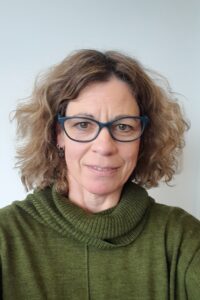
By Professor Leanne Hodson
Leanne completed her PhD at the University of Otago, New Zealand, before moving to the University of Oxford to undertake postdoctoral research. In 2011, she established her own research group and is now Professor of Metabolic Physiology. Her research focuses on obesity-related metabolic diseases and the impact of dietary nutrients on hepatic lipid metabolism by using a combination of human in vivo, ex vivo, and in vitro models with advanced stable-isotope tracer methodologies.
Leanne Hodson is the 2027 winner of The Joan Mott Prize Lecture Celebrating Women Physiologists. We spoke to Leanne as part of our 150 Voices of Physiology series.
What first inspired you to go into physiology or your area of research?
I grew up and undertook all my education in New Zealand. Interestingly, my journey to university was far from straightforward. My school’s career advisor suggested that I wasn’t academic enough to pursue university study, so I’m still a little surprised to find myself with a career in academia.
Through my involvement in rowing, I developed an interest in sports nutrition and performance. Driven by this curiosity, I enrolled in a newly offered evening course in Sports Medicine, where I found myself particularly drawn to nutrition and physiology. This eventually led me to the University of Otago to study for a BSc in Human Nutrition, which included several physiology courses.
The turning point in my decision to pursue research came when Professor Murray Skeaff delivered a lecture on lipids and fatty acids. I found the topic fascinating, and Murray was also the person who first suggested that I consider doing a PhD. At the time, I wasn’t sure whether it was something I wanted to do, or even whether I was capable of it. In hindsight, I think much of that uncertainty stemmed from not fully appreciating that a PhD is a training platform through which you develop a range of transferable skills, including problem-solving, communication and analytical skills. These skills can open up many different opportunities to contribute to science.
With Murray’s encouragement, I went on to undertake my PhD under his supervision, investigating the use of fatty acids as biomarkers. After completing my first research project, I was hooked. I wanted to understand more about lipid and fatty acid metabolism in humans, and that curiosity has continued to shape my research career.
Who or what has inspired you most during your career?
I have been fortunate to be inspired by many people in different ways throughout my career.
Professors Murray Skeaff and Keith Frayn both inspired me to become a better communicator. They have a remarkable ability to explain complex concepts in ways that are accessible, interesting, engaging and informative. Their approach has influenced how I communicate my own research and share scientific knowledge with others.
Through rowing, I was also inspired by coaches who taught me the importance of focusing on the process rather than the outcome. This is a mindset that I have carried into my research, as well as into how I work with my team to bring out the best in others.
My grandfather was another constant source of inspiration throughout my life. He demonstrated the importance of working hard and being a team player, but perhaps most importantly, he taught me not to take myself too seriously and to have fun along the way. Life is too short not to laugh often and share a few laughs with others!
Please tell us anything you can your upcoming 2027 prize lecture The Joan Mott Prize Lecture Celebrating Women Physiologists
My lecture will reflect on key findings and lessons from my research career to date, including how we have combined complementary in vitro cellular and ex situ human models with in vivo human studies to gain mechanistic insights. I will explore how the metabolism of endogenous and exogenous (dietary) fatty acids is influenced by phenotype (e.g. sex, adiposity and insulin resistance) and nutritional state (fasted versus fed), and how dietary changes can alter whole-body fatty acid metabolism and intrahepatic fatty acid partitioning, with implications for cardiometabolic disease risk.
What advice would you give to students or early career researchers starting out in physiology?
Learn to have the conversations you might find uncomfortable early on. Addressing a small challenge sooner can prevent it from developing into something much bigger.
When looking for a mentor, find someone you trust, who will be honest with you and with whom you feel comfortable having open conversations. Make the most of your peers, too; they are an incredibly valuable source of knowledge, support and perspective.
Keep an open mind and be willing to explore opportunities that come your way. You never know where they might lead or what doors they might open.
Make time for the things that matter most to you. For me, that is family, friends and exercise. Spend as much time celebrating your successes as you do dwelling on your disappointments.
There will inevitably be good days and not-so-good days throughout your career, but there should always be an element of fun in what you do. Work hard, support those around you, enjoy the journey and, most importantly, don’t take yourself too seriously!