Introduction:
Hand Grip strength (HGS) is a reliable and valid objective parameter to evaluate the functional integrity of the musculoskeletal system.
It can be quantified by measuring the amount of isometric force generated by the hand around a dynamometer.
The physiological parameters of age, body mass, height and gender influence the hand grip strength along with one’s occupation, leisure activities, and hand span. Recently studies have reported an association between handgrip and the mental health of the population.
Aims/Objectives:
To investigate the association between HGS and symptoms of anxiety and depression among university students, faculty, and staff.
Methods:
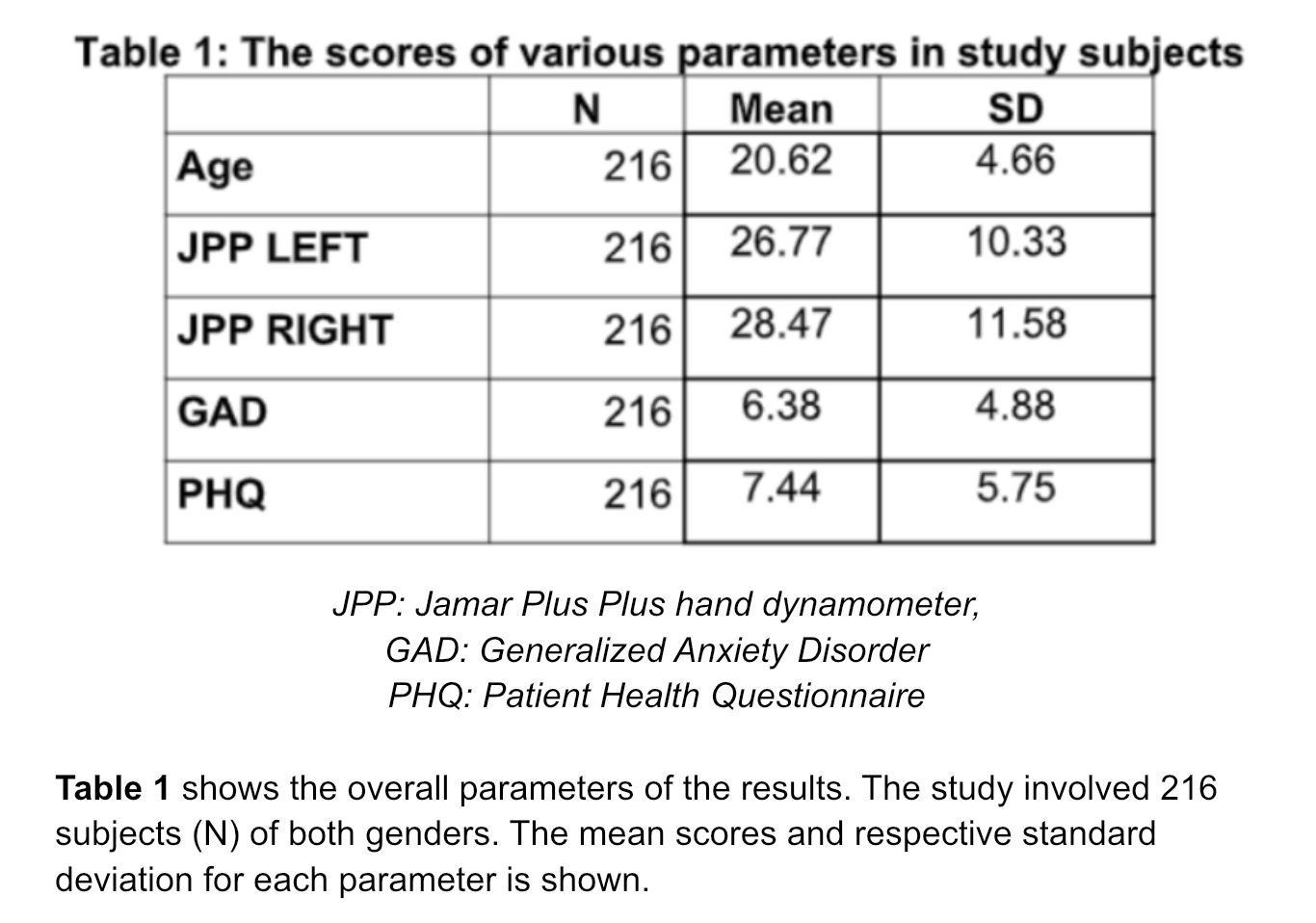
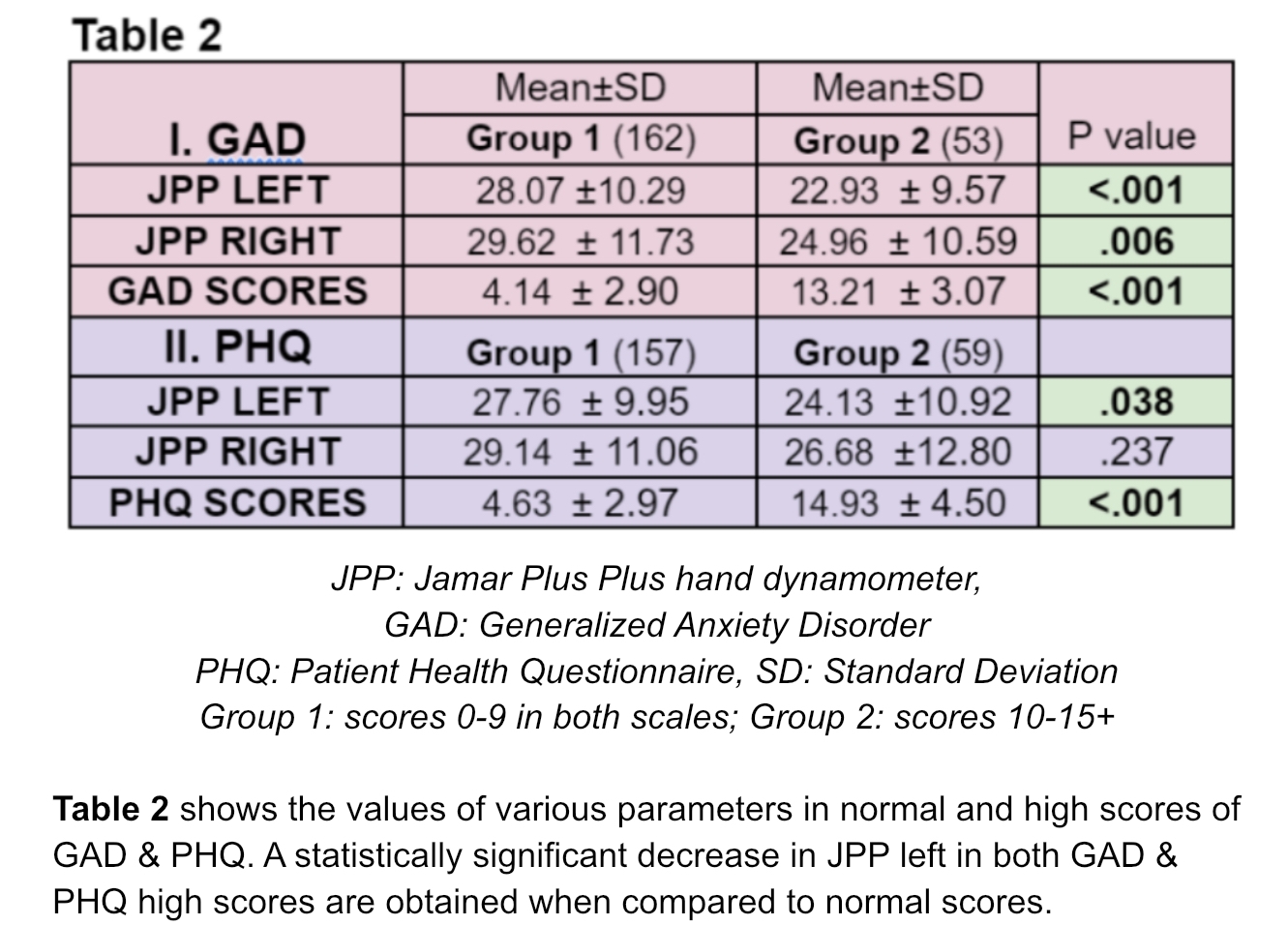
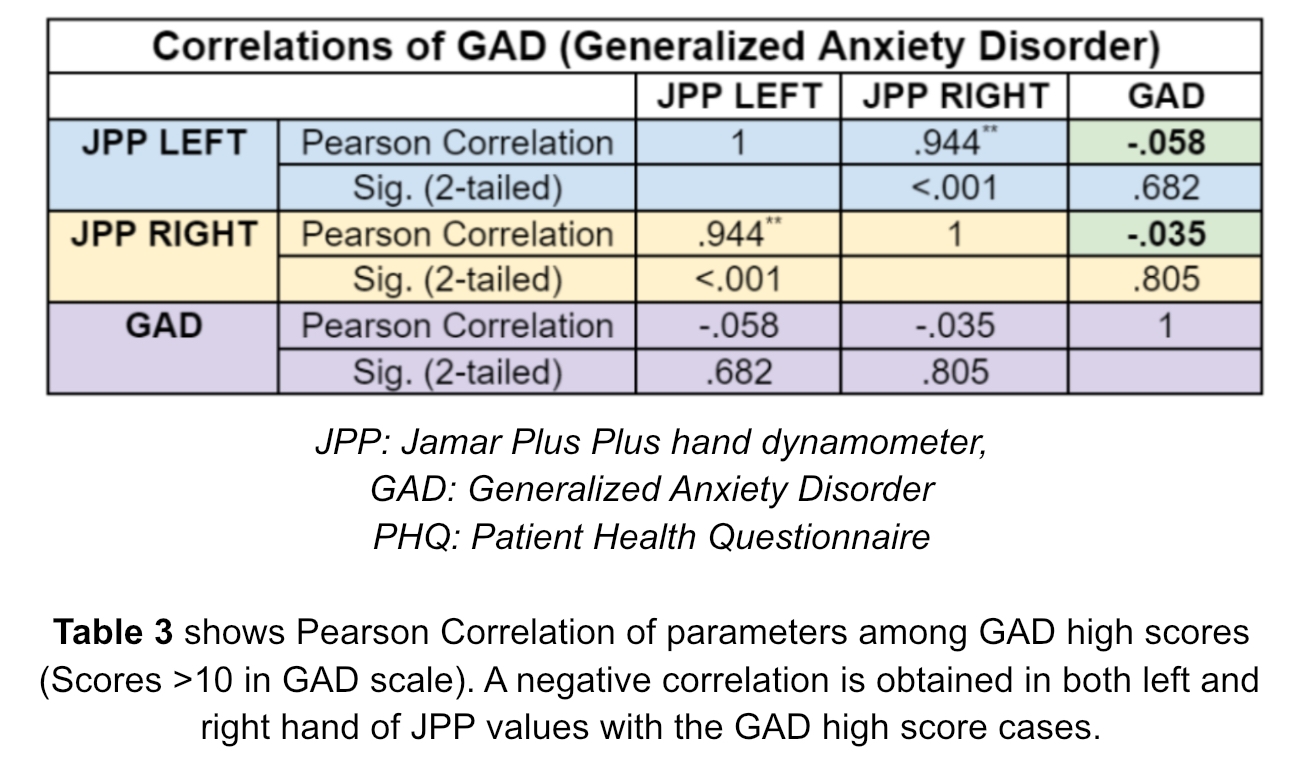
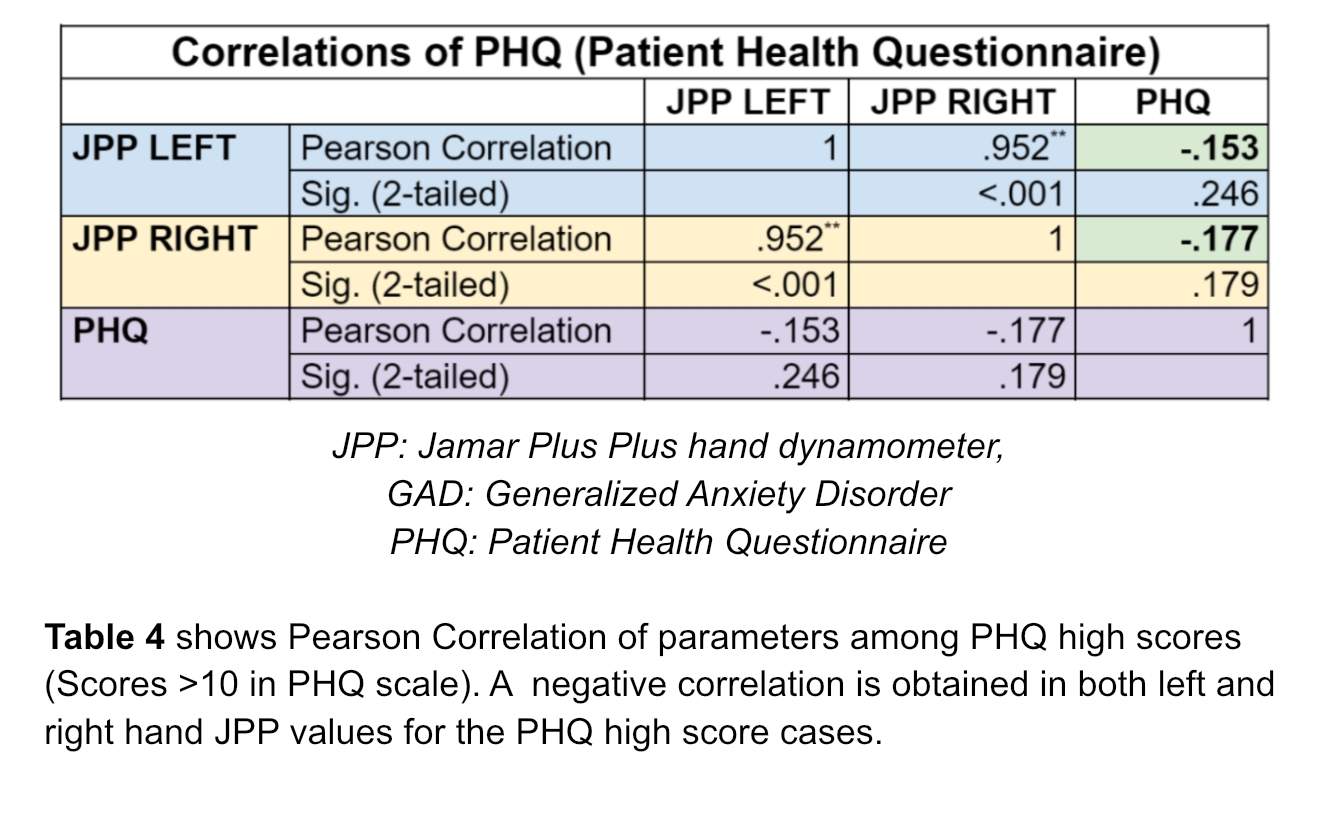
A cross-sectional study was conducted at RAKMHSU with 216 participants (138 females, 78 males; mean age 20.6 ± 2.3 years). Following informed consent, demographic data were collected. Mental health was assessed using the Generalized Anxiety Disorder Scale (GAD-7) and the Patient Health Questionnaire (PHQ-9). HGS was measured bilaterally using a Jamar Plus dynamometer according to standard protocols. Statistical analyses included Pearson’s correlation to examine relationships between HGS and mental health scores, and independent t-tests to compare grip strength between high and normal anxiety/depression groups.
Results:
A statistically significant negative correlation was found between HGS and both GAD-7 and PHQ-9 scores (p < 0.05), indicating that participants with higher grip strength had lower anxiety and depression levels. This association was more pronounced in females than in males.
Conclusions:
Higher handgrip strength is associated with reduced risk of anxiety and depression, supporting its potential as a simple, non-invasive screening tool for mental health in young adults. Future longitudinal studies are recommended to explore causal relationships and underlying neurophysiological mechanisms.
Ethical Standards:
The study was approved by the institutional ethics committee of RAKMHSU. All participants provided written informed consent.
Keywords: handgrip strength, anxiety, depression, neurophysiology, mental health