
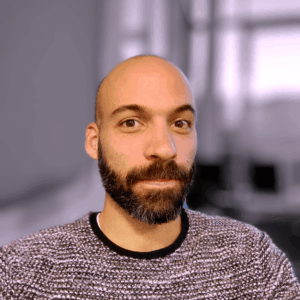
By Dr Francesco Giardini
Institute of Clinical Physiology, National Research Council (IFC-CNR), Florence, Italy.
Institute for Experimental Cardiovascular Medicine, University Heart Center Freiburg ‒ Bad Krozingen, Medical Faculty and Medical Center ‒ University of Freiburg, Freiburg im Breisgau, Germany.
Francesco Giardini received his master’s degree in Biomedical Engineering in 2018 from the University of Florence. In 2019, he was awarded a short-term EMBO fellowship to visit Dr Martin Bishop at the Cardiac Electro-Mechanics Research Group (CEMRG), King’s College London. In 2022, he obtained his PhD in Molecular Medicine from the University of Siena. From 2023 to 2026, he held a research position at the Institute for Experimental Cardiovascular Medicine (IEKM), Freiburg, Germany. He is now a researcher at the URT OptoCARD of the Institute of Clinical Physiology (CNR), Italy, and continues his collaboration with IEKM, Freiburg, as a guest scientist. His research focuses on 3-D image analysis and computational modelling based on high-resolution whole-heart reconstructions to investigate cardiac tissue remodelling and electrical function. In 2025, he was awarded the DGK Research Fellowship from the German Cardiac Society (DGK) and received funding through the European Rare Diseases Research Alliance (ERDERA) transnational call to join an international consortium working on arrhythmogenic cardiomyopathy. In 2026, he was named recipient of the 2027 R Jean Banister Prize Lecture for Early-Career Physiologists, awarded by the Physiological Society.
Francesco Giardini is the 2027 winner of The R Jean Banister Prize Lecture for Early-Career Physiologists. We spoke to Francesco as part of our 150 Voices of Physiology series.
150 VOICES : CURIOUS ABOUT COMPLEXITY
What first inspired you to go into physiology or your area of research?
My path into physiology began in a lecture hall, during a course on bioimaging and physiological models in my undergraduate degree in Computer Science. That course changed the direction of my studies, and I decided to move into Biomedical Engineering. For my Master’s thesis, I joined Leonardo Sacconi’s group at the European Laboratory for Non-Linear Spectroscopy (LENS), drawn by their advanced optical microscopy techniques and image analysis approaches. At the time, I was fascinated by the technological and computational challenges, and I loved it.
But something changed when I started analysing the structure of cardiac tissue. I became fascinated by the relationship between tissue architecture and cellular function, and by the possibility of exploring these connections across increasingly larger scales, all the way up to the whole heart.
I also realised how beautiful physiology is. Nature has made us incredibly complex, and despite centuries of research, there is still so much we do not understand about how our bodies work. I find that both humbling and exciting. It is what keeps me curious.
Can you share a project you have worked on that you are particularly proud of?
The project I am most proud of is the work we published in Nature Cardiovascular Research. It accompanied me through some of the most exciting moments of my career. One of my strongest memories dates back to the first year of my PhD, when I saw the software I had developed to map the orientation of cardiomyocytes working on an entire heart reconstructed using light-sheet microscopy. I still remember the feeling of seeing everything come together.
The project also opened many doors. It took me to London for six months, where I was warmly welcomed by Martin Bishop’s group at King’s College London, and later to the Institute for Experimental Cardiovascular Medicine in Freiburg, where I continued my research after completing my PhD. Along the way, I had the opportunity to meet and collaborate with outstanding researchers from around the world, learning something valuable from each of them.
Who or what has inspired you most during your career?
Two people have inspired me in very different ways.
The first is Leonardo Sacconi, who passed on to me his passion for research and his approach to scientific work: the goal should not simply be to do a good job, but to do your very best and always strive for excellence.
The second is my paternal grandfather, Remo Giardini, born in Italy in 1927. He narrowly survived the Second World War and had the opportunity to complete only primary school. Yet he became a self-taught scholar, with an extraordinary curiosity about music, history and technology. When I was a child, he used to buy popular science magazines, read them and then pass them on to me, asking me to explain things he did not understand, such as computers and the internet. I think he is the reason I first started saying that I wanted to become “a scientist”, as he used to call it. Looking back, I realise that he taught me something fundamental: curiosity has no age or educational boundaries.
Please tell us anything you can about your upcoming 2027 prize lecture, The R Jean Banister Prize Lecture for Early-Career Physiologists
In my lecture, I will explore the potential of correlative, multimodal imaging to study the heart. The idea is to observe the same heart in different ways: measuring its electrical function and reconstructing its three-dimensional structure, so that these two perspectives can be brought together.
I will use our work on cardiac fibrosis as an example. By combining these approaches, we found that electrical conduction through fibrotic regions depends on heart rate: the same tissue can behave differently depending on the rhythm at which the heart is beating. This is something we could not have appreciated by looking at structure or function in isolation. I hope to show how integrating different imaging modalities can help us understand how the architecture of the heart shapes its electrical behaviour, and ultimately contributes to arrhythmias.
What does the future of physiology mean to you?
I see two major opportunities for the future of physiology. The first is a deeper understanding of fundamental biological mechanisms. Technologies such as spatial omics are generating increasingly large and complex datasets, while artificial intelligence offers new ways to analyse them and uncover patterns that might otherwise remain hidden.
The second opportunity lies in understanding and predicting disease. I expect increasingly sophisticated predictive models to emerge, combining information from multimodal imaging with molecular, cellular and functional data.
Ultimately, I believe the future of physiology lies in connecting different levels of biological organisation. Understanding individual molecules, cells or tissues is essential, but it is equally important to understand how they work together to sustain the function of an entire organ or organism. This integrative perspective is what makes physiology so important today, and what makes me optimistic about its future.
What advice would you give to students or early career researchers starting out in physiology?
My first piece of advice is to pay attention to how you feel about your research in the early months and years of your career. A good sign is when you find yourself still thinking about a scientific problem after you have left the lab and gone home. Research can be challenging, and recognition is never guaranteed, but the real reward is discovering something new, solving a problem and understanding something that nobody understood before. Focus on that sense of discovery rather than external recognition.
My second piece of advice is to keep stepping outside your comfort zone and surround yourself with people who are better than you, who challenge you and from whom you can learn. Do not be afraid to ask questions, try something unfamiliar or admit that you do not know something. That is how you grow, both as a scientist and as a person.