

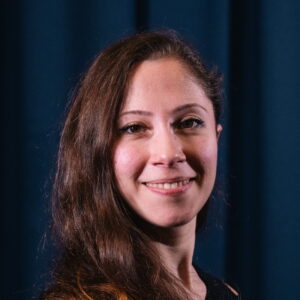
By Ilke Guntan PhD
Dr Ilke Guntan is a postdoctoral research associate at Peters Lab,Cardiff University. She works on mitochondrial dysfunction in microglia in Motor Neuron Disease (MND). Improved understanding of mitochondrial metabolic dysregulation in microglia in MND may provide insight into non–cell-autonomous disease mechanisms and identify novel therapeutic targets aimed at modulating neuroinflammatory responses.
Ilke was a 2026 Poster Winner at our UK Glia 2026 meeting. We spoke to Ilke as part of our 150 voices series.
Looking Back and Looking Forward
I am still quite new to the Physiological Society. My first experience was UK Glia Meeting 2026, so reflecting on its 150-year history from the perspective of someone who has only just joined feels particularly interesting. What struck me most was how quickly a room full of researchers could feel like a community. People were curious about each other’s work, generous with their ideas and genuinely excited to start conversations. For me, that is what makes being part of a scientific society special.
My own route into physiology has been through neuroscience. My research focuses on how disease-associated mutations affect microglial responses in Motor Neuron Disease and Frontotemporal Dementia, with a particular interest in mitochondrial quality control. Although my work sits primarily within neuroimmunology, I value opportunities to look beyond my immediate research area. The Physiological Society’s meetings bring together researchers with different expertise and perspectives, and it is often those unexpected connections that make you think about your science differently.
UK Glia Meeting 2026 was a great example. I presented my research on mitochondrial responses to immune stimulation in MND/FTD-associated human microglia and was delighted to receive a Best Poster – Gold Prize. The award was a wonderful highlight, but the conversations around the poster were just as meaningful. Discussing my work with researchers approaching glial biology from different perspectives made me think about my research in new ways. It reminded me that meetings are not simply opportunities to present what you have discovered—they can be where the next question begins.
Taking part in the Society’s 150th anniversary year has made me think about how much physiology has changed since 1876. The techniques, technologies and questions we work with today would have been difficult to imagine then. Yet the reason for coming together feels remarkably familiar: to share ideas, challenge each other and learn from one another. The tools of science change, but the value of scientific community does not.
That is what I hope the future of physiology will retain. As research becomes increasingly interdisciplinary, some of the most interesting questions sit at the boundaries between fields. Physiology has an important role in connecting molecules and cells with tissues, organs and whole organisms. But making those connections requires people to connect too.
Fifty years from now, I hope the Physiological Society is still creating spaces where those connections can happen—where an early-career researcher can meet someone they would never otherwise encounter, where a question at a poster can develop into a collaboration, and where different perspectives can take science somewhere unexpected.
What makes me most hopeful is seeing that this is already happening. I may be new to the Society, but my first experience showed me the energy and curiosity within its community. After 150 years, that feels like a wonderful foundation for the next 150.