

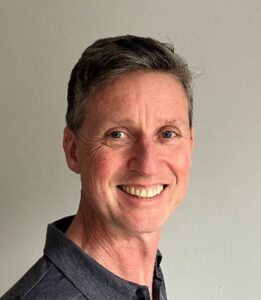
By David Beech BSc (Hons) PhD FMedSci
After studies in biophysics, pharmacology and physiology at universities in Manchester, London and Seattle, David established a research group in Leeds adjacent to one of the UK’s largest teaching hospitals to better understand ion channels in cardiovascular biology and seek human health benefits from the new understanding. His work focussed mostly on the idea of multiple distinct calcium ion entry pathways determining spatial and temporal availabilities of intracellular calcium ions for cellular control in health and disease when there can be devastating consequences of calcium ion dysregulation. When he started in research, there was no knowledge of the panoply of pathways, activators and modulators that would become apparent. With fantastic team members and collaborators, he discovered PIEZO1 channels as pivotal force sensors of cardiovascular biology, opening an entirely new field of inquiry, while our discoveries of heteromeric TRPC1/4/5 channels and their polymodality in cardiovascular injury and inflammation paved the way for new understanding of protein structure and multimillion-pound investment in therapeutic drug discovery.
https://medicinehealth.leeds.ac.uk/medicine/staff/1121/professor-david-j-beech
We spoke to David as part of our 150 voices of physiology series, about his career, and his hopes for the future of physiology.
I first became involved in the Society as a PhD student when I submitted an abstract for oral communication in a meeting at University College London almost 40 years ago. It was about a toxin from scorpion venom blocking potassium channels. The abstract was ultimately cited 17 times over 25 years, so even this little contribution, made possible by the Society, had its impact. I recall the daunting environment of the meeting, with senior investigators leading a merciless culture of demanding questions and answers. The auditorium was classical, packed with people and energy.
I first published in the Society’s leading journal, The Journal of Physiology, 2 years later, feeling the rigours and benefits of its peer-review. My application for Society membership was accepted 3 years on and I was proudly in. I was a Journal of Physiology reviewing editor 5 years later, had a stint as senior editor, and I have published 20 Journal of Physiology articles so far, including a 2024 reflection on my PhD supervisor’s life and a 2026 Journal Club commentary co-authored with an inspiring new physiologist from China.
The Society impacted on me in many positive ways but perhaps most importantly by providing a community of investigators with genuine interests in understanding physiology and exposing real facts about it. I met friends and collaborators, was challenged, and I listened and learned. It provided me with opportunities to speak at stimulating conferences, so I could advertise my work, engage in debate and experience other ideas and perspectives. My first talk was in Nagoya at a joint meeting of the Irish, Japanese and UK societies and I later spoke at other Society meetings in the UK and Australia, Germany, Ireland and Russia, thus travelling and enjoying time with a broad range of people. The Society brought opportunities for me to organise meetings across the breadth of physiology and on focussed topics, sometimes in spectacular locations such as Rio de Janeiro. It brought vacation scholarship funding for aspiring physiologists to obtain hands-on experience in my lab and opportunities for my PhD students to win prizes that boosted their prospects.
In this anniversary year, I was fortunate to speak on one of my favourite topics, endothelial PIEZO1 channels, at a Society meeting about organ microcirculatory control in the inspiring setting of Oxford University. For two days, we talked about how this physiology works. We had a wonderful and productive time, with a gentler atmosphere than 40 years ago and, on a balmy evening, talked science over wine until late.
I was also fortunate this year to lead scientifically on a Society meeting entirely about PIEZOs and the physiology of mechanobiology. It was at the superb convention centre in Glasgow and part of a larger event led by the Institute of Physics synergising multiple society interests. Of course, I enjoyed thinking only about PIEZOs for three days and the wonderful talks of outstanding investigators such as Serena Zacchigna, Bailong Xiao and the Nobel Laureate Ardem Patapoutian, but it was also a huge pleasure to work with the Society’s team. The Institute of Physics organisers were full of praise too, earnestly expressing their desire to partner again.
Sydney Ringer’s work published in The Journal of Physiology almost 150 years ago nicely illustrates the importance there has been of experiments and inquisitive minds in advancing knowledge and understanding of physiology. I hope in 50 years this approach remains significant. Indeed, I sense it may be critical if we are to continue our progress. Nevertheless, approaches will change. The power of computation may well bring transformative advantages beyond what it already did. Physiology is wonderful but too complex for our minds alone to understand. The era of artificial general intelligence, used in the right ways, could be highly advantageous for digesting, comprehending and using the vast knowledge humanity so diligently and skilfully acquired about physiology and may acquire in the future on an even grander scale.