

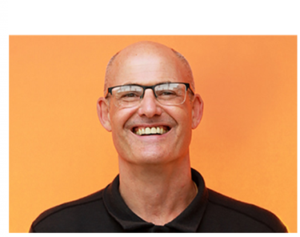
By Professor Nick Freestone
Nick is an Associate Professor at Kingston University. Given the multi-cultural learning environment that Nick operates in, his academic practice has been firmly rooted in the principles of Equality, Diversity and Inclusivity to suit the learning needs of his extremely diverse student audience.
Nick has undertaken the transition from embedding EDI principles within his own teaching contexts to a wider policy milieu by his participation in the EDI committees of a number of bioscience learned societies. Perhaps most impactful has been his contribution to the Society of Experimental Biology’s Awards Taskforce, which seeks to diversify the potential pool of applicants to their suite of prizes. Two of his nominees have been ultimately awarded these prizes in the last two years.
In addition, the Network of Equality Champions at Kingston University that Nick is a founder member of was shortlisted for the Times Higher Education Award in the category of “Outstanding Contribution to EDI” in 2022.
Nick Freestone is the 2027 winner of The Otto Hutter Physiology Teaching Prize and Lecture. We spoke to Nick as part of our 150 Voices of Physiology series.
What first inspired you to go into physiology or your area of research?
Going into a full-time lecturing role in a teaching-focussed HEI I had to make the dispositional shift of seeing my interest in physiology as primarily a research undertaking to one of making physiological principles more accessible and understandable to students. The skills necessary to undertake a laboratory-based inquiry into physiological areas of interest are very different from those needed to help others understand physiology. Most of my research career was spent in a darkened room staring at fluorescently labelled cardiac cells down a microscope. Thus, I had to acquire knowledge and techniques to enabled me to be a useful interpreter of the mysteries of physiology to learners.
Can you share a project you’ve worked on that you’re especially proud of?
I was aided in this task by my experience of working on some very understandable but very unusual physiology relating to a novel β1-adrenergic receptor in cardiac cells – the low affinity βl-adrenoceptor. This is a propranolol-insensitive receptor found in mammals, including humans, that mediates positive inotropic, chronotropic and lusitropic changes in cardiac function. The physiological or pathophysiological relevance of this receptor is still not known, although it appears to mediate markedly pro-arrhythmic calcium release events within cardiac cells.
Who or what has inspired you most during your career?
In answer to this question I was always cite Dr Roland Vetter who supervised aspects of my PhD training during a memorable year in east Berlin in 1990 at the Max Delbruck Centre (which was the repository of Lenin’s brain!) – the year after the fall of the Berlin Wall. A very interesting time with very interesting individuals in the Molecular Cardiology Lab in Haus 54 set up by Wollenberger (he of the liquid nitrogen clamps fame). As a rather directionless individual at that time this experience showed me that one could live a life in science and find purpose and meaning in this work. Here too I met my wife!
Why do you think physiology is such an important science today?
Physiology is life! In an age of unfounded beliefs and bias, physiology provides hard evidence as to how we might improve our own lives and the lives of others, whether this be through advances in medical physiology, exercise physiology or plant physiology. It is the most immediately relevant and compelling of the sciences I feel.
Please tell us more about your 2027 prize lecture,The Otto Hutter Physiology Teaching Prize and Lecture
I look forward with great anticipation to delivering a Prize Lecture. I’m currently thinking about how I can provide a balance between the positive side of how physiology has provided a career structure for me and personal development and success and the current stresses and strains within our universities and wider society. At the recent 150 year birthday celebrations at the Houses of Parliament, Professor Mike Tipton emphasised that physiologists need to play their part in wider society by interacting more strategically with, and impact more purposefully on, policy makers and politicians so that decisions are made with the benefit of our expertise and evidence.
What does “the future of physiology” mean to you?
The future of physiology means for me the continued presence of physiology within our universities and curricula as a thriving and independent cognate discipline. It means physiologists having a role in national policy-making and a higher profile in wider society explaining the complex nature of the biological world and our role in it.
Where do you hope to see the field — and the Society — 50 years from now?
In 50 years from now I would hope that the Society has just celebrated its 200th birthday at a refurbished and/or rebuilt Houses of Parliament and that that would be the hottest ticket in town with everyone keen to hear from acknowledged experts replete with hard-won expertise and knowledge. In terms of physiology more generally I would hope that it still exists as an independent discipline and that students will still be taught “physiology” by physiological experts.
What makes you most hopeful about the next chapter for physiology?
I have had occasion to be a judge for the Rob Clarke awards for undergraduate student research endeavours. I have been continually blown away by the level of work being undertaken right across the country by these individuals. Things have moved on so far from when I was a student. The work on show is always of an impressively high standard boding well for our physiological future. I think we are in safe hands.
What advice would you give to students or early career researchers starting out in physiology?
My advice to students would be to learn by doing. There is no substitute for actually doing hands-on experiments. This gives one such confidence and knowledge and the confidence to talk with other colleagues sharing similar experiences. Remember too that no effort is wasted – an experiment that goes completely wrong – might provide you with greater insight than one that goes well. In fact I’m not sure, to be honest, if any experiment ever goes completely to plan! Also don’t be afraid to try something completely “off the wall” – I’m reminded here of Fleming’s discovery of “lysozyme” from a patient’s nasal mucus – where did he come that idea from? Bonkers!