

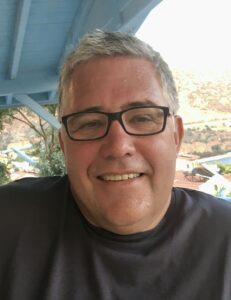
By Professor Paul Greenhaff
Paul is Professor of Muscle Metabolism at the University of Nottingham. Following the completion of his PhD at the University of Aberdeen in 1988, he undertook postdoctoral training at the Animal Health Research Trust in Cambridge, the Karolinska Institute in Stockholm, and the University of Aberdeen. He joined the faculty at Nottingham as a lecturer in 1991, establishing a lifelong career at the institution. Paul is a Fellow of the Physiological Society. His contribution to the Society includes serving as a Trustee, leading the Human Physiology Special Interest Group for over a decade, and chairing and participating in multiple Expert Groups. Additionally, his commitment to the scientific community is reflected in his three terms as a Reviewing Editor for The Journal of Physiology, where he currently serves as a Senior Editor.
Paul’s long-standing research program focuses on the in vivo regulation of human muscle metabolism in relation to exercise and nutrition. His work spans the dysregulation of muscle function during ageing, immobilisation, acute trauma, inflammation, and chronic illness, while evaluating targeted exercise, nutritional, and pharmacological interventions to counteract these pathophysiological effects. This expertise has seen him hold leadership roles within MRC, Arthritis UK, and NIHR research centres of excellence at the University of Nottingham. Alongside his research, he remains actively committed to education, teaching physiology to undergraduate medical and sport and exercise science students.
Paul Greenhaff, The David Greenfield Human Physiology Unit, Division of Physiology, Pharmacology and Neuroscience, School of Life Sciences, University of Nottingham, Queen’s Medical Centre, Nottingham NG7 2UH
We spoke to Paul as part of our 150 voices of physiology series, about his career, his hopes for the future of physiology and his work with our Policy Team.
Motivation
What first inspired you to go into physiology or your area of research?
My late teens and early career were driven by a fascination of the limits of human exercise performance. However, I later recognized that human physiological limits can be easily eclipsed by the extraordinary physiological capabilities of other species, such as the thoroughbred racehorse. Nevertheless, I maintain that the human body is the most valid model for understanding our own physiological limits and adaptations. It provides the most appropriate insights into how we navigate acute environmental stressors and adapt in ageing and chronic disease.
Who or what has inspired you most during your career?
My career has been profoundly shaped by the extraordinary mentors and colleagues who ignited and then sustained my passion for human physiology and muscle metabolism. My training and interactions as an early career researcher provided significant intellectual vitality and lit a spark that continues to drive my work today.
Community/Society
How did you first get involved with the Physiological Society?
My involvement started as a PhD student attending meetings of the Society. The Christmas meeting was always a highlight for the Human Physiology Special Interest Group. Meetings at that time were formal, with voting on abstract acceptance!
What impact has being part of the Society had on your career?
For over four decades, the Society has been a constant in my professional journey, positively shaping my career in physiology. From my time as an Early Career Researcher receiving vital travel support, to attending and then helping to organise scientific meetings, including chairing the organising committee for the Biomedical Basis of Elite Performance conference series. As my career progressed, my contributions expanded into leadership and stewardship, granting me valuable perspectives through service on Council, chairing Society reports, and contributing as a reviewing editor and senior editor to The Journal of Physiology. Overall, this engagement has been deeply enriching.
Could you share more about the projects and work you’ve been involved in with our policy team?
I chaired the Growing Older, Better Expert Group responsible for generating the Physiological Society’s report on this topic in 2019, that highlighted the role of physiology in meeting the UK Government’s healthy ageing mission of increasing health-span. I am confident the report aided and contributed to expert advisory panel discussions to affect policy change e.g. the 2019 House of Lords Science and Technology Committee inquiry into Ageing. Other Society policy projects that I contributed to include A National Covid-19 Resilience Programme: Improving the health and wellbeing of older people during the pandemic and A National Post-Pandemic Resilience Programme: Supporting older adults to recover from the pandemic. It is essential that we actively champion the vital role of the physiological sciences in advancing government priorities and enriching public understanding of science.
Looking Forward
What advice would you give to students or early career researchers starting out in physiology?
Look for a mentor/laboratory that is researching and publishing in a discipline that you are passionate about. This will invigorate your intellectual curiosity and bring opportunities to develop your learning, understanding and career progression.
What makes you most hopeful about the next chapter for physiology?
Over the course of the 20th century physiology emerged as a quantitative research field, addressing novel questions in animal models and human volunteers with unprecedented precision. Most current physiological disciplines were defined in this time and emerged as independent disciplines. Since then, the crusading thrust of physiology has waned somewhat relative to technological advances in cell and molecular biology and population level focussed research. However, it is now recognised that dovetailing molecular and cellular discoveries with organ and whole-body physiological function is required to catalyse science progress in human health and disease. We cannot yet map multi-omic signatures to precise, time-resolved physiological adaptations, but technological advances in minimally invasive techniques, such as magnetic resonance imaging and stable isotope tracers will soon overcome this, which inspires great optimism for its future. It is a great time to be a physiologist. Here’s to the next 150 years of the Physiological Society!