

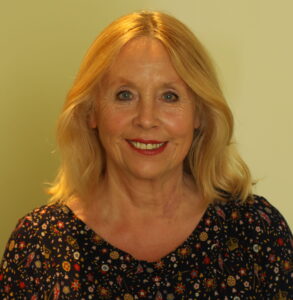
By Professor Sue Wray
Susan Wray is an emeritus professor at The University of Liverpool. She holds a BSc and PhD in Physiology from University College London. She served as Head of the Department of Physiology, Director of the Centre for Better Births, and Co-Director of the Harris Centre for Preterm Birth Research. She was also the university’s lead for equality and diversity. She is internationally recognized as an expert in uterine smooth muscle. Her research has integrated basic science discoveries with clinical needs around safe and timely labours. Her finding of the pH dependence of uterine contractility led to translational research to reduce dysfunctional labour with clinical trials using sodium bicarbonate. She is currently editor-in-chief of Current Research in Physiology. She is a Honorary Fellow of the Royal College of Obstetricians & Gynaecologists, Fellow of the Academy of Medical Sciences, Hon Fellow of the Physiological Society and Member of the Academia Europaea. She has served as President of the Federation of European Physiological Societies and President of the International Union of Physiological Societies.
Sue Wray is the 2026 winner of The Annual Review Prize Lecture. We spoke to Sue as part of our 150 Voices of Physiology series.
I grew up as the eldest of five children living in Failsworth near Oldham. I could not wait to leave home to escape helping to look after siblings and see brighter lights than those on offer locally. Although no one else I knew had gone to university, for me going there was a no-brainer. I was studying science A levels but could not decide which course or where. My biology teacher was friendly and after asking me what I enjoyed she declared I wanted to be a physiologist. “How do you spell that”, I asked. I selected UCL and loved it, London and the physiology. I continued there doing research into the uterus, first its connective tissue, then muscle and metabolism, moving on to Liverpool and EC-coupling and translational physiology.
I have always enjoyed the more biophysical end of physiology as it appeared more logical and therefore easier to pose and test hypotheses. Smooth muscle, the Cinderella of the muscle types back then, made it easier to find a niche to make one’s own, but hellish to obtain funding, especially as only half the population had a uterus, and the other half held the purse strings. Even as things became more cellular and then molecular, I always needed to fit the ideas into the bigger physiological picture. Thinking about ultimately translating my data into something that might be applied clinically was a dream that only took about thirty years to fulfil. I started by being curious and confused about what the effects of protons would be on vascular and uterine smooth muscles. I never thought this would lead to novel ideas and impacting on difficult labours and provide the possibility of new ways to help women suffering such labours. You will have to attend my Annual Review Prize Lecture later this year to find out more.
It is satisfying that everything seems to come back to physiology. We physiologists just have to continue pointing that out. The Society plays a powerful role in advocating for us and the subject. The doomsayers were wrong, physiology is not dying, it is more that they do not know how to spell it. We should all be loud and proud for physiology and dare to speak its name.
The Physiological Society has been a constant throughout my career. I am grateful for the opportunities, stimulation, networking and dinners it has given me. Lifelong colleagues and friends are made at the Society’s meetings. I am proud of the project I undertook with Tilli Tansey and the society to produce a book celebrating 100 years of Women’s membership of the Physiological Society, in 2015. The improvement in diversity within the Society is an achievement the Society, including staff and trustees, can be rightly applauded for.
I gave my first Communication at the Marine Biological Laboratory in Plymouth. I travelled down with a fellow PhD student. Unfortunately, that evening she came down with a painful attack of cystitis. We spent about four hours travelling on foot to eventually get her some medication. Not much sleep, but my nerves saw me through the next morning. As I kept to time, answered the questions, and had my Communication accepted, I wanted to attend more meetings and get involved with the Society.