Associate member, Dr Badugu Infant Mario Raja MBBS, MD
Department of Physiology, Government Siddhartha Medical College, Vijayawada, India
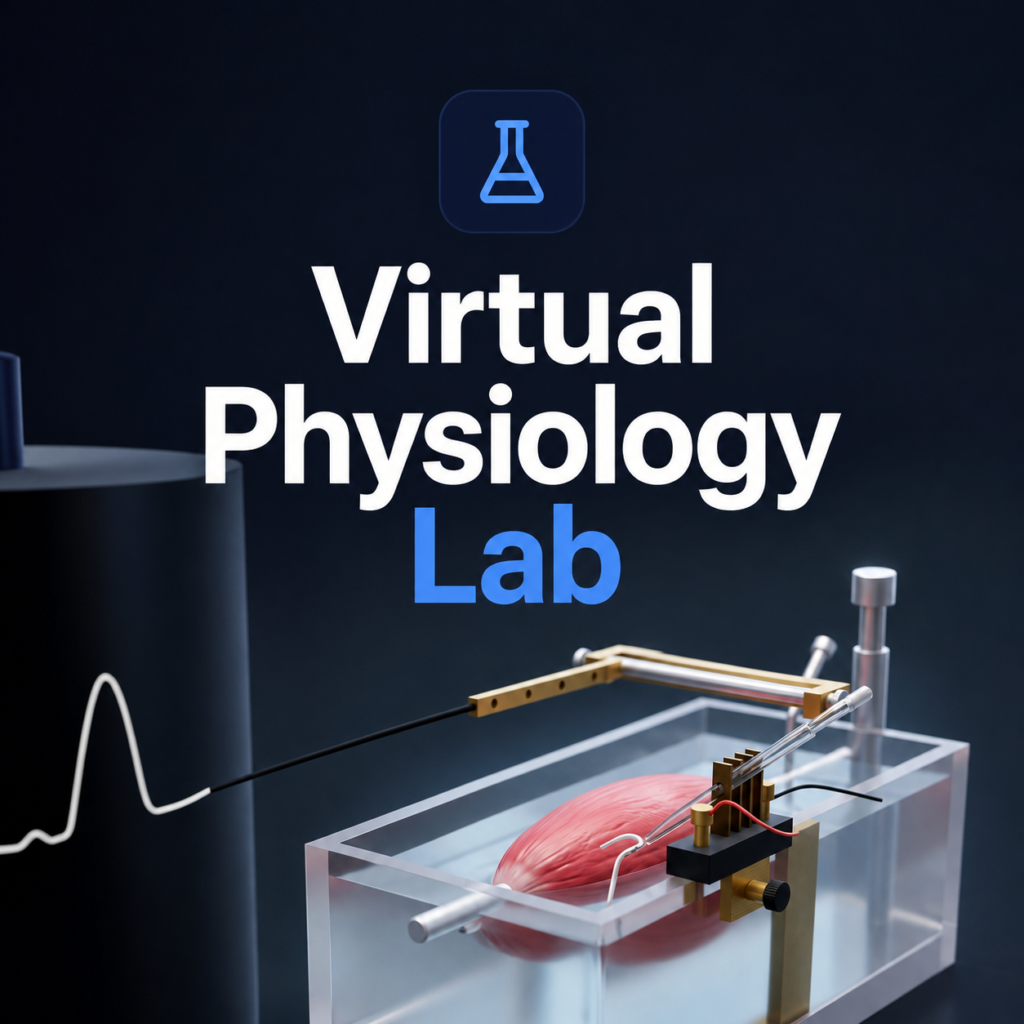
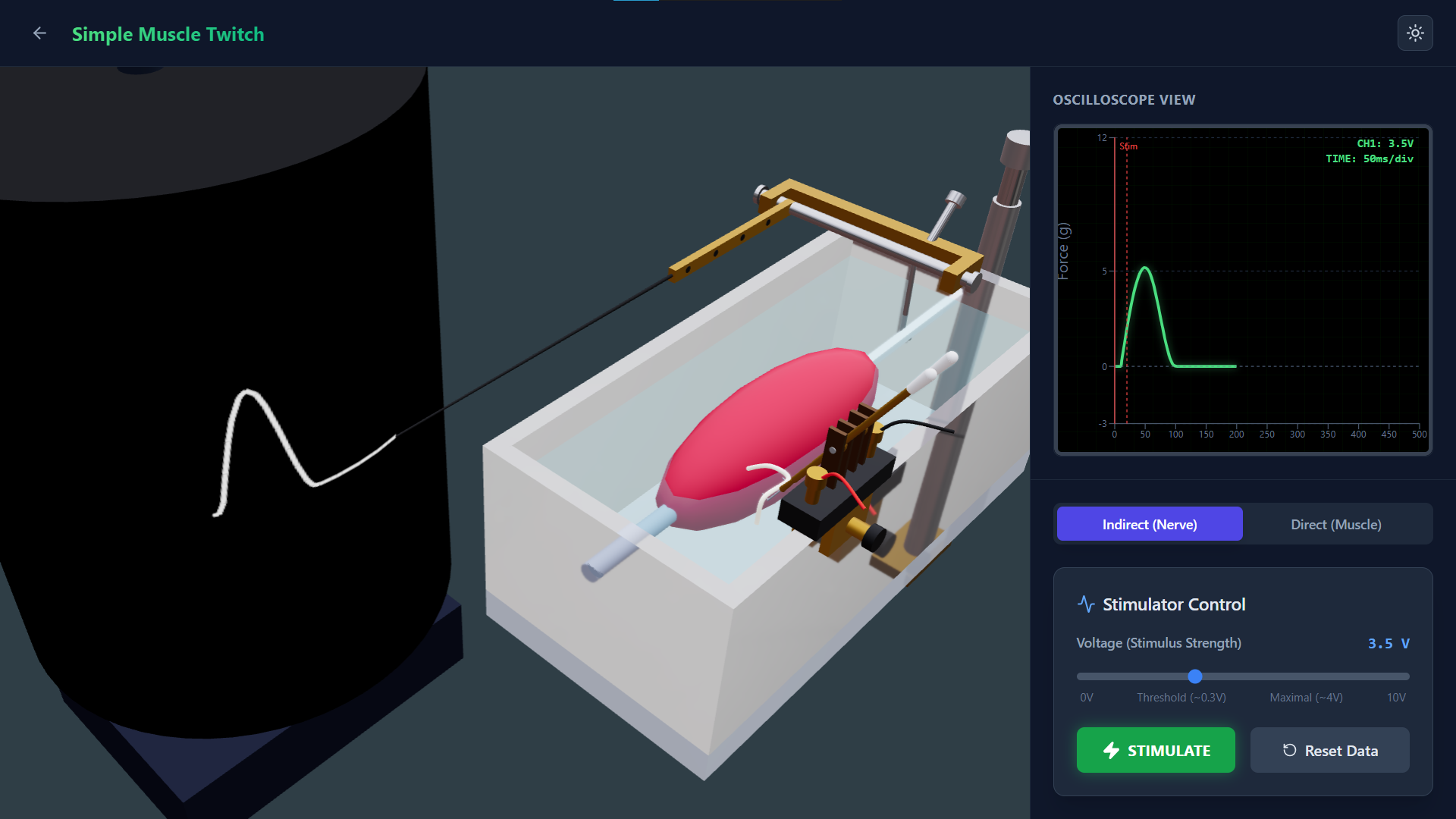
Imagine a first-year medical student learning physiology practicals for the first time with limited access to laboratory resources. Now picture that same student late at night, phone in hand watching a muscle twitch trace appear on a virtual kymograph in real time with a single click of the “Stimulate” button. That is what I wanted to build. And after months of late evenings and a lot of JavaScript, it now exists.
What is the Virtual Physiology Lab?
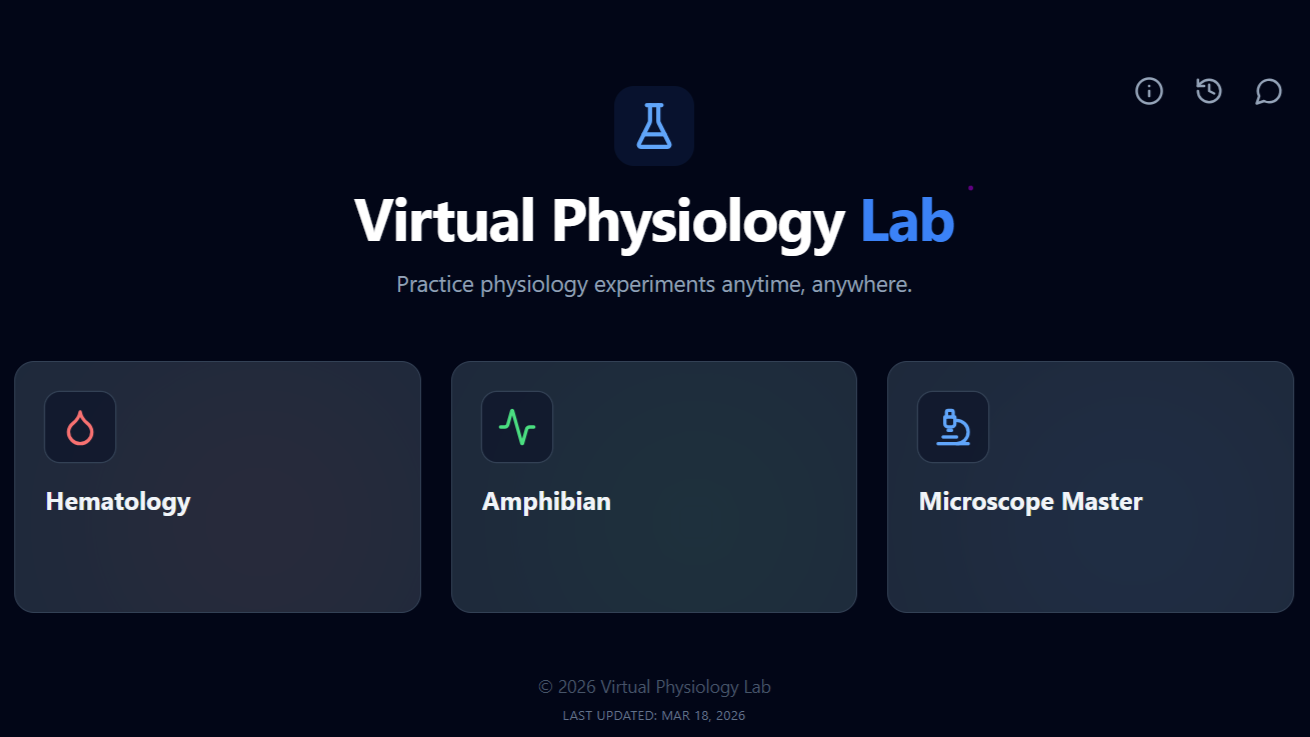
The Virtual Physiology Lab (VPL) is a free, browser-based platform that brings physiology experiments to life through interactive 3D models and simulations. Built for medical and medical technology students, it enables learners to explore and practice physiology experiments anytime, anywhere. The platform is organised into three modules:
Hematology covers white blood cell (WBC) count, total leukocyte count (TLC), red blood cell (RBC) count, differential leukocyte (DLC) count, and a DLC identification quiz where students distinguish cell types from virtual blood smears.
Amphibian Physiology is the most expansive module, covering skeletal muscle experiments. This includes; simple muscle twitch, effect of load, genesis of fatigue, two successive stimuli, genesis of tetanus, effect of temperature, effect of stimulus strength, and conduction velocity. These are alongside cardiac experiments, such as the normal cardiogram and properties of cardiac muscle.
Microscope Master trains students in operating a virtual microscope focusing, selecting magnification power, navigating slides, skills that are difficult to practice outside a scheduled lab session.
Why I built it
In India, the Committee for the Purpose of Control and Supervision of Experiments on Animals (CPCSEA) is improving laboratory animal welfare and the use of live animals in undergraduate physiology teaching has greatly reduced. While this is an important step forward, it means that many students may never observe classic experiments such as a frog heart preparation or a muscle twitch recorded on a kymograph.
The Virtual Physiology Lab was developed to help bridge this gap. Through interactive simulations, students can explore these experiments on a phone or laptop, gaining a deeper understanding of physiological principles while supporting the move toward more ethical and accessible education.
I built the VPL as a practice tool, a space where students can work through experiments vividly and independently. Seeing the twitch waveform, watching fatigue develop across successive contractions, tracing the genesis of tetanus from summation through live interaction on the web.
How students use the resource
Students can use the VPL during the hours when they can’t gain physical access to a lab on campus, whether this be the night before an exam, or travelling on a train between cities. The DLC quiz proved unexpectedly popular: distinguishing cell types on screen is genuinely challenging, and students keep retrying until they got it right. That kind of low-stakes repetition is hard to replicate in a real lab where slides are limited and time is short.
A physiology lab in every pocket
Simulations are not a replacement for hands-on experience. But they can fill genuine gaps in preparation, revision, and accessibility. The vision behind the Virtual Physiology Lab is simple: to shrink an entire physiology laboratory to the size of a smartphone and place it in every student’s pocket. Curiosity should not end when the laboratory door closes.
The platform works on any modern browser, including mobile. Watch the trailer below for a quick guide on using the platform, and click on the link to start practicing physiology experiments: https://mrnerd96.github.io/virtual-lab