

Working on fair access to medical education: Q&A with Dr Simon Cork, 2026 Prize Lecture recipient
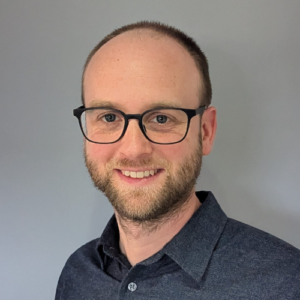
Dr Simon Cork, Anglia Ruskin University School of Medicine (UK)
“…it transformed my life,” shares Simon Cork of the widening participation initiative that supported his undergraduate studies at Durham University. He was the first in his family to achieve post-16 qualifications, the first to go to university, and the first to leave the area where he grew up. Simon is now a Senior Lecturer in Physiology at Anglia Ruskin University (ARU) School of Medicine and an advocate for greater equity in access to education.
In June, Simon will be delivering The Widening Participation in Physiology Prize Lecture, the Physiological Society’s annual lecture that celebrates impactful work in increasing the number and diversity of people studying and conducting research in physiology. Read the Q&A to find out more about Simon’s career and his dedicated work to widening access to medical education.
What inspired your interest in physiology?
I studied Biomedical Sciences at Durham University, and truth be told the only thing I found really interesting was neuroscience and physiology. I loved the fact that what we were studying encompassed the entire body and integrated different systems together, rather than a more reductionist view that I found with other specialisms.
I did my third year honours project investigating the expression of nitric oxide synthase in hypothalamic paraventricular neurons with Professor Susan Pyner, which then led to an offer to study for a PhD after I graduated, investigating receptor expression changes in the PVN in hypertension and pregnancy.
How did this lead to specialising in the regulation of appetite and body weight?
As with most of my career, it wasn’t pre-planned. I had spent a lot of my PhD reading papers that used patch clamp electrophysiology to measure the response of individual neurons to different stimuli, and I was really interested in learning the technique for myself. There weren’t many labs in the UK doing this technique at the time (not for systems-level research anyway), and my wife and I toyed with the idea of moving abroad, but finding a university that catered for both of our research interests was difficult.
I ended up finding a paper written by Professor Stefan Trapp, who at the time was working at Imperial College London (now at UCL), that used patch clamp electrophysiology to investigate a population of brainstem neurons that I had never heard of before – PPG neurons. It turns out these neurons are important for the regulation of appetite, and so I reached out to him to see whether he had any post-doc opportunities coming up. He had just had a grant accepted and would be advertising, so I went up to London (for the first time in my life!) to meet him and the rest as they say is history.
I spent a productive three years working with Stefan (including a move from Imperial to UCL) before moving back to Imperial to work with Professor Sir Stephen Bloom, who had just received a big European research grant to develop an implantable vagus nerve stimulator to regulate appetite. Luckily for me he was looking for someone with experience in appetite regulation and electrophysiology, but this time in whole animals.
Alongside your scientific research, you are an advocate for greater equity in education. Why is this important to you, and what motivated you to get involved in this work?
I was the first person in my family to achieve post-16 qualifications, the first to go to university, and the first to leave the area where I grew up. I didn’t know it at the time, but I was accepted into Durham University on what was a widening participation initiative (it wasn’t termed as such at the time), and it transformed my life.
Gaining access to university has not only determined my job, but also where I have lived, where I have travelled, the people I have met, my outlook on the world and who I married. I was very lucky in that sense. After working as a post-doc for a few years, I was starting to get disenchanted by the prospect of spending my working life chasing grants. My wife was also a post-doc at the time, we had a mortgage and a child, I couldn’t afford the insecurity that came with that life, nor did I find I was getting the kind of enjoyment I wanted from it anymore.
I had done some teaching ever since my PhD days and found myself wanting to do more of it as a post-doc, as I found it really enjoyable. So, I jumped at any and every opportunity that came up. There was an opening to join the small team at King’s College London who worked on their widening access medicine programme (the Extended Medical Degree Programme). It was a big decision to move from pure research to pure teaching, but in hindsight it was the best decision I ever made (and in the end, didn’t put a stop to research).
I learnt there that medicine (which in its broadest sense is just applied physiology with a bit of pharmacology thrown in) has a significant access issue that resonated a lot with me. Four-fifths of medical students originate from higher socioeconomic backgrounds, 80% of medical students come from 20% of schools in the UK, and applicants from independent schools are four-times higher than expected. It’s not that people from backgrounds other than these don’t want to study medicine, but the system is against them. I felt that, given my own lived experiences, this was an area where I could really make a difference.
Tell us about your initiatives for widening access to medical education
I was lucky enough to land my current job at Anglia Ruskin University just a couple of years after the medical school opened. The benefit of working at a new medical school is the layers of bureaucracy that tend to build up over time have not yet set in. As admissions lead, I am given much more freedom to implement policies than many of my peers at other, more established medical schools.
Admission to medical school is highly competitive, requiring applicants to undertake work experience, take a national pre-entrance exam (the University Clinical Aptitude Test (UCAT) – the score from which is used to shortlist candidates to interview and often involved in offer making decisions), be interviewed and achieve high GCSE and A level grades.
Research consistently shows that students from lower socioeconomic backgrounds are less likely to succeed in their applications than those from less disadvantaged backgrounds, with each of the application steps acting as a barrier. Research also shows that a diverse medical workforce leads to better patient outcomes, underscoring the importance of addressing this issue.
Over the years I have implemented a number of policies that have led to us recruiting sector leading levels of widening participation students onto our medicine programme.
I implemented an evidence driven Widening Access to Medicine Scheme (WAMS), that acknowledges that some students face social and/or educational disadvantage that does not dictate their future potential. Through this scheme, we identify such candidates at the application stage, uplift their UCAT score by 5% (data from UCAT shows such students achieve on average 5% lower UCAT scores than non-disadvantaged candidates) and give them a lower offer at A level. Crucially, this does not dilute the quality of students we attract, with ARU having one of the highest continuation rates of any medical school in the country.
Research shows that students who receive free school meals or who have experienced care are some of the most disadvantaged when applying to university, particularly to high tariff courses such as medicine. At ARU, we have implemented a policy of guaranteed interviews for these students, regardless of how well they score on the UCAT. This year we invited over 250 applicants to interview through this scheme.
I am also proud that ARU are the first medical school in the country to acknowledge the strong academic potential that T level students offer. T levels are industry-specific Level 3 qualifications (equivalent to A levels) that combine academic and placement-based learning aligned to specific industries. The T level Health course is closely aligned to the General Medical Councils Outcomes for Graduates (which outlines the expected skills of graduating doctors) and we are recruiting our first students from this course in September 2026. This opens the door to a medicine career for upwards of 7000 students (growing at 30-50% per year), and I am working with government and industry bodies to advocate for this entry route nationally. Of note, around 25% of T level Health students have received free school meals, making this a significant widening participation initiative as well.
I was also privileged to lead on the admissions process for the Medicine (Doctor) Degree Apprentice. This unique entry route combines the same medical studies that other students undertake, with paid employment with a local NHS trust, providing these apprentices with a salary and covering their tuition fees. Over two cohorts we admitted 50 apprentices, of which 70% meet strict widening participation criteria, many of whom would not otherwise have been able to afford to go to medical school.
I’m proud to also sit on the Board of both the UCAT consortium and the Medical Schools Council Selection Alliance, where I advocate for fair access policies at a national level.
What changes do you hope to see for broadening participation and increasing diversity in those studying physiology?
My hope is that we get to a point of fair access, where people’s chances of getting into university are based on merit. Presently, all too often exceptionally talented people are either put off applying or fail against a system pitted against them. If we can get to a point where national-level metrics on access is equal across socioeconomic background, ethnicity, disability etc., then I think the benefits of that, not only to those individuals, but as a nation will be significant.
It’s important to be clear that, despite what some critics say, this isn’t about introducing barriers to those who haven’t experienced disadvantage, but about recognising that where there is talent (regardless of where it comes from), there is opportunity.
What does receiving the Society’s Widening Participation in Physiology Prize Lecture mean to you and your work championing EDI?
It’s obviously nice to be recognised on a personal level, but I hope this award shines a light on the important work that we’re doing at Anglia Ruskin University, not only to achieve fair access to medicine locally, but to be unashamedly proud of it as an institution.
What’s one thing about you that most people don’t know?
I seem to have developed a mid-life obsession with baking bread. In fact, I have some rolls in the oven as I’m writing this, in readiness for my lunch.
Simon Cork will be delivering his lecture The Widening Participation in Physiology Prize at ‘Celebrating Physiology in Northern Ireland’ on 25 June 2026 at Queen’s University Belfast, UK. Register now to join the celebration