Key information for Delegate Arrival
Registration is now closed.
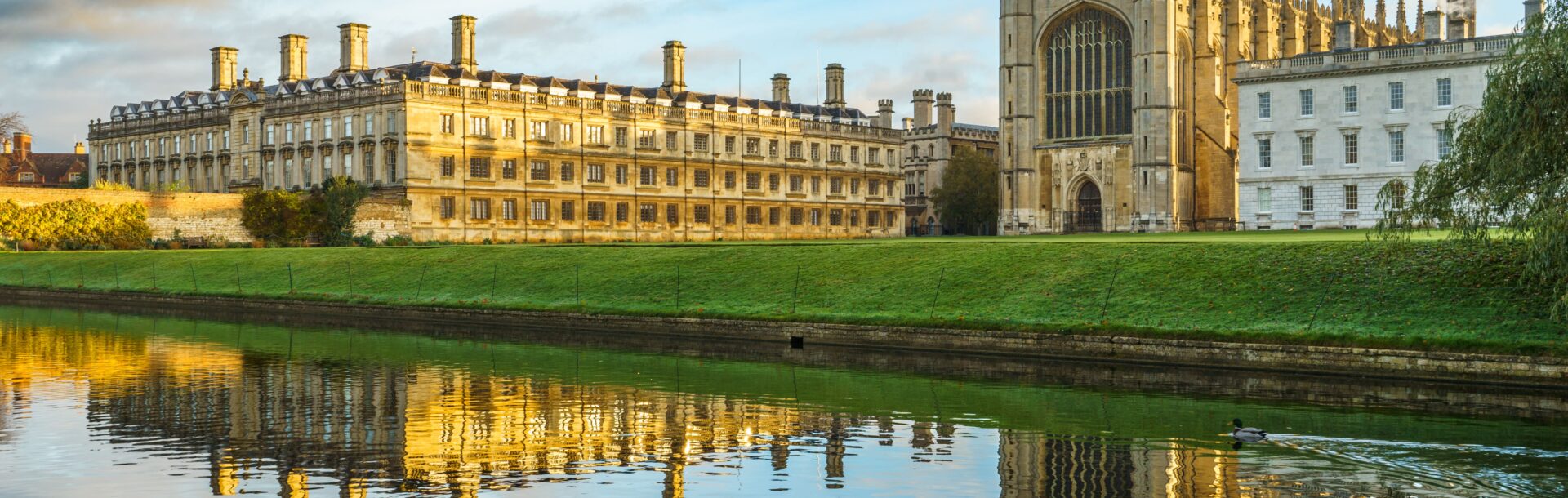
Join us at the University of Cambridge for a special celebration marking the Physiological Society’s 150th anniversary, highlighting the vital role of physiology and physiologists; past, present, and future.
The celebrations will include the Physiological Society Mabel Fitzgerald Prize for Diversity in Physiology delivered by Professor Ming Lei (University of Oxford, UK).
Designed to spark discussion and encourage meaningful exchange, the symposium combines cutting-edge science with dedicated networking opportunities to foster collaboration across disciplines.
For more information, please email events@physoc.org
Be part of the Physiological Society’s legacy
In 2026, the Society celebrates its 150th anniversary: a landmark moment to celebrate physiologists past and present, the discoveries that have shaped our understanding of the body, and the community driving physiology forward.
This meeting is one of the many exciting activities in our biggest programme of events to date celebrating this important milestone.
All abstracts presented throughout the year will be published in a special 150th Anniversary Abstract Booklet, which will become part of our historical archive capturing a snapshot of physiological research in 2026.
To celebrate our 150th anniversary in 2026, we have introduced a new, more inclusive membership model, including the launch of a new free category, Associate Member, to welcome qualified individuals and strengthen the future of the Society. This is alongside reduced global membership fees to make joining and staying involved more accessible for all.
13:40 SA01 From survival to disease: How fetal hypoxia reprogrammes the cardiovascular system
Professor Dino Giussani, University of Cambridge, UK
14:05 SA02 Structured hybrid exercise restores cardiac function in murine cardiometabolic HFpEF
Dr Ana Vujic, University of Cambridge, UK
14:30 C01 STED microscopy and transmission electron microscopy reveal mitochondrial reverse remodelling following respiratory heart rate variability pacing in heart failure
Serah 'Otukolo, University of Auckland, New Zealand
14:40 SA03 High-altitude adaptation: Metabolic lessons from the mountains
Professor Andrew Murray, University of Cambridge, UK
15:10 SA04 Cortical and collicular contributions to visual spatial detection in freely moving mice
Dr Jasper Poort, University of Cambridge, UK
15:35 SA05 Hunting down the neural pulse generators controlling fertility
Professor Allan Herbison, University of Cambridge, UK
16:00 C02 NeuroMap: Developing cortical mapping techniques for clinical application in neurological disorders
Adam Shann, Imperial College London, UK
16:35 SA06 From Foster to the future: Physiology practical class teaching in Cambridge
Professor Matthew Mason, University of Cambridge, UK
17:00 PL07 Sir Jospeh Barcroft 1872-1947: Pioneer of fetal and neonatal physiology
Professor Abigail Fowden, University of Cambridge, UK
17:25 PL06 Hodgkin and Huxley: Giants of science
Professor Steve Edgley, University of Cambridge, UK
09:00 SA07 How to build the human lungs
Professor Emma Rawlins, University of Cambridge, UK
09:25 The remarkable placenta: Shaping maternal and offspring metabolic health
Professor Amanda Sferruzzi-Perri, University of Cambridge, UK
09:50 C03 PCOS-like follicular arrest and endocrine disturbance following granulosa loss of MRP4
Dr Ye Chun Ruan, The Hong Kong Polytechnic University, Hong Kong
10:00 SA08 Genomic imprinting as a regulator of postnatal physiology
Dr Geula Hanin, University of Cambridge, UK
11:00 SA09 Insights into endocrine and metabolic phenotypes from humans carrying rare genetic variants
Professor Sir Stephen O’Rahilly, University of Cambridge, UK
13:15 Origins of obesity: Impact of obesity in pregnancy on the offspring hypothalamus
Dr Laura Dearden, University of Cambridge, UK
13:40 SA10 Using ‘omics analyses to generate new insights into adipocyte metabolism
Dr Daniel Fazakerley, University of Cambridge, UK
14:05 C04 Maternal obesity programs adipogenic commitment in neonatal mesenchymal stem cells: A link to redox‐dependent FOXO1 signaling
Dr Sofia Bellalta, University of Cambridge, UK
14:15 SA11 Unravelling obesity biology through natural genetic variation in dogs
Dr Eleanor Raffan, University of Cambridge, UK
15:00 The Hodgkin and Huxley legacy: A personal appreciation
Dr Angus Brown, University of Nottingham, UK
15:10 C05 Waveform-derived length and time constants for propagating action potentials
Dr James Fraser, University of Cambridge, UK
15:20 From the physiology department to the clinic: Electrophysiology research in a clinical setting
Dr Claire Martin, University of Cambridge and Royal Papworth Hospital, Cambridge, UK
15:50 PL08 PAK1/2 signalling and therapeutic activation in cardiac protection
Professor Ming Lei, University of Oxford, UK
Abstracts
Abstract submission is now closed. All submitters have been notified with regards to abstract acceptance and also presentation type. If you have not received an email please contact events@physoc.org
Please view our presentation guidelines in preparation for the meeting and make sure to register for the conference to join the discussions, network with peers, and expand your knowledge with the latest advancements in the field.
Key Information
Key dates
| Registration opens | 04 June 2026 |
| Abstract submission opens | 18 May 2026 |
| Abstract submission closes | 3 July 2026 |
| Conference Attendance Award deadline | 30 June 2026 |
| Registration deadline | 03 September 2026 |
| Meeting date | 17-18 September 2026 |
Venue
The meeting will take place at the University of Cambridge.
Thursday 17 September
The Physiological Laboratory,
Department of Physiology,
Downing Street,
Cambridge,
CB2 3EG
Friday 18 September
The Pitt Building,
Trumpington Street,
Cambridge,
CB2 1RP
Travel
By train
Cambridge is well connected by train and the main station is located about one mile from the city centre (around 20 minutes on foot). There is another train station, Cambridge North, around 2 miles north of the city. See National rail enquiries for train timetables and to book tickets.
There’s a taxi rank outside the main Cambridge station and buses run frequently between the station and city centre (to/from Emmanuel Street/St Andrew’s Street). The ‘Universal’ bus service route (see below) also picks up/sets down at Cambridge train station.
By bus
National Express coaches usually stop on Parkside, next to Parker’s Piece in the city centre.
Local bus services usually run to/from Cambridge bus station in Drummer Street, and/or the adjacent Emmanuel Street and St Andrew’s Street. There are frequent buses from the railway station to the city centre.
The ‘U’ / Universal bus service bus service runs from Girton and Eddington, next to the Madingley Road Park and Ride site, through to our Biomedical Campus from Monday to Sunday.
By plane
The nearest airports to Cambridge are Stansted (30 miles) and Luton (40 miles). There’s a direct train link to Cambridge from Stansted and Gatwick airports, and Heathrow airport is also easily accessible by train (via London King’s Cross/London St Pancras). In addition, buses regularly run from Stansted, Luton, Heathrow and Gatwick airports to the city centre.
Accommodation
We do not have a specific conference hotel, so attendees are able to choose accommodation which meets their needs and budgets.
Support to Attend
The grants below support attendance at our events.
Grants for Carers
We care because you do. We are aware that many of our members have caring responsibilities or need care. We have funds allocated to help you with care costs to facilitate your attendance at meetings.
Conference Attendance Award
Up to £375 for the support of member engagement at our own meetings. The deadline for this meeting is 30 June 2026.