This meeting is sold out.
Please email events@physoc.org to be added to the waiting list.
Key information for delegate arrival
Join us at the University of Oxford for a special two-day celebration marking the Physiological Society’s 150th anniversary, highlighting the vital role of physiology and physiologists; past, present, and future.
Thursday 18 June: Celebrating Physiological Legacy
The celebrations begin with an afternoon dedicated to recognising the rich heritage of physiology.
The afternoon will include insightful presentations from Professor Denis Noble (University of Oxford, UK) and Nobel Laureate Professor Sir Peter Ratcliffe (University of Oxford, UK).
The event will conclude with the unveiling of a blue plaque honouring the outstanding physiologist Sir John Eccles, followed by a drinks reception.
Friday 19 June: Exploring the Future of Physiology Symposium
The one-day symposium brings together an interdisciplinary community of internationally leading researchers to explore what lies ahead for the field. This forward-looking programme will examine the power of physiology as a discipline, methodology, and approach, showcasing how it continues to drive scientific discovery.
The programme will include:
• Plenary lectures from established scientists
• Short presentations from emerging leaders in physiology
• Two flash talk sessions enabling early-career researchers to present original research
Designed to spark discussion and encourage meaningful exchange, the symposium combines cutting-edge science with dedicated networking opportunities to foster collaboration across disciplines.
Be part of the Physiological Society’s legacy
In 2026, the Society celebrates its 150th anniversary: a landmark moment to celebrate physiologists past and present, the discoveries that have shaped our understanding of the body, and the community driving physiology forward.
This meeting is one of the many exciting activities in our biggest programme of events to date celebrating this important milestone.
All abstracts presented throughout the year will be published in a special 150th Anniversary Abstract Booklet, which will become part of our historical archive capturing a snapshot of physiological research in 2026.
To celebrate our 150th anniversary in 2026, we have introduced a new, more inclusive membership model, including the launch of a new free category, Associate Member, to welcome qualified individuals and strengthen the future of the Society. This is alongside reduced global membership fees to make joining and staying involved more accessible for all.
15:00 SA01 The biophysical basis of intracellular homeostasis
Professor Sir Peter J Hunter FRS, University of Auckland, New Zealand
16:30 Welcome
Professor David J Paterson, University of Oxford, UK
16:35 The history of the Physiological Society
Professor Denis Noble, University of Oxford, UK
16:50 The work of Sir John Eccles
Professor Sir Peter Ratcliffe, University of Oxford, UK
17:15 Plaque Unveiling Ceremony to celebrate Sir John Eccles
Professor David J Paterson and Professor Sir Peter Ratcliffe, University of Oxford, UK
08:45 Welcome
Professor Peter Kohl, University of Freiburg, Germany
08:50 Humpty Dumpty: How advanced engineering helps to decipher the heartbeat
Professor Igor Efimov, Northwestern University, Chicago, US
09:30 Re-assembly: AI at the cross-roads of integration and reduction
Professor Fu Siong Ng, Imperial College London, UK
10:10 C01 Artificial intelligence-enabled reconstruction of beat-by-beat cardiomyocyte nano-dynamics reveals mechanical auto-regulation of cardiac function
Dr Eva Rog-Zielinska, University Medical Center Freiburg, Germany
10:18 C02 Glycocalyx integrity associates with diastolic function and is therapeutically targetable in cardiometabolic diseases
Dr Stanley Buffonge, University of Bristol, UK
10:26 C03 Investigating the role of nerve growth factor in neuro-cardio-vascular co-development in a human 3D innervated cardiac muscle model
Dr Michael Gani Setya, University of Goettingen, Germany
10:34 C04 Redefining neurocardiac interactions in the human heart
Dr David Revuelta Garcia, University Medical Center Hamburg-Eppendorf, Germany
11:15 SA02 Adaptation to stress: Why reduction ain’t the answer
Professor Michael Joyner, Mayo Clinic, US
11:55 Neural-cardiac communication in organoids
Dr Maria-Patapia Zafeiriou, University Medical Center Göttingen, Germany
12:35 C05 Association between sympathetic nervous system dysregulation and ventricular arrhythmogenesis in a progressive murine model of chronic kidney disease
Katie Tompkins, University of Birmingham, UK
12:43 C06 The effect of unilateral carotid body resection on beat-to-beat blood pressure variability in resistant hypertension
Marianna Theodorou, University of Bristol, UK
12:51 C07 The role of the carotid chemoreflex in the resting hyperventilation experienced by patients with long-COVID
Dr Hazel Blythe, University of Bristol, UK
12:59 C08 Occurrence and prevention of a novel class of ischaemia-reperfusion arrhythmias
Dr Callum Zgierski-Johnston, University Medical Center Freiburg, Germany
13:45 SA03 Lessons learned from pacemaking: More players for a single function, more functions for a single player
Professor Dario DiFrancesco, University of Milan, Italy
14:25 Mechanics and pacemaking
Dr Eilidh MacDonald, University of Glasgow, UK
14:40 Patient specific modelling and simulation: fact or fiction?
Professor Caroline Roney, Queen Mary’s University London, UK
15:20 SA04 Linking wet and dry lab to control rhythm disturbances
Dr Jakub Tomek, University of Oxford, UK
15:35 SA05 A device for dynamic FAD measurements in the human heart ex vivo model and an in vivo large animal model
Dr Eric Rytkin, Northwestern University, US
16:30 The cell is swell, but the issue is tissue
Professor Alan Garfinkel, University of California, Los Angeles, US
17:10 Slaves or masters: Interstitium vs. stroma
Professor Peter Kohl, University of Freiburg, Germany
17:50 Closing Remarks
Professor David J Paterson, University of Oxford, UK
Registration
Registration is now closed.
To celebrate our 150th anniversary in 2026, we have introduced a new, more inclusive membership model, including the launch of a new free category, Associate Member, to welcome qualified individuals and strengthen the future of the Society. This is alongside reduced global membership fees to make joining and staying involved more accessible for all.
| Membership category | Early registration rate until 04 May 2026 | Standard registration rate until 04 June 2026 |
| Member * | £35.00 | £70.00 |
| Non-member | £35.00 | £70.00 |
*Members are required to pay a refundable fee to secure attendance, helping to manage capacity and ensure commitment. This fee will be reimbursed at the end of the event.
Before registering, please read our event terms and conditions.
Member registration
In order to register as a member, you first need to log in with username and password. The system will default to the correct fee for your membership category.
Should you have any queries, please email events@physoc.org
Non-member registration
In order to register as a non-member you need to create a guest account.
Non-member rates include a complimentary one-year Society membership. Non-member attendees will be contacted after the event to confirm their membership activation.
By joining as a member, you will benefit from reduced registration and other key member benefits including:
- Free online access to The Society’s three world-class journals
- Free or discounted registration for Society events
- Eligibility for Society’s grant schemes
To find out more about membership with The Society, please click here or email membership@physoc.org
Applying for a visa
Do you need a visa to be able to participate in the meeting?
To check whether you need a visa to be able to attend, please click here
For more detailed information, application forms and guidance notes, please visit the official UK visa website.
It is recommended that you apply for your visa well in advance (at least 12 weeks before the meeting) as applications for UK visas in certain countries can take longer than expected. Attendees are requested that they book early enough and apply for a visa with sufficient time prior to the conference.
The conference organisers cannot be held responsible if delegates do not receive their visas in time, and the cancellation policy will automatically apply. Every effort will be made to support genuine applications. The conference organisers are happy to provide you with documentation to support your application which will be sent as a PDF attachment. If you require a hard copy to be sent to you, please include your mailing (postal) address. The Physiological Society will only send via regular post.
Documentation to support visa applications will only be provided to those attendees who have registered to attend.
Please complete the webform below, and attach confirmation of your registration, and submitted abstract (if appropriate).
Supporting documentation will be distributed within 10 working days – it is the responsibility of the attendee to allow sufficient time for processing.
Please note that The Society are not involved with and cannot influence consular decisions.
Abstracts
Abstract submission is now closed. Thank you to all who have submitted their work for consideration. All submitters have been notified with regards to abstract acceptance and also presentation type. If you have not received an email please contact events@physoc.org
All abstracts must be submitted through our abstract submission system provided by Hyperion Live Ltd. You will need to create an account on the system first to submit your abstract. Once logged in you will be able to create a new submission(s) and you can continue to log in and make amends to your abstract(s) until the deadline. If you have any issues or queries when submitting your abstract, please contact events@physoc.org.
Abstracts can be submitted in one of the following categories:
- Original research
- Case study
- Systematic reviews (including qualitative research)
- Technical paper (e.g. methods)
It is important that the following are included:
- Appropriate statistical analysis including n numbers
- Appropriate structure including intro, aims/objectives, method, results and conclusions
- Compliance with ethical standards
Please find The Society’s guidelines for creating your abstract here.
Key Information
Key dates
| Registration opens | 17 February 2026 |
| Abstract submission opens | 17 February 2026 |
| Abstract submission closes | 31 March 2026 |
| Early bird registration deadline | 4 May 2026 |
| Conference Attendance Award deadline | 30 April 2026 |
| Registration deadline | 4 June 2026 |
| Meeting dates | 18 – 19 June 2026 |
Venue
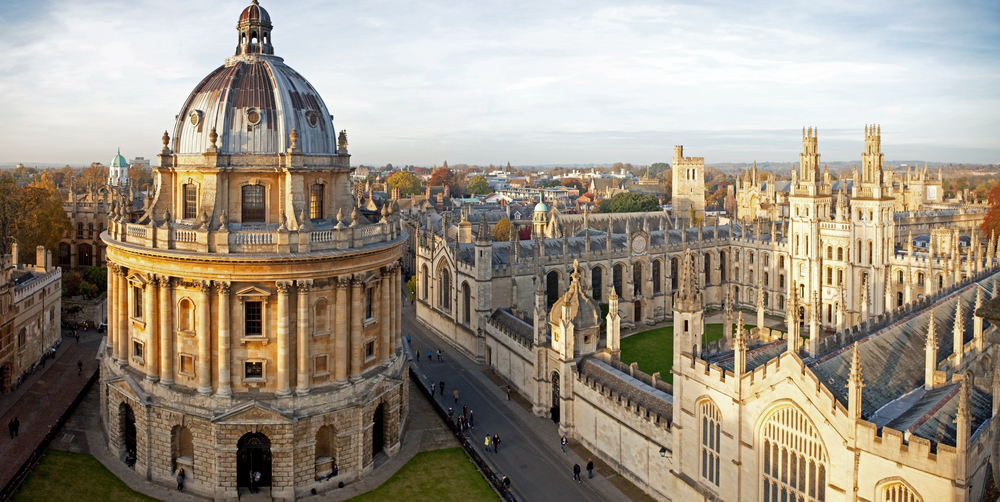
The meeting will take place at the University of Oxford.
University of Oxford,
Department of Physiology, Anatomy and Genetics
Sherrington Building,
Sherrington Rd,
Oxford OX1 3PT
Travel
The Sherrington Building is a 25-minute walk from Oxford Station.
Regular trains run between London Paddington and London Marylebone. Book your tickets here
Accommodation
We do not have a specific conference hotel so attendees are able to choose accommodation which meets their needs and budgets.
Support to Attend
The grants below support attendance at our events.
Grants for Carers
We care because you do. We are aware that many of our members have caring responsibilities or need care. We have funds allocated to help you with care costs to facilitate your attendance at meetings.
Conference Attendance Award
Up to £375 for the support of member engagement at our own meetings. The deadline for this meeting is 30 April 2026.