Dr Alistair Monteyne
University of Exeter, UK
Dr Marlou Dirks
University of Exeter, UK
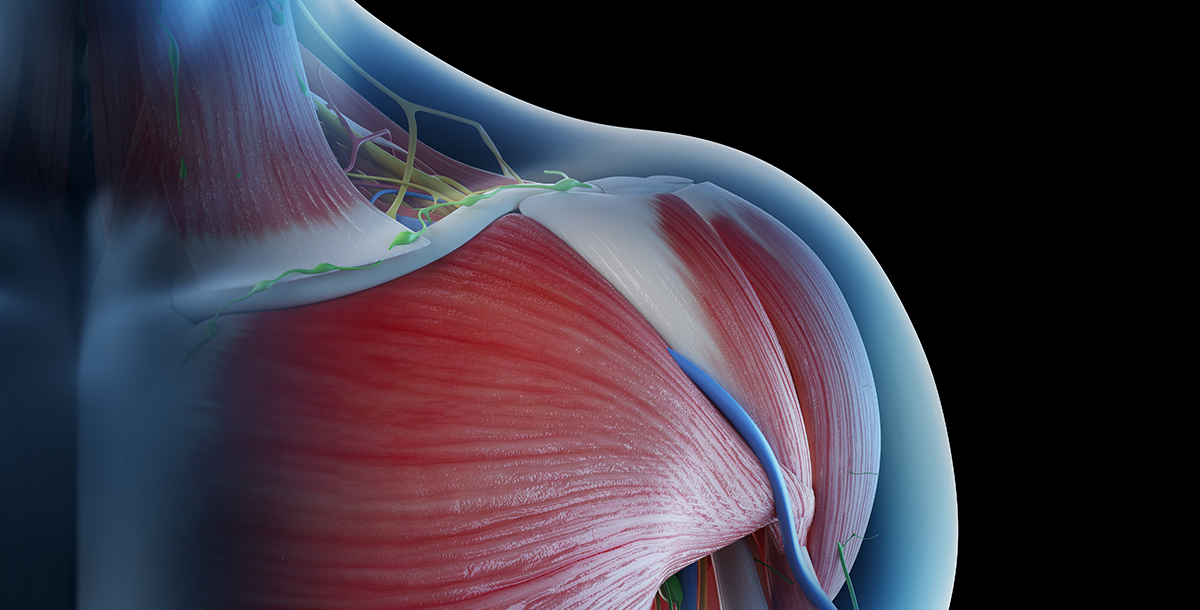
This meeting will explore recent advances in nutritional physiology as they pertain to skeletal muscle tissue. Contemporary topics will include the influence of age and sex on protein turnover, the skeletal muscle response to obesity and weight loss, ketone metabolism, and the interplay between exercise and nutrition. Over the two days, the programme will present a diverse range of emerging evidence, spanning mechanistic experimental physiology through to clinical applications.
In 2026, the Society celebrates its 150th anniversary: a landmark moment to celebrate physiologists past and present, the discoveries that have shaped our understanding of the body, and the community driving physiology forward.
This meeting is one of the many exciting activities in our biggest programme of events to date celebrating this important milestone.
All abstracts presented throughout the year will be published in a special 150th Anniversary Abstract Booklet, which will become part of our historical archive capturing a snapshot of physiological research in 2026.
Professor Andrew Jones, University of Exeter, UK
Dr Tyler Churchward-Venne, McGill University, Canada
Dr George Pavis, University of Exeter, UK
Professor Javier Gonzalez, University of Bath, UK
Max Davis, University of Bath, UK
Matthew Davitt, Lancaster University, UK
Dr Jacintha Domic, Wageningen University, Netherlands
Gabriel Eksteen, University of Leuven, Belgium
Dr Patricia Duque-Estrada, University of Copenhagen, Denmark
Professor Clemence Blouet, University of Cambridge, UK
Professor Luc van Loon, Maastricht University, The Netherlands
Jordan Acheson, University of Birmingham, UK
Dr Bibiana Eiya, University of Benin, Nigeria
Ansley Li, University of Glasgow, UK
Dr Shehu-Tijani Toyin Shittu, Crescent University, Nigeria
Jinmeng Yang, Wangingen University, Netherlands
Rebecca Young, University of Bath, UK
Professor Ellen Blaak, Maastricht University, The Netherlands
Professor Dan Cuthbertson, University of Liverpool, UK
Dr Gráinne Whelehan, University of Leicester, UK
Professor Stuart Gray, University of Glasgow, UK
Professor Brian Carson, University of Limerick, Ireland
Dr John Noone, University of Limerick, Ireland
Vinicius Faria, Dublin City University, Ireland
Dr Catrin Herpich, German Institute of Human Nutrition Potsdam-Rehbrücke, Germany
Dr Konstantinos Prokopidis, University of Liverpool, UK
Dr Harry Smith, University of Bath, UK
Dr Marianna Apicella, University of Leicester, UK
Dr Oscar Horwath, Karolinska Institutet, Sweden
Dr Simon Dreher, Universitätsklinikum Tübingen, Germany
Registration is now closed.
To celebrate our 150th anniversary in 2026, we have introduced a new, more inclusive membership model, including the launch of a new free category, Associate Member, to welcome qualified individuals and strengthen the future of the Society. This is alongside reduced global membership fees to make joining and staying involved more accessible for all.
| Membership category | Early registration rate until 07 July 2026 | Standard registration rate until 27 July 2026 |
| Undergraduate & Master’s member | £50.00 | £100.00 |
| Postgraduate member | £50.00 | £100.00 |
| Full member (concessionary) * | £50.00 | £100.00 |
| Full member | £100.00 | £150.00 |
| Fellow member | £100.00 | £150.00 |
| Honorary Fellow | £100.00 | £150.00 |
| Retired member | £50.00 | £100.00 |
| Associate member | £150.00 | £200.00 |
| Non-member | £200.00 | £250.00 |
| ECR Non-member * | £100.00 | £150.00 |
*please email events@physoc.org for the discount code
Please note, Full Member (concessionary) refers to those who have Full Membership at the reduced rate.
Before registering, please read our event terms and conditions.
In order to register as a member, you first need to log in with username and password. The system will default to the correct fee for your membership category.
Should you have any queries, please email events@physoc.org
In order to register as a non-member you need to create a guest account.
Non-member rates include a complimentary one-year Society membership. Non-member attendees will be contacted after the event to confirm their membership activation.
By joining as a member, you will benefit from reduced registration and other key member benefits including:
To find out more about membership with The Society, please click here or email membership@physoc.org
Do you need a visa to be able to participate in the meeting?
To check whether you need a visa to be able to attend, please click here
For more detailed information, application forms and guidance notes, please visit the official UK visa website.
It is recommended that you apply for your visa well in advance (at least 12 weeks before the meeting) as applications for UK visas in certain countries can take longer than expected. Attendees are requested that they book early enough and apply for a visa with sufficient time prior to the conference.
The conference organisers cannot be held responsible if delegates do not receive their visas in time, and the cancellation policy will automatically apply. Every effort will be made to support genuine applications. The conference organisers are happy to provide you with documentation to support your application which will be sent as a PDF attachment. If you require a hard copy to be sent to you, please include your mailing (postal) address. The Physiological Society will only send via regular post.
Documentation to support visa applications will only be provided to those attendees who have registered to attend.
Please complete the webform below, and attach confirmation of your registration, and submitted abstract (if appropriate).
Supporting documentation will be distributed within 10 working days – it is the responsibility of the attendee to allow sufficient time for processing.
Please note that The Society are not involved with and cannot influence consular decisions.
Abstract submission is now closed. All submitters have been notified with regards to abstract acceptance and also presentation type. If you have not received an email please contact events@physoc.org
Please view our presentation guidelines in preparation for the meeting and make sure to register for the conference to join the discussions, network with peers, and expand your knowledge with the latest advancements in the field.
| Registration opens | 02 March 2026 |
| Abstract submission opens | 01 April 2026 |
| Abstract submission closes | 31 May 2026 |
| Early review deadline | 15 April 2026 |
| Early bird registration deadline | 07 July 2026 |
| Conference Attendance Award deadline | 30 June 2026 |
| Registration deadline | 27 July 2026 |
| Meeting dates | 25 – 26 August 2026 |
The meeting will take place in the XFi Building at the University of Exeter, Streatham campus.
University of Exeter XFi Centre for Finance and Investment
Rennes Dr
Exeter
EX4 4ST
Below are directions to the campus. The conference venue is building 30 on the university campus map.
By train
The venue is a 20 minute walk from both Exeter St David‘s and Exeter Central rail stations. Taxis are available outside the station.
Plan your journey here.
By bus
National Express bus routes stop at Exeter coach station from various locations in UK.
The conference venue is a 20 minute walk from the coach station.
Plan your journey here.
Local UNI buses run between the city centre and the university.
By taxi
Apple Taxis Exeter have a dedicated taxi rank on campus. Apple Taxis have offices at both Exeter St David’s rail station and Exeter International Airport.
By plane
Exeter is served by Exeter International Airport. There are direct flights from various airports in the UK and Ireland.
Accommodation
We do not have a specific conference hotel so attendees are able to choose accommodation which meets their needs and budgets.
A limited number of University accommodation rooms are available to book at Holland Hall, which is a 13 minute walk from the conference venue.
The following hotels are also within walking distance of the venue:
The grants below support attendance at our events.
We care because you do. We are aware that many of our members have caring responsibilities or need care. We have funds allocated to help you with care costs to facilitate your attendance at meetings.
Up to £375 for the support of member engagement at our own meetings. The deadline for this meeting is 30 June 2026.
Partnering with us provides you with the ideal platform to highlight your brand, products and services to our members and the broader physiology community of researchers and educators.
In addition, attending our conferences also gives you an invaluable opportunity to network with influential scientists from around the UK, Europe and further afield.
All external funding is used to support the scientific community by keeping event registration fees at an affordable level and to achieve the charitable aims of The Society.
Opportunities range from a standard tabletop exhibition space, to more comprehensive sponsorship packages, including advertising, session sponsorship and speaking slots at the meeting.
To discuss your requirements in more detail and build a package that suits you, contact us today at events@physoc.org.