Dr Peter Aldiss
University of Nottingham, UK
Dr Craig Doig
Nottingham Trent University, UK
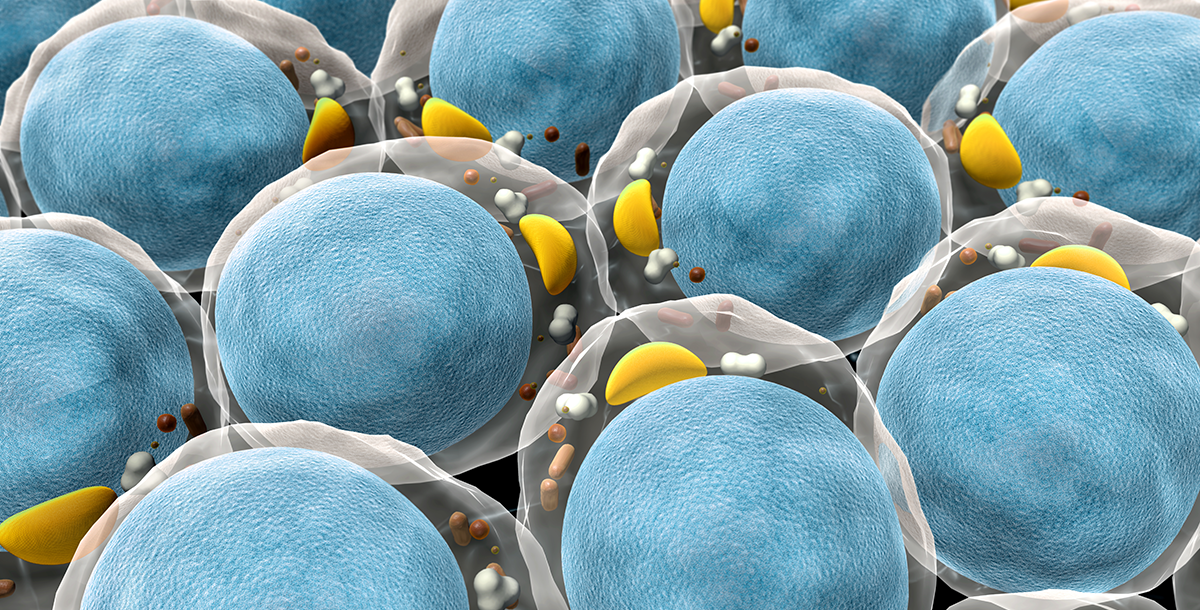
The Physiology of Obesity: From Mechanisms to Medicine began at the European Congress on Obesity in 2018 where our aim was to develop an early career researcher-led session in the obesity and metabolic disease field.
This was followed by further successful symposia at the European Congress on Obesity 2019, Experimental Biology 2019, a one-day satellite meeting in collaboration with Professor Lora Heisler (University of Aberdeen) at Physiology 2019 and, most recently, a 12 week webinar series with The Physiological Society, to compensate for the impact of Covid19 on ECRs in the field. This webinar series was attended by over 2000 individuals from 40 countries with ~12000 subsequent views on YouTube.
We now welcome you to the first in-person conference where we will explore diverse topics in the field of obesity, with a focus on groundbreaking, translational and multidisciplinary science spanning the breadth of organs and obesity-associated diseases. With 15 speaking opportunities across the two days, we continue our efforts to provide opportunities for ECRs in the field highlighting both upcoming, and leading early career researchers in the field.
Thanks to Sable Systems Europe and their generous support, there are 10 x £200 travel awards available for Early Career Researchers.
To be considered for an award the following criteria must be met:
This meeting is supported by Linton Instrumentation, Sable Systems Europe GmbH and NADMED.



Professor Neil Guha, University of Nottingham, UK
Professor Leanne Hodson, University of Oxford, UK
Dr Jo Lewis, University of Cambridge, UK
Professor Kate Ellacott, University of Exeter, UK
Dr Nimesh Mody, University of Aberdeen, UK
Dr Mark Nixon University of Edinburgh, UK
Dr Lukasz Chrobok, University of Bristol, UK
Dr Louise Hunter, University of Manchester, UK
Professor James Johnson, The University of British Columbia, Vancouver, Canada
Professor Tony Goldstone, Imperial College London, UK
Dr Nathan Hodson, Manchester Metropolitan University, UK
Emmanuel Ademilusi, University of Ibadan, Nigeria
Dr Caroline Gorvin, University of Birmingham
Professor Lee Roberts, University of Leeds, UK
Professor Alexander Bartelt, Technical University of Munich, Germany
Professor Ellen Blaak, Maastricht University, Netherlands
Professor Frankie Rawson, University of Nottingham, UK
Professor Edward Chouchani, Harvard Medical School, US
Michael Macleod, University of Birmingham, UK
Dr Amanda MacCannell, University of Leeds, UK
Dr Mireia Pérez Verdaguer, University of Padova, Italy
Dr Féaron Cassidy, Maynooth University, Ireland and Karolinska Institutet, Sweden
Lawrence Jones, Liverpool John Moores University, UK
Enoch Alex, University of Cambridge, UK
Dr Madusha Peiris, Queen Mary University of London, UK
Dr. Lauren Struszczak, British Nutrition Foundation, London, UK
Dr Emilia Tarland, TSE Systems, Berlin, Germany
Professor Torben Hansen, University of Copenhagen, Denmark
Registration is now closed.
Please read our event terms and conditions.
| Membership category | Early registration rate until 10 June 2025 | Standard registration rate until 17 June 2025 |
| Undergraduate & Master’s member | £150.00 | £230.00 |
| Postgraduate member | £150.00 | £230.00 |
| Full member (concessionary) * | £150.00 | £230.00 |
| Full member | £220.00 | £300.00 |
| Fellow member | £220.00 | £300.00 |
| Honorary Fellow | £220.00 | £300.00 |
| Retired member | £150.00 | £230.00 |
| Non-member | £440.00 | £540.00 |
| ECR Non-member * | £300.00 | £400.00 |
*please email events@physoc.org for the discount code
Please note, Full Member (concessionary) refers to those who have Full Membership at the reduced rate.
Before registering, please read our event terms and conditions.
In order to register as a member, you first need to log in with username and password. The system will default to the correct fee for your membership category.
Should you have any queries, please email events@physoc.org
In order to register as a non-member you need to create a guest account.
By joining as a member, you will benefit from reduced registration and other key member benefits including:
To find out more about membership with The Society, please click here or email membership@physoc.org
Do you need a visa to be able to participate in the meeting?
To check whether you need a visa to be able to attend, please click here
For more detailed information, application forms and guidance notes, please visit the official UK visa website.
It is recommended that you apply for your visa well in advance (at least 12 weeks before the meeting) as applications for UK visas in certain countries can take longer than expected. Attendees are requested that they book early enough and apply for a visa with sufficient time prior to the conference.
The conference organisers cannot be held responsible if delegates do not receive their visas in time, and the cancellation policy will automatically apply. Every effort will be made to support genuine applications. The conference organisers are happy to provide you with documentation to support your application which will be sent as a PDF attachment. If you require a hard copy to be sent to you, please include your mailing (postal) address. The Physiological Society will only send via regular post.
Documentation to support visa applications will only be provided to those attendees who have registered to attend.
Please complete the webform below, and attach confirmation of your registration, and submitted abstract (if appropriate).
Supporting documentation will be distributed within 10 working days – it is the responsibility of the attendee to allow sufficient time for processing.
Please note that The Society are not involved with and cannot influence consular decisions.
Submitters of successful abstracts and late breaking posters have now been notified.
Please view our presentation guidelines in preparation for the meeting and make sure to register for the conference to join the discussions, network with peers, and expand your knowledge with the latest advancements in the field.
Thanks to Sable Systems Europe and their generous support, there are 10 x £200 travel awards available for Early Career Researchers.
To be considered for an award the following criteria must be met:
The Michael J Rennie Oral Communication Prize will be awarded at this meeting. This opportunity is open to Undergraduate and Master’s members, Postgraduate members and Full members who are within five years of their PhD. The winner will receive a £200 prize, a medal and certificate.
| Registration opens | 3 February 2025 |
| Abstract submission opens | 3 March 2025 |
| Abstract submission closes | 30 April 2025 |
| Early bird registration deadline | 27 May 2025 |
| Conference Attendance Award deadline | 31 May 2025 |
| Registration deadline | 17 June 2025 |
| Meeting dates | 8 – 9 July 2025 |
Abstract decisions will be issued in advance of the early bird registration deadline.
The meeting will take place in the Trent Building at The University of Nottingham, UK.
The Trent Building
The University of Nottingham
Jubilee Avenue
Nottingham
NG7 2RD
The conference venue is building 11 on the university campus map.
By train
Services operate between Nottingham and London St Pancras, Birmingham, Leeds, Manchester, and Sheffield.
Book your tickets on the National Rail Enquiries website.
By tram and bus
The campus is 2 miles from Nottingham train station, about a 40 min walk or a short journey by public transport.
A tram goes directly from Nottingham train station to University Park, with stops at Queen’s Medical Centre, the South Entrance to University Park and adjacent to the Highfields Sports Ground.
The bus stop closest to Nottingham train station is Broadmarsh bus station (for Trent Barton’s Indigo services).
By plane
The closest airport to Nottingham is the East Midlands Airport, which mainly serves national or short international connections. Directions on how to get from the airport to the campus and further information on the local transport system can be found here.
International guests may find suitable flights to Birmingham, Manchester or any of the London airports (Stansted, Heathrow, Gatwick). The fastest way to reach Nottingham from these cities is by train directly to Nottingham or Beeston station; Beeston is closer to the university.
We do not have a specific conference hotel, so attendees are able to choose accommodation which meets their needs and budgets. The following accommodation is within walking distance or a short bus ride of the venue:
Other accommodation options can be found here.
The grants below support attendance at our events.
We care because you do. We are aware that many of our members have caring responsibilities or need care. We have funds allocated to help you with care costs to facilitate your attendance at meetings.
Up to £375 for the support of member engagement at our own meetings. The deadline for this meeting is 31 May 2025.
Partnering with us provides you with the ideal platform to highlight your brand, products and services to our members and the broader physiology community of researchers and educators.
In addition, attending our conferences also gives you an invaluable opportunity to network with influential scientists from around the UK, Europe and further afield.
All external funding is used to support the scientific community by keeping event registration fees at an affordable level and to achieve the charitable aims of The Society.
Opportunities range from a standard tabletop exhibition space, to more comprehensive sponsorship packages, including advertising, session sponsorship and speaking slots at the meeting.
To discuss your requirements in more detail and build a package that suits you, contact us today at events@physoc.org