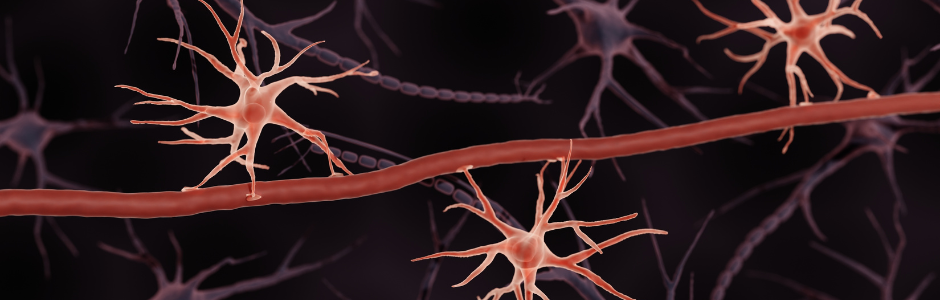
UK Glia 2026 meeting will highlight the pivotal role of glia in brain physiology, offering invaluable insights for those investigating glia function in both health and disease. Find out more about the event taking place on 8-9 June 2026.
  • Monday 08 June - Tuesday 09 June 2026

UK Glia 2026

Click here to view other past events
  • Date

    Mon 08 - Tue 09 Jun 2026

  • Location

    University of Bristol, UK

Key Information for Delegate Arrival

Joining instuctions

UK Glia 2026 will unite researchers across all career stages, from undergraduate students to leading experts, to explore the cutting-edge of glial biology.  

This meeting will highlight the pivotal role of glia in brain physiology, offering invaluable insights for those investigating glia function in both health and disease.  

It is an essential event for anyone seeking to integrate glia research into their work, addressing crucial areas like neurodegeneration and neuropsychiatric disorders.  

Be part of the Physiological Society’s legacy

In 2026, the Society celebrates its 150th anniversary: a landmark moment to celebrate physiologists past and present, the discoveries that have shaped our understanding of the body, and the community driving physiology forward.

This meeting is one of the many exciting activities in our biggest programme of events to date celebrating this important milestone.

All abstracts presented throughout the year will be published in a special 150th Anniversary Abstract Booklet, which will become part of our historical archive capturing a snapshot of physiological research in 2026.

Dr Valentina Mosienko

University of Bristol, UK

Dr Isabel Christie

University of Sheffield, UK

Dr Lucy Crompton

University of the West of England, Bristol, UK

Dr Philip Hasel

UK DRI, University of Edinburgh, UK

Professor Clare Howarth

University of Sheffield, UK

Dr Mootaz Salman

University of Oxford, UK

Dr Stavros Vagionitis

University of Cambridge, UK

Dr Lucy Wheatley

University of Edinburgh, UK

This meeting is convened by the UK Glia Network and supported by SYSY Antibodies and 2BScientificADInstruments, bit.bio, Bruker BioSpin, Hello Bio, Miltenyi Biotec, VectorBuilder and World Precision Instruments.

  • AD Instruments 40th anniversary logo
09:00 SA01 Regenerative neural plasticity: Neuroprotection and remyelination

Professor Ragnhildur Thóra Káradóttir, University of Cambridge, UK

10:30 SA02 Myelin plasticity in nervous system development and disease

Professor David Lyons, University of Edinburgh, UK

10:55 SA03 Ischaemia and amyloid beta evoked damage to the node of Ranvier and myelin

Professor David Attwell, University College London, UK

11:20 SA04 TRPA1-dependent regulation of oligodendrocyte potassium channels affects myelin function and seizure susceptibility

Dr Nicola Hamilton-Whitaker, King’s College London, UK

11:45 SA05 Myelin plasticity in adulthood

Dr Cassandra Sampaio Baptista, University of Glasgow, UK

12:10 C01 Deconstructing the roles of oligodendrocytes and neurons in mediating TDP43-related neurodegeneration

Dr Marcus Keatinge, University of Edinburgh, UK

15:25 SA06 Membrane hyperpolarization by Kir2.1 potassium channels drive protective microglial functions in Alzheimer’s disease

Professor Christian Madry, Charité – Universitätsmedizin Berlin, Germany

15:50 SA07 Utilising live human brain slice cultures to study glia in health and disease

Dr Calum Bonthron, University of Edinburgh, UK

16:15 SA08 MRI methods to study glial function: Opportunities and pitfalls

Dr Isabel Christie, University of Sheffield, UK

16:40 C02 CD4+ T cell-secreted factors suppress phagocytosis and induce antigen presentation machinery in induced pluripotent stem cell-derived microglia-like cells

Andreea-Ingrid Baloc, King's College London, UK

09:00 SA09 A life course approach to unravelling the role of neuroinflammation in dementia

Professor Diego Gomez-Nicola, University of Southampton, UK

09:25 SA10 Molecular alterations of the vasculature-astrocyte interactions in dementia

Dr Blanca Díaz Castro, UK DRI, University of Edinburgh, UK

09:50 SA11 Understanding the role of meningeal immune-matrix remodelling in head injury

Dr Andrew Greenhalgh, University of Manchester, UK

10:15 SA12 Revisiting the glia limitans in the age of single cell and spatial transcriptomics

Dr Philip Hasel, UK DRI, University of Edinburgh, UK

10:40 C03 Immune stimulation exacerbates cell autonomous microglial dysfunction in a stem cell model of TBK1-associated ALS-FTD

Dr Uroosa Chughtai, Cardiff University, UK

13:00 SA13 Reciprocal control of neuronal and glial phenotypes in health and disease

Professor Giles Hardingham, UK DRI, University of Edinburgh, UK

13:50 SA14 Astrocyte metabolic dysfunction in Alzheimer's disease

Dr Simon Bell, University of Sheffield, UK

14:15 SA15 Astrocyte metabolism as a target of antidepressants

Dr Valentina Mosienko, University of Bristol, UK

14:40 C04 Lysosomal calcium release through TRPML1 restores astrocytic calcium signaling in early Alzheimer’s disease

Dr Disha Shah, University College London, UK

16:25 SA16 Functions and failures of astrocytes in neural circuits

Professor Baljit Khakh, University of California, Los Angeles, US

Registration

Registration is now closed.

To celebrate our 150th anniversary in 2026, we have introduced a new, more inclusive membership model, including the launch of a new free category, Associate Member, to welcome qualified individuals and strengthen the future of the Society. This is alongside reduced global membership fees to make joining and staying involved more accessible for all.

Membership category  Early registration rate until 27 April 2026 Standard registration rate until 18 May 2026
Undergraduate & Master’s member £50.00 £100.00
Postgraduate member £50.00 £100.00
Full member (concessionary) * £50.00 £100.00
Full member £100.00 £150.00
Fellow member £100.00 £150.00
Honorary Fellow £100.00 £150.00
Retired member £50.00 £100.00
Associate member £150.00 £200.00
Non-member £200.00 £250.00
ECR Non-member *  £100.00 £150.00

*please email events@physoc.org for the discount code

Please note, Full Member (concessionary) refers to those who have Full Membership at the reduced rate.

Before registering, please read our event terms and conditions. 

Member registration

In order to register as a member, you first need to log in with username and password. The system will default to the correct fee for your membership category.

Should you have any queries, please email events@physoc.org

Non-member registration

In order to register as a non-member you need to create a guest account.

Non-member rates include a complimentary one-year Society membership. Non-member attendees will be contacted after the event to confirm their membership activation.

By joining as a member, you will benefit from reduced registration and other key member benefits including:

  • Free online access to The Society’s three world-class journals
  • Free or discounted registration for Society events
  • Eligibility for Society’s grant schemes

To find out more about membership with The Society, please click here or email membership@physoc.org

Applying for a visa

Do you need a visa to be able to participate in the meeting?

To check whether you need a visa to be able to attend, please click here

For more detailed information, application forms and guidance notes, please visit the official UK visa website.

It is recommended that you apply for your visa well in advance (at least 12 weeks before the meeting) as applications for UK visas in certain countries can take longer than expected. Attendees are requested that they book early enough and apply for a visa with sufficient time prior to the conference.

The conference organisers cannot be held responsible if delegates do not receive their visas in time, and the cancellation policy will automatically apply. Every effort will be made to support genuine applications. The conference organisers are happy to provide you with documentation to support your application which will be sent as a PDF attachment. If you require a hard copy to be sent to you, please include your mailing (postal) address. The Physiological Society will only send via regular post.

Documentation to support visa applications will only be provided to those attendees who have registered to attend.

Please complete the webform below, and attach confirmation of your registration, and submitted abstract (if appropriate).

Supporting documentation will be distributed within 10 working days – it is the responsibility of the attendee to allow sufficient time for processing.

Please note that The Society are not involved with and cannot influence consular decisions.

Click here for the visa supporting documents form

Abstracts

View the abstracts

Abstract decisions and presentation slots have been sent out to all submitters. 

Please view our presentation guidelines in preparation for the meeting and make sure to register for the conference to join the discussions, network with peers, and expand your knowledge with the latest advancements in the field.

Poster communications

Poster communications can be displayed for the full conference. Please ensure your posters are affixed by 10:00 on Monday, 08 June and are accompanied between the applicable formal presentation time detailed below.

Odd communication numbers are scheduled to present during Poster Session 1 on Monday, 08 June from 13:25 – 15:25.

Even communication numbers are scheduled to present during Poster Session 2 on Monday, 08 June from 17:00 – 19:00.

Poster Session 3 on Tuesday, 09 June is an informal session for all poster presenters to discuss their research with meeting attendees.

Key Information

Key dates

Registration opens 20 October 2025
Abstract submission opens 17 November 2025
Abstract submission closes 23 January 2026
Early review deadline 01 December 2025
Early bird registration deadline 27 April 2026
Conference Attendance Award deadline 30 April 2026
Registration deadline 18 May 2026
Meeting dates 08 – 09 June 2026

Venue

The meeting will take place at the Wills Memorial Building, University of Bristol, UK.

Wills Memorial Building 
Queens Road 
Clifton 
Bristol
BS8 1QE

Travel

By train 
Bristol Temple Meads is the closest main train station and is a 25-minute walk to the venue. Plan your journey here.

By bus 
National Express coach services are available from major towns and airports in the UK. Stops include Bristol Coach Station (a 14-minute walk to the venue) and University of Bristol Queens Road (Stop U2 – Sainsbury’s) (a two minute walk to the venue).

By plane
Bristol Airport is a short distance from the city centre. The Airport Flyer Express bus runs between the airport and Bristol Bus and Coach Station. Other UK airports with good transport links to Bristol include London Heathrow Airport, Birmingham Airport and Gatwick Airport.

You can find more information on travelling to Bristol and the university here.

Accommodation
We do not have a specific conference hotel so attendees are able to choose accommodation which meets their needs and budgets. The following hotels are within walking distance of the venue:

The Berkley Square Hotel 
OYO The Regency 
The Clifton Hotel 
Clayton Hotel Bristol City

Support to Attend

The grants below support attendance at our events.

Grants for Carers

We care because you do. We are aware that many of our members have caring responsibilities or need care. We have funds allocated to help you with care costs to facilitate your attendance at meetings.

Find out more

Conference Attendance Award

Up to £375 for the support of member engagement at our own meetings. The deadline for this meeting is 30 April 2026.

Find out more

Partner With Us

Partnering with us provides you with the ideal platform to highlight your brand, products and services to our members and the broader physiology community of researchers and educators.   

In addition, attending our conferences also gives you an invaluable opportunity to network with influential scientists from around the UK, Europe and further afield.   

All external funding is used to support the scientific community by keeping event registration fees at an affordable level and to achieve the charitable aims of The Society.    

Partner Packages

Opportunities range from a standard tabletop exhibition space, to more comprehensive sponsorship packages, including advertising, session sponsorship and speaking slots at the meeting.    

To discuss your requirements in more detail and build a package that suits you, contact us today at events@physoc.org. 

Site search

Filter

Content Type