
The Physiological Society’s Board of Trustees is delighted to announce the appointment of a new 2026 Honorary Fellow:
- Professor Bruce R. Ransom, University of Washington in Seattle (USA)
Honorary Fellowship is the highest honour that the Physiological Society presents to an individual and it recognises persons of distinction in science who have contributed to the advancement of physiology. This award recognises Ransom’s pioneering work with glial cells.
The Honorary Fellow appointment will be celebrated at the 2026 Member Forum this week, part of Advancing Physiology Together, which will be held at The Royal Society of Medicine and online 25-26 November 2026.
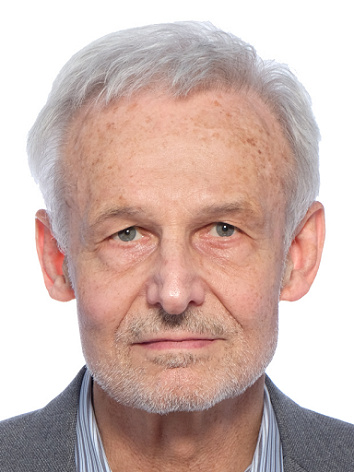
Professor Bruce R. Ransom
Growing up in Minnesota I was an avid agate collector and thought of becoming a geologist. At the University of Minnesota, however, I found physiology more exciting than lava flows and decided to become a physician. I was fascinated by neurophysiology in medical school (Washington U., St. Louis, MO) and convinced Prof Sidney Goldring, an epilepsy-focused neurosurgeon, to take me on as a PhD student. I made intracellular recordings from ‘silent cells’ (later revealed as astrocytes) in cerebral cortex to determine membrane characteristics and response to brain stimulation. We published three papers (1973) demonstrating that the membrane potential of mammalian glial cells was dominated by [K+]o and sensitive to neuronal activity.
Following medical school (MD/ PhD), I spent three years at the NIH in Phil Nelson’s lab studying the physiology of neurons in organotypic cell culture. In a series of papers in 1977 we described the basic electrophysiological properties, the chemosensitivity, the synaptic interconnections and the circuitry of cultured spinal cord neurons. I moved to Stanford University in 1976 for neurology residency and stayed as a faculty member. It was a stimulating research environment with a potent mix of exceptional neuroscientists (e.g., Barry Connors, Scott Thompson, David McCormick, Arnold Kriegstein, Dennis Choi, David Prince, and Steve Waxman). We were tightly packed in adjoining labs, but proximity led to productive collaborations. My laboratory interests shifted back to glial cells. My clinical duties led to encountering one of the first patients intoxicated with MPTP, an unintended by-product in the synthesis of a narcotic designer drug. We discovered that MPTP is converted by astrocytes into a toxic molecule that causes Parkinson Disease pathology.
In 1987, I was recruited to the Neurology Department at Yale University. I continued my work on astrocyte physiology and developed a model system (acutely isolated rodent optic nerve) to study the pathophysiology of stroke in brain white matter. I was fortunate to work with exceptional postdocs during this period, many of whom are now Professors at institutions scattered worldwide, including Harry Sontheimer, Peter Stys, Christine Rose, Arthur Butt, Bob Fern and Angus Brown to name a few. I was honoured to receive an NIH ‘Javits Award’ which provided seven years of strong research funding.
I met Helmut Kettenman in 1983 and after a period of scientific collaboration on glial cell physiology, we recognized the need for a dedicated scientific forum devoted to these cells. This led us to start the scientific journal GLIA in 1987 and serve as its Editors-in-Chief for almost 40 years (1988 – 2026)! Another common project was to organize and edit a basic textbook on glial cells through three unique editions (Neuroglia, Oxford Press; 1995, 2005 and 2013). Our decades long friendship and collaboration has been a great boon to my career.
In 1995, I was recruited by the University of Washington in Seattle as the founding Chair of the newly launched Department of Neurology. I was busy recruiting new faculty and expanding the residency program, but continued my research, now focused mainly on the pathophysiology of CNS white matter (WM) ischemic injury, an overlooked area with great clinical importance. We demonstrated that the pathophysiology of WM ischemic injury is unique, thus explaining why prior treatment strategies focused on grey matter alone were ineffective.
I have spent the last six years in Hong Kong working sequentially for two different universities. I started a neuroscience department at City University of Hong Kong and then became the founding director of the Gerald Choa Neuroscience Institute at The Chinese University of Hong Kong (CUHK). My final PhD student is scheduled to defend her developing thesis early in 2027.