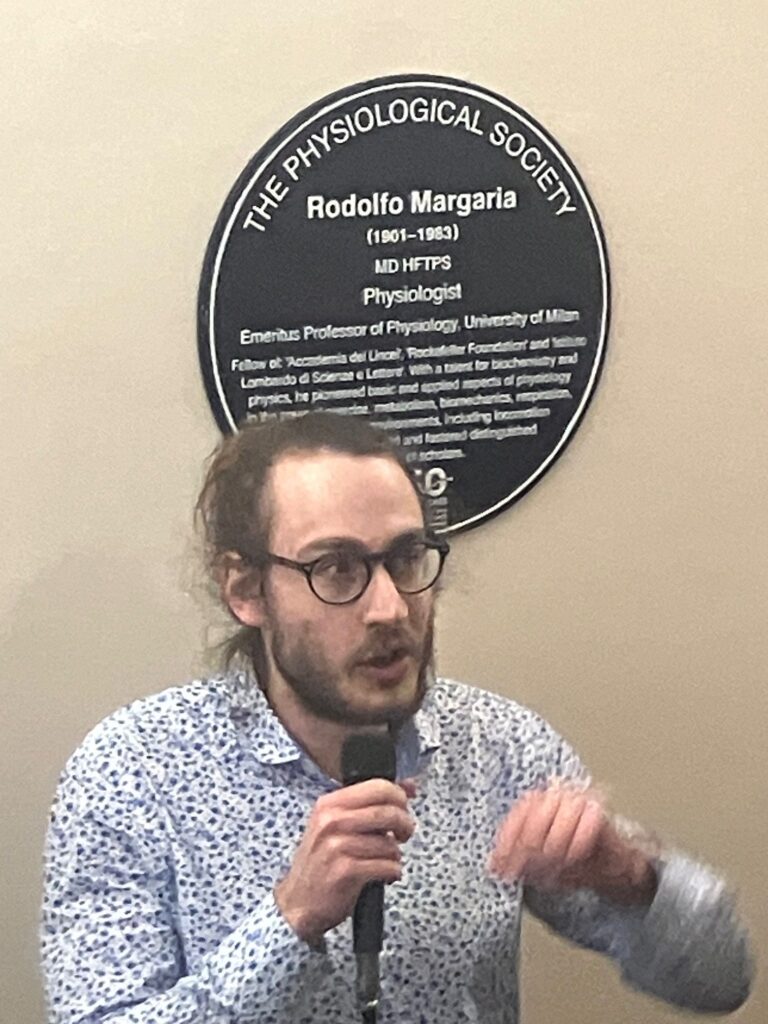
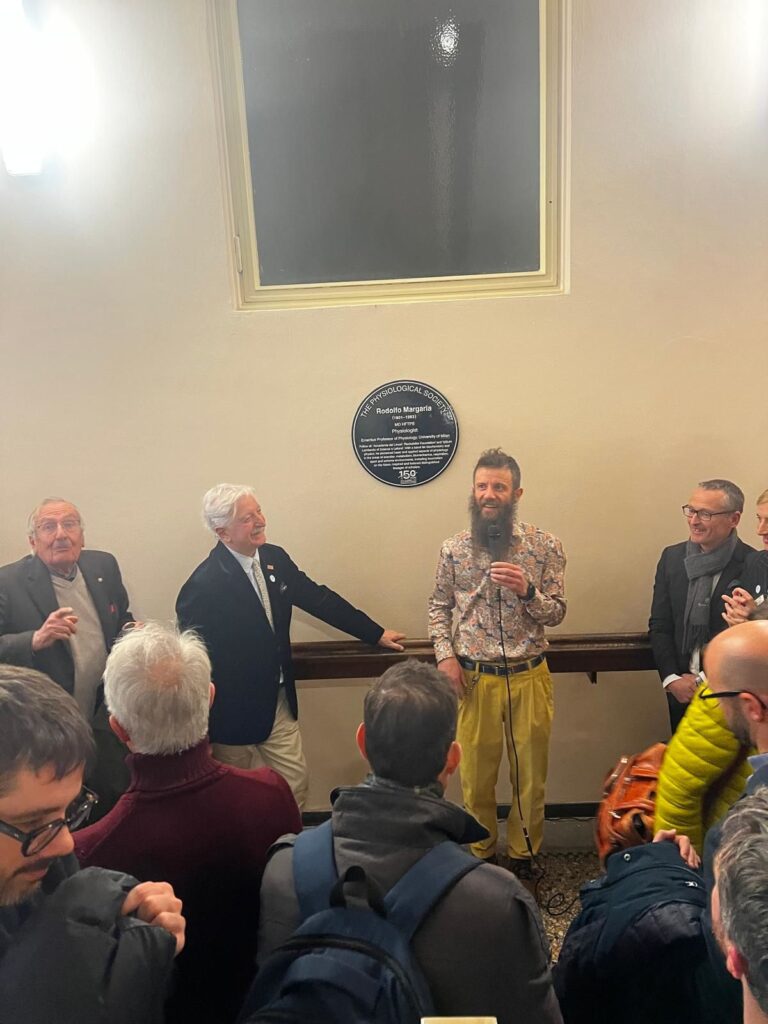
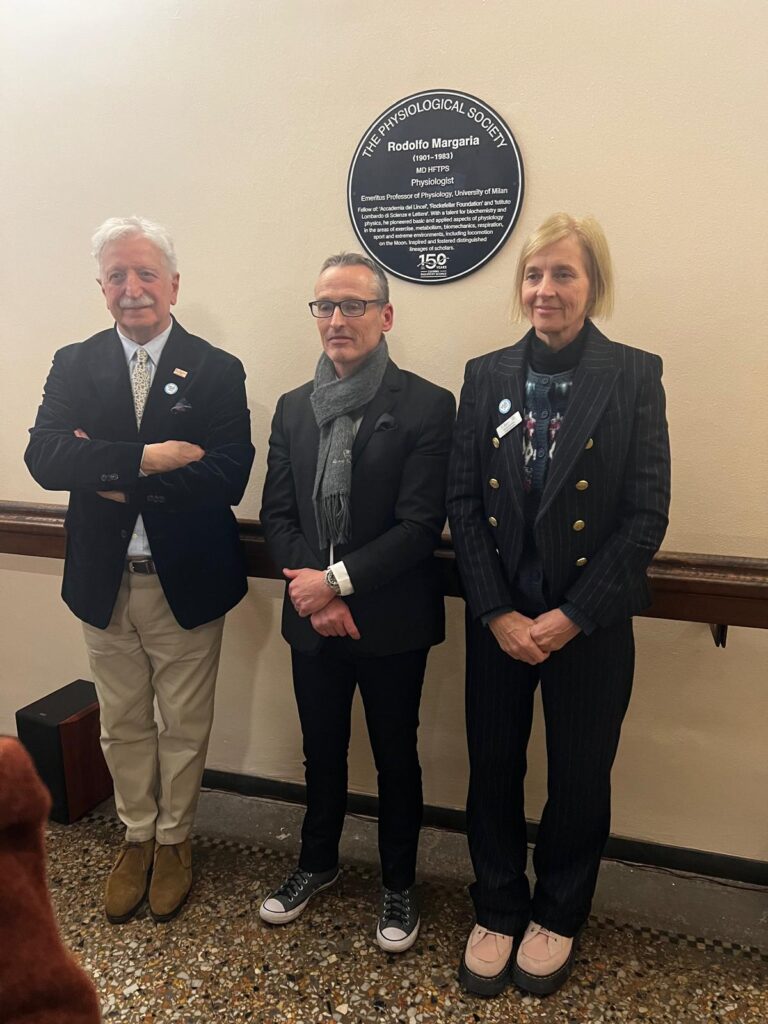
On Friday 23 January 2026, the Physiological Society unveiled a blue plaque at the University of Milan to honour the distinguished Italian physiologist Rodolfo Margaria. Margaria (1901–1983) was an internationally renowned applied human physiologist with particular expertise in muscle bioenergetics, respiratory function, and the biomechanics of human locomotion. He was elected an Honorary Fellow of the Physiological Society in 1973.
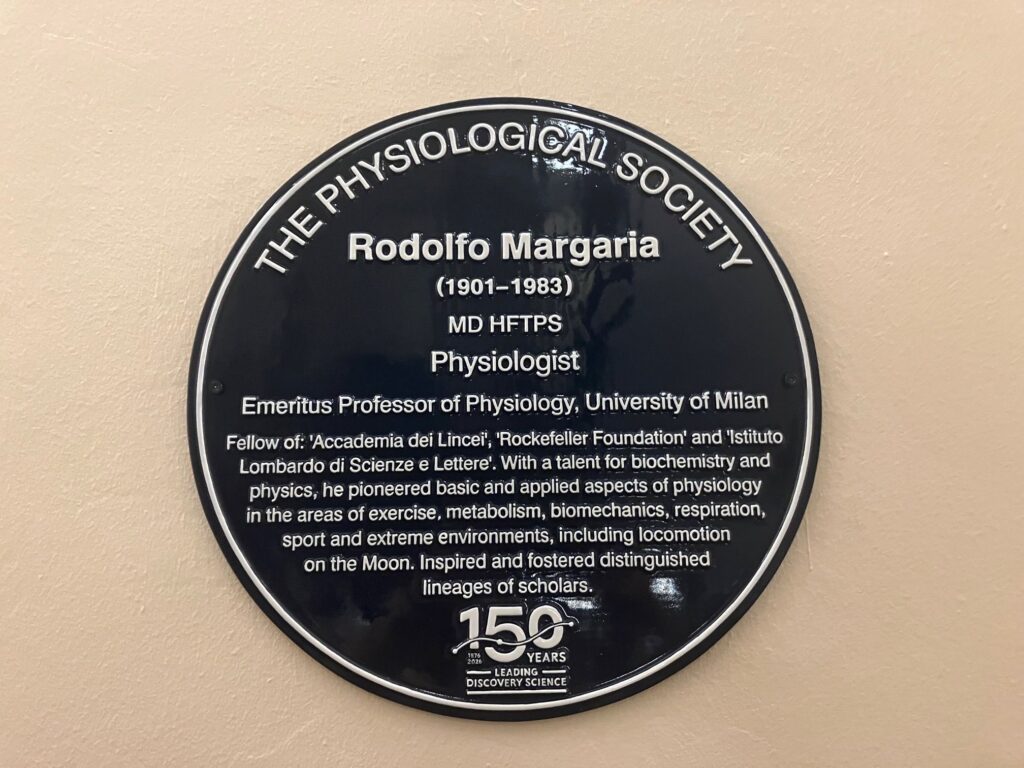
From the 1924 British Mount Everest Expedition to the 1969 Moon landing, Margaria’s research explored how the human body reacts in different and extreme environments, and formed the basis for today’s applied sports medicine.
The plaque was unveiled in the Pathophysiology and Transplantation Department, housed in the building where Margaria worked for forty years (1937–1977) as Director of the Institute of Human Physiology. The unveiling took place during the department’s 100th anniversary year.
The Physiological Society is also marking a major milestone, celebrating 150 years since its founding in 1876. The Rodolfo Margaria plaque unveiling, together with the twinned scientific meeting, is one of many special events scheduled throughout the year to commemorate our anniversary.
The Physiological Society’s blue plaque scheme was initiated in 2021 and honours outstanding physiologists who have contributed to the advancement of the discipline through their discoveries while leaving a legacy beyond their lifetime. The Rodolfo Margaria blue plaque is the 22nd unveiled by the Society and the first international plaque outside of the UK and Ireland.
Special guests at the plaque unveiling consisted of members of Rodolfo Margaria’s family, including Elsa Margaria MD and Architect Martina Margaria. Also in attendance were one of his former pupils and pioneer in the field, Pietro Di Prampero, along with the Dean of the Medical Faculty, Professor Francesco Blasi MD. Representing the Physiological Society were its Chief Executive Dariel Burdass and Editor-in-Chief of Experimental Physiology Damian Bailey.
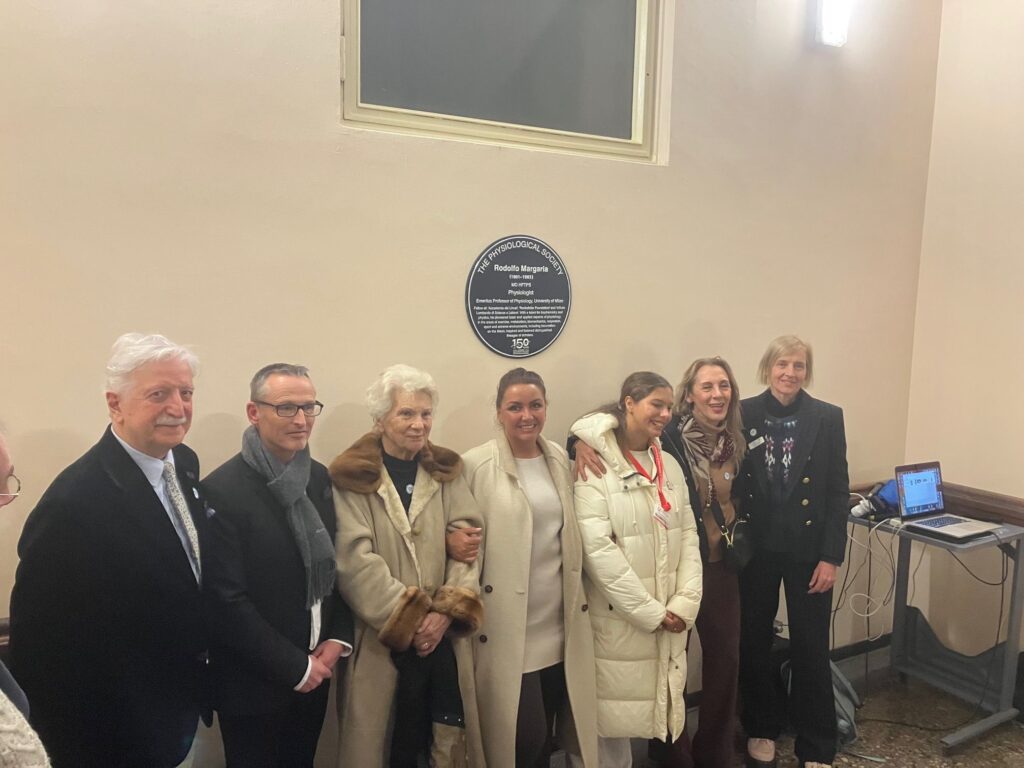
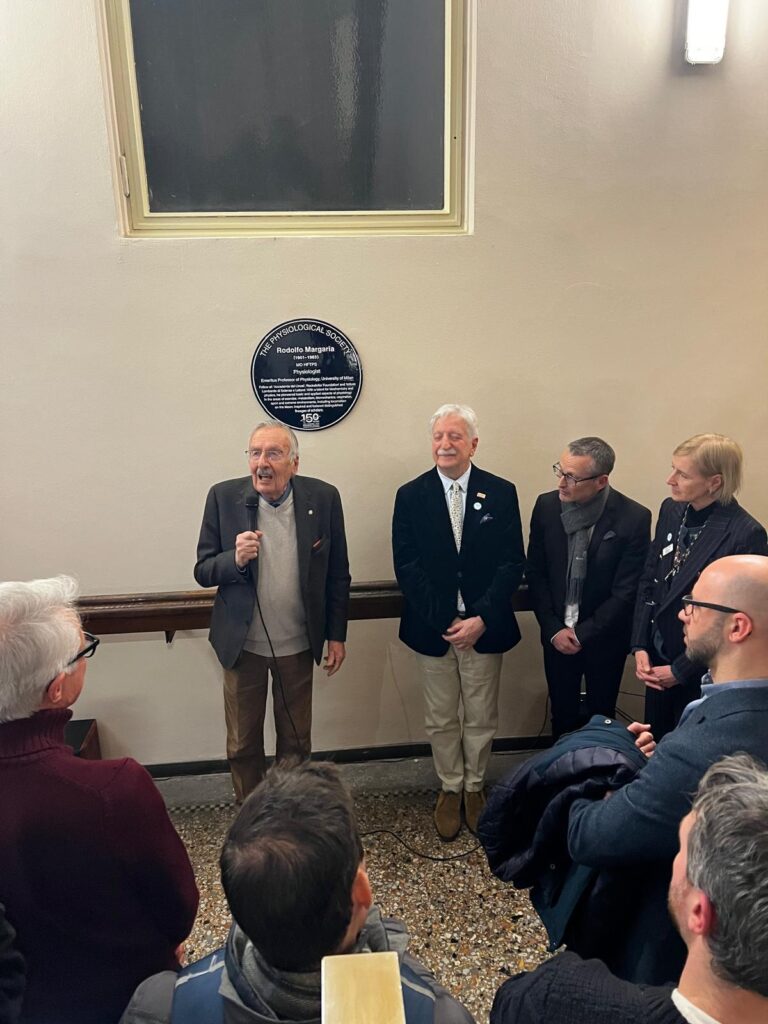
The unveiling dovetailed with the biennial scientific meeting ‘Work in Progress’ (‘Lavori in Corso’) organised by University of Milan Professors of Physiology Alberto Minetti and Gaspare Pavei. Originally envisaged as an informal meeting for scientists working in Margaria-related fields (exercise science, locomotion metabolism and biomechanics, and muscle physiology and ergonomics), it has become an established tradition attracting at least three generations of Margaria’s successors. This gathering of provides a unique opportunity for scientists with a physiology focus to gather and discuss research in an early phase of development.
The Society’s Chief Executive Dariel Burdass praised the meeting for its breadth of research, inclusive engagement across career stages, rapid knowledge exchange, and importantly, moving to a format that shifts from polished results to active feedback.
Professor Damian Bailey gave a background talk on Rodolfo Margaria, calling him a ‘Renaissance Man who rubbed shoulders with some of the best [physiologists]’. He encouraged those in attendance to follow in Margaria’s footsteps and ‘foster curiosity and humility, commitment to mentorship, intellectual generosity, strong scientific rigour, a collegial spirit, a true joy in discovery, and an enduring legacy of inspiration.’
Professor Minetti commented:
“The simultaneous occurrence of Margaria’s blue plaque unveiling and the well-attended physiology Scientific Congress had a synergistic effect. Many young investigators, after they had presented and discussed their research with colleagues, attended the ceremony where the Great Mentor of their mentors was celebrated for the quality of his research and for the School of physiological lineage he originated. This was a stimulus for them and the next generations to pursue Applied Physiology with curiosity, creativity and rigor.”