
The Society is delighted to recognise the experience, knowledge, expertise and commitment to the discipline of its six 2026 Fellow appointments:
- Professor Emeritus Paul Andrews, City St. Georges, University of London, UK
- Professor José González-Alonso, Brunel University of London, UK
- Professor David Greensmith, University of Salford, UK
- Professor Janna Morrison, Adelaide University, Australia
- Professor Rasmus Petersen, University of Manchester, UK
- Professor Mala Shah, University College London, UK
The Fellowship appointments will be celebrated at the 2026 Member Forum this week, part of Advancing Physiology Together, which will be held at The Royal Society of Medicine and online 25-26 November 2026.
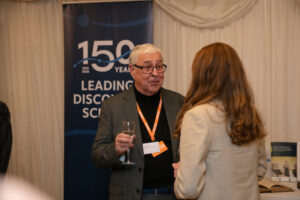
Professor Emeritus Paul Andrews
Paul Andrews studied Physiology at the University of Sheffield (BSc, PhD, DSc) before obtaining lectureships at Sheffield and Edinburgh Universities and finally St George’s University of London for the majority of his career, retiring as Professor of Comparative Physiology, Deputy Head of Division of Biomedical Sciences, and Dean of Postgraduate Studies. He is Professor Emeritus at City St George’s University of London and a Fellow at Stazione Zoologica Anton Dohrn, Naples, Italy.
His main research has focused on the nervous control of gastric motility and the neuropharmacology of nausea and vomiting, particularly anti-cancer therapy induced nausea and vomiting. The inability of rodents to vomit prompted comparative studies reviewed in the 2009 Sydenham Lecture of the Society of Apothecaries’ “A brief history of vomiting: the first 700 million years”. He has worked closely with colleagues from the pharmaceutical industry on the site(s) of the anti-emetic action 5-hydroxytryptamine3 and neurokinin1 receptor antagonists, and on understanding why nausea and vomiting are adverse events of many therapeutic agents. Animal models and their clinical translation was a key aspect of these studies, stimulating investigations with colleagues of both Refinement (e.g., telemetry of gastric muscle activity and cardiovascular parameters) and Replacement (e.g., human volunteer studies) reviewed in the 78th Paget Memorial Lecture (Research Defence Society, now UAR), “Translating the 3Rs in complex Physiological Systems”.
He continues to publish, particularly on the theme of his 2024 Wingate lecture (Neurogastroenterology Institute, QMUL) “Why do we not have optimal drug therapy for both nausea and vomiting?” and continues research on the cephalopod digestive tract with colleagues in Italy.
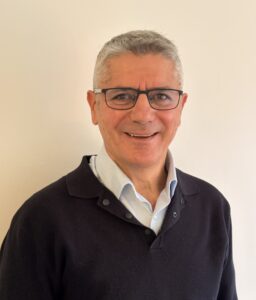
Professor José González-Alonso
José González-Alonso has been Professor of Exercise and Cardiovascular Physiology at Brunel University of London since 2006. He previously served as Director of the Centre for Human Performance, Exercise and Rehabilitation (2006–2013) and the Centre for Sports Medicine and Human Performance (2015–2021). Before joining Brunel, he worked as a senior researcher at the Copenhagen Muscle Research Centre, a centre of excellence in integrative human physiology led by the late Professor Bengt Saltin, and as a postdoctoral fellow in the former Department of Human Physiology at the University of Copenhagen. He completed his MA and PhD in Exercise Physiology in the Department of Kinesiology and Health Education at the University of Texas at Austin, USA, and his undergraduate studies in Physical Education at the University of Barcelona, Spain.
His research investigates how the human cardiovascular system regulates regional blood flow, oxygen delivery and systemic haemodynamics during physiological and environmental stress. Over more than three decades, he and his collaborators have conducted controlled human experiments examining the effects of exercise, heat stress, hyperthermia, dehydration, hypoxia, and interventions that alter blood flow, blood volume, oxygenation and vascular tone. A central theme of this work is to understand how local vascular mechanisms interact with central cardiovascular responses as circulatory demand increases and approaches physiological limits.
A major contribution of his work has been the identification of temperature-sensitive mechanisms that regulate tissue perfusion. Human heating studies from his laboratory have shown that local tissue and blood temperatures strongly influence regional blood flow and that erythrocytes release ATP in a temperature-dependent manner, thereby inducing vasodilation. More recent work has demonstrated that passive hyperthermia can markedly increase both regional and systemic blood flow, with comparatively modest or no changes in conduit artery mechanics or intrinsic cardiac function. Collectively, these findings support an important role for peripheral mechanisms in circulatory control and highlight the therapeutic potential of heat therapy.
Another important contribution has been the characterisation of the circulatory limitations to exercise in humans. Using interventions such as heat stress, dehydration and large- versus small-muscle-mass exercise, his research has shown that substantial cardiovascular strain develops before exhaustion during maximal aerobic exercise, although the metabolic consequences differ across the brain, heart and skeletal muscles.
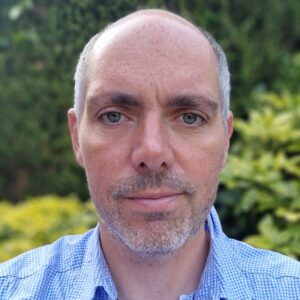
Professor David Greensmith
In 2005, David Greensmith graduated from the University of Salford with a degree in Biological Sciences. He then completed a PhD and two postdoctoral positions in cardiac physiology with Professors Mahesh Nirmalan, David Eisner, and Andrew Trafford at the University of Manchester. In 2014, he returned to the University of Salford as a lecturer in Biomedical Science, where he is now Professor of Cardiac Physiology and Associate Dean – External Engagement for the Faculty of Science, Engineering and Environment.
He is currently the Physiological Society representative for the University of Salford and leads a cardiac research group that investigates the cellular basis of the heart’s normal function and its dysfunction in disease. He is also Associate Editor for the journal Current Research in Physiology and a twice-elected committee member of the British Society for Cardiovascular Research (BSCR). In January 2025, he began his term as President of the BSCR and was also appointed as Scientific Director of the childhood cancer research charity, KidsCan.
Furthermore, he remains a passionate educator. For his collective contributions to equity, diversity, and inclusion through widening participation in research, he received the 2019 Vice Chancellor’s Distinguished Teaching Award and the 2023 Physiological Society Otto Hutter Teaching Prize and Lecture.
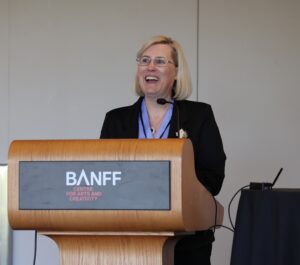
Professor Janna Morrison
Janna Morrison was awarded a Masters in Physiology from the University of Western Ontario in 1997 and a PhD in Reproductive and Developmental Sciences from the University of British Columbia in 2001. She has been funded as a fellow by the Heart Foundation (2004-13), National Health and Medical Research Council (NHMRC, 2014-17), Australian Research Council (ARC, Future Fellow, 2018-2021) and now holds a NHMRC Investigator L2 (2026-30). She has authored >270 peer reviewed publications cited over 12,800 times with an h-Index of 48 (Scopus).
She is Head of the Early Origins of Adult Health Research Group in the Robinson Research Institute at Adelaide University. She leads this dynamic team of MCRs, ECRs and HDRs that together seek answers about how babies grow in the womb and the impact on their future health with funding from the ARC (2019-26), NHMRC (2007-14, 2020-29), Medical Research Future Fund (2022-24), Canadian Institutes of Health Research (2016-19), National Institutes of Health (2024-26) and Channel 7 (2020, 2023-26). She was inaugural Director of Health and Biomedical Innovation (2019-2024) at the University of South Australia and is now Deputy Director (2024-pres).
She is a Fellow of the Cardiovascular Section of the American Physiological Society. She was awarded the Australian Physiological Society Medal Lecture in 2022, the Joan Mott Lecture Prize (Physiological Society UK) in 2024 and the NICHD Speakership (Perinatal Research Society, USA) in 2026. In 2025, she was received the South Australian Cardiovascular Research Network Cardiovascular Research Excellence Award in 2025. She was the Research Degree Supervisor of the Year in the 2025 Unstoppable Research & Enterprise Awards at the University of South Australia.
She is Co-Chief Editor of Reproductive Sciences (Aug 2026-pres). She is a Reviewing Editor for The Journal of Physiology (2016-pres). She was Editor of Themed Issues for the Journal of the Developmental Origins of Adult Health (2012-2026) and reviews grants for multiple funding bodies in Australia and internationally.
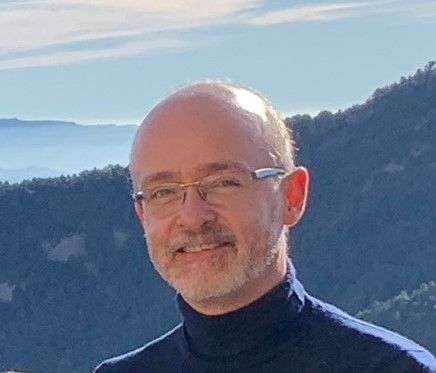
Professor Rasmus Petersen
Rasmus Petersen is a Professor of Neuroscience at the University of Manchester whose work combines experimental and computational approaches to sensory physiology.
His work has helped establish the importance of precise spike timing and population activity in sensory coding. His recent work has investigated how sensory cortex integrates incoming signals with information about body state during natural behaviour.
Alongside his research, he has a long-standing commitment to postgraduate training. He is Director of the BBSRC-funded NorthWest Doctoral Programme in Bioscience, a partnership between Manchester and Liverpool. The programme embeds computational skills within bioscience training and develops new pathways to broaden participation in doctoral training.
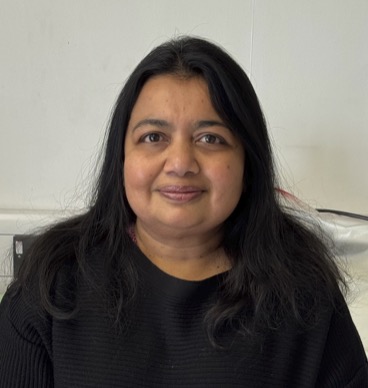
Professor Mala Shah
Mala Shah is renowned for her work on understanding the biophysical properties and function of neuronal ion channels. She has published extensively on the role of the hyperpolarization-activated cyclic nucleotide gated (HCN), the K+ channels, KV7, underlying the so-called ‘M-current’ and the low threshold T-type Ca2+ channels in mediating neuronal excitability in cortical and hippocampal neurons under physiological and pathophysiological conditions. More recently, her lab has discovered acetylcholine muscarinic (M1) G-protein coupled receptor (GPCRs) to be located in neuronal axon initial segments of hippocampal neurons and reported that activation of the receptor induced a novel form of intrinsic plasticity. Her lab continues to understand the role of GPCRs and ion channels in influencing neuronal and neural circuit activity. The excellence of her work has been recognised by the Physiological Society GSK Prize Lecture (2014) and citations for her publications.
She has been co-lead of the Translational Neuroscience Cluster at the School of Pharmacy. She was a member of the editorial board for Journal of Biological Chemistry and is currently an editor for British Journal of Pharmacology.