News & Views
Using puzzles and games to engage students
By Professor Frankie MacMillan, University of Bristol, UK
Frankie MacMillan shares how she replaced didactic Q&A sessions with interactive and collaborative learning workshops using puzzles and games to engage first-year physiology students.

Professor Frankie MacMillan
Encouraging attendance at in-person teaching activities has become challenging as students rely on lecture recordings and juggle competing priorities such as part-time work. To address this, we have replaced poorly attended didactic Q&A sessions with topic-based workshops designed to foster interactive and collaborative learning.
Each 1.5-hour workshop follows a series of lectures in a first-year physiology unit and aims to reinforce learning by encouraging engagement and collaborative learning. The four workshops cover cell biology, introductory neurophysiology, muscle physiology and the cardiovascular system. They are run by the academic responsible for the corresponding lectures and supported by a teaching associate. Up to 85 students attend each workshop and are held in a flatbed teaching space with individual tables each accommodating up to six students.
Puzzles and games
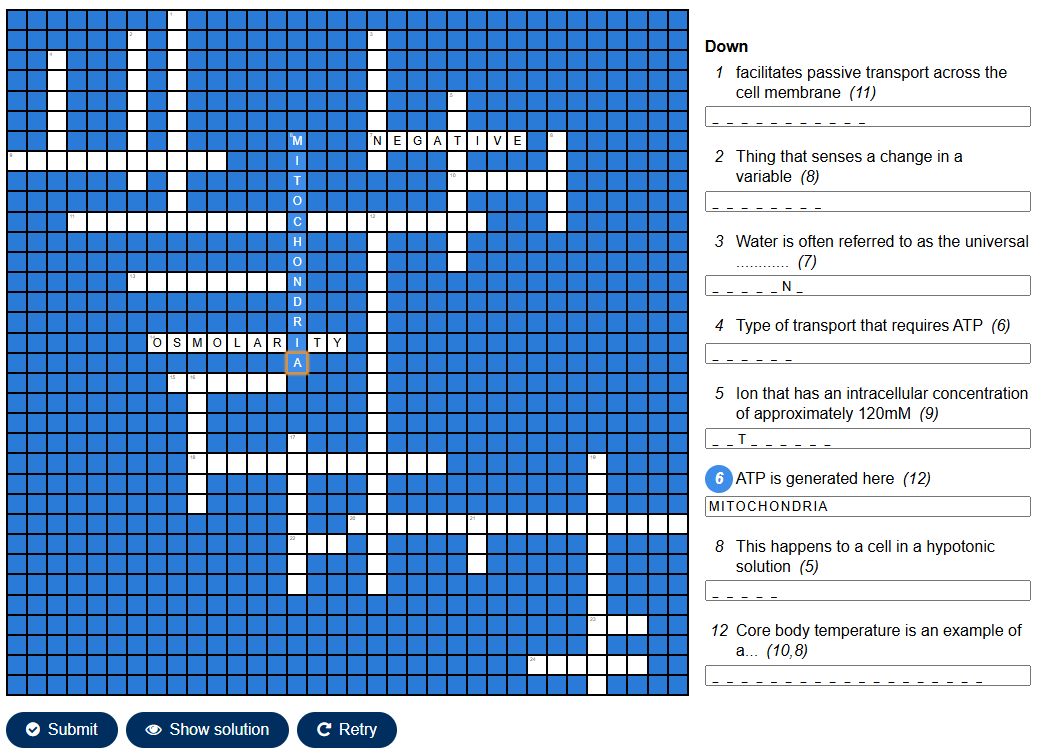
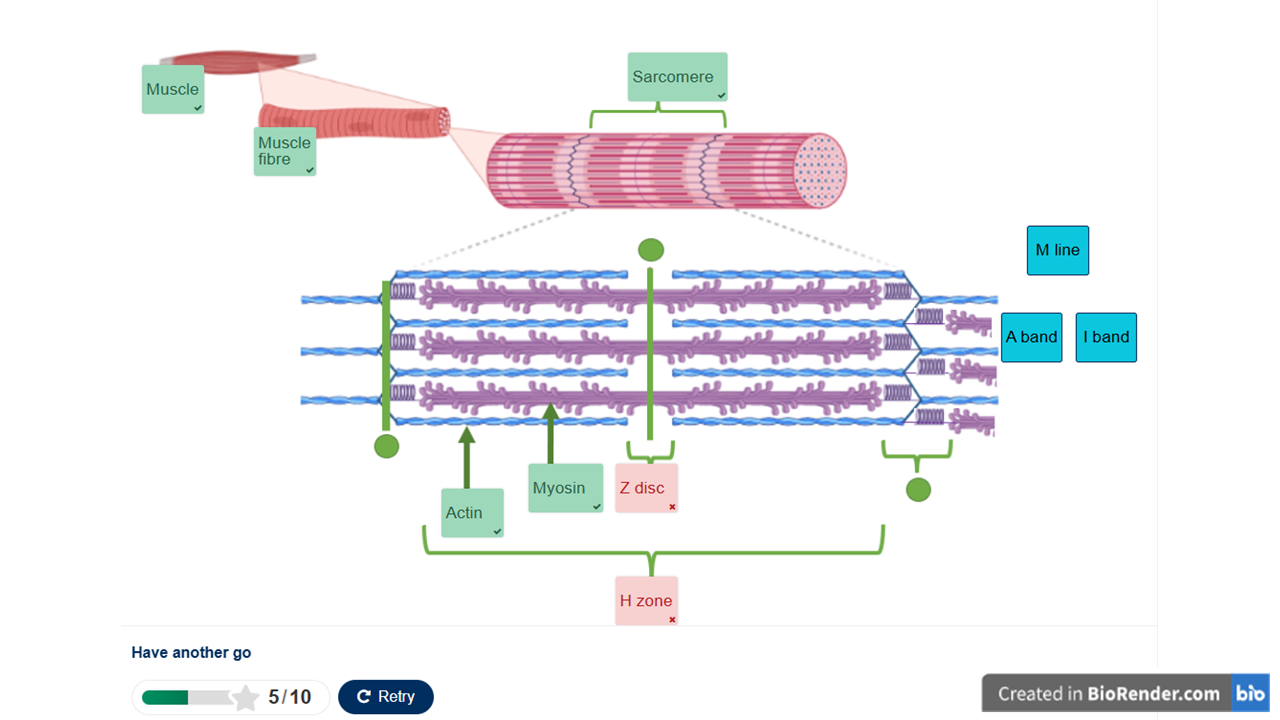
Workshops begin with a starter activity that students complete on their personal devices, either individually or in groups, as they arrive at the workshop. These are either labelling an image via drag and drop text boxes (see Fig.1) or a crossword puzzle related to the workshop topic (see Fig.2) and are created using Html-5-Package (H5P) an easy-to-use open-source content creator. This is followed by a teacher-led segment, involving problem-based learning or data interpretation tasks designed to consolidate and extend students’ understanding. One example is completion of a table to indicate the effects of osmosis on body fluid compartments in different scenarios e.g. I.V infusion of fluid or blood loss.
The final part of the workshop is a team-based competitive quiz activity modelled on a gameshow and using exam-style questions. Students work in teams and are given 100 beads which they distribute in pots relating to the possible answers for multiple choice questions. Beads allocated to incorrect answers are forfeited, and the team with the most beads remaining after five rounds is declared the winner. The number of answer options reduces with each round, increasing difficulty and strategic thinking. The quiz questions span lecture content and beyond, therefore encouraging exam preparation as well as further discussion. A small prize is awarded to the winning team.
Collaborative learning and cohort building
Student attendance is good, and the enjoyment factor is evident particularly in relation to the competitive aspect of the quiz. Students are positive about the workshops through in-person comments and in the unit feedback survey. The varied activity formats cater to different learning preferences, balancing individual tasks with group collaboration. These types of activities and resources could easily be adapted to different subject areas and engender collaborative learning and cohort building in a large group of students.