Features
Art is a creative lens through which we can more deeply examine physiology
Cécile Jacovetti and Chris Donnelly
A.R.BT. Artistically Retranscribing Biological Theories
Artistic media offer a powerful avenue to explore and express the spaces in between biology and art. Artistically Retranscribing Biological Theories embraces the fundamental concept that breakthroughs addressing human health will benefit from thinking outside of traditional disciplinary boundaries. Artistically Retranscribing Biological Theories aims to broaden our understanding of human health by retranscribing and exploring scientific research artistically.
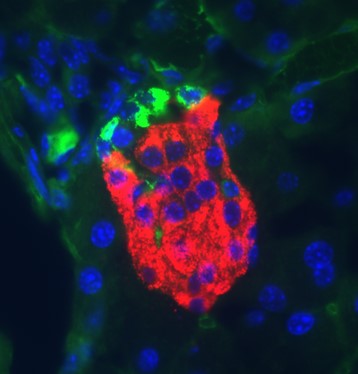
Physiology is the science of life, but what is art?
Whilst ‘Art’ and ‘Science’ are not easy to define (or definable), there is likely a consensus that they are not the same thing.
Broadly speaking, science is a discipline that builds and organises knowledge in the form of testable hypotheses and predictions about the universe. Science is divided into different branches like the social sciences and the natural sciences with further sub-divisions including life sciences. Physiology is the science of life and the branch of biology that aims to understand the mechanisms of living things.
Art on the other hand, encompasses a diverse range of cultural activities. Including visual arts – painting, sculpture, photography and architecture, performing arts – theatre and dance, as well as literature, music and film. All of which open pathways to amplify the world, offering a renewed and alternative understanding of it.
Linking art and science
Despite their differences, science and art are not incompatible and are combined on many occasions. From the perspective of scientists interacting with art we have seen art used in physiology courses to enhance learning experiences or as part of scientific outreach to engage with wider audiences, to name just a few examples.
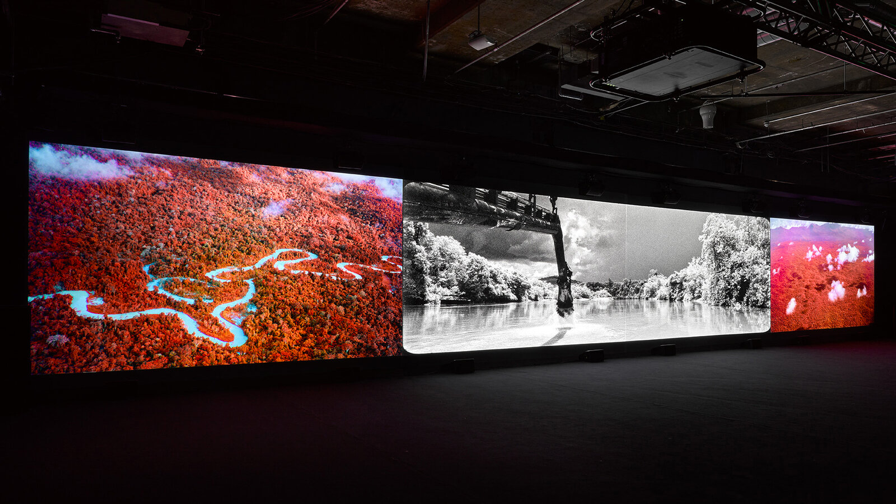
Artists engage with scientific research in the form of information and technology. A poignant example is the work by the artist Richard Moss. Moss documents humanitarian and environmental crises using cutting-edge scientific imaging techniques. His work has employed military surveillance film and thermal infrared cameras to document civil war, the refugee crisis, and deforestation. His practice halfway between art and documentary filmmaking mixing aesthetics and technology has been powerful for raising awareness and influenced policymaking.
Moss is a notable example of how an artist has employed the products of scientific work to shine a light on the big issues facing society. By exploring the space between science and art, scientists can further contribute to solving some of the big issues facing society: such as the complex problems in human health.
Mixing science and art
While science increasingly shapes our world, providing us with tools to explore and helping us to understand nature – it is not without limitations. Despite our deep and potent knowledge of physiology, we continuously question the inherently subjective interpretations of raw data by scientists. Which despite their subjectivity are often regarded as “fixed and superior” truths. Perhaps, by embracing a multiplicity of representations, we could better balance accuracy with complexity, accessibility, creativity, and inclusivity?
Artistic media – film, music, painting, poetry – offer a powerful avenue to explore and express the spaces between physiology and art. These spaces of imagination, intuition and sensory intelligence are often neglected.
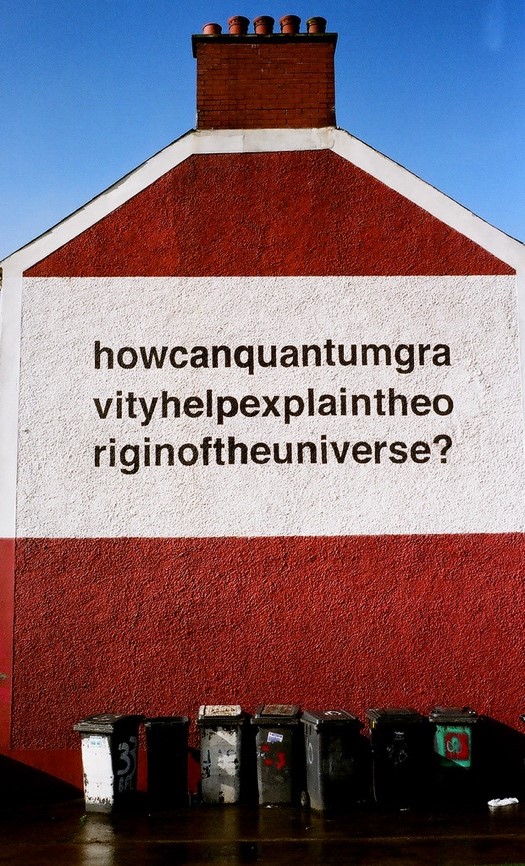
Rethink. Rediscover. Evolve.
Art is a creative lens through which we can more deeply examine physiology. Rethinking, rediscovering and evolving with it. Not replacing science but accompanying it.
Many ideas that seemed barely imaginable and impractical, impossible even, led to major discoveries that changed society and culture. Just look at the evolution since 1950 of our understanding of the genome, which provides the underlying code for biology.
In the late-1950s, the structure of DNA and the central dogma (i.e., DNA to RNA to protein) were first published. It is almost unimaginable that back then techniques such as whole genome sequencing and polymerase chain reaction would have seemed practical. That only 2% of the genome codes for proteins: unthinkable.
Rethinking what the leftover 98% of the genome, for which we had information in our hands for decades, revealed that the “junk DNA” is actually a hugely important orchestrator of our biological code. In 1993 when the discovery of a new class of RNA molecules, namely microRNA, was published the results were met by almost deafening silence by the scientific community. Unaccepted to begin with, this work received the Nobel Prize in Physiology or Medicine thirty years later.
If in the past, breakthroughs and advances were unthinkable, unimaginable and impractical… What can we do in the present to make breakthroughs addressing human health in the future? Perhaps there is no exclusive methodology? Or perhaps there is potential benefit to thinking outside of traditional scientific disciplinary boundaries?
We have seen trends to go for something different. Data sharing, open-access, data banks, graphical abstracts, shorter articles and podcasts. Whilst all of these endeavors contribute to the richness and value of present-day science, they remain constrained within traditional scientific disciplinary boundaries. Linguistic, visual, cognitive.
What about going beyond to a space outside these. Could we think and perceive differently? There exist too many data that we have not heard about and too much information that we have looked at without seeing. How can we reach them, or can they reach us?
Artistically retranscribing biological theories
Artistically Retranscribing Biological Theories, A.R.BT., is a not-for-profit initiative which aims to broaden our understanding of biological theories by retranscribing them artistically. Traversing the lesser seen emotions, imaginary realities, and sensory concepts inherent in biology. A.R.BT. fosters a new culture where artistic and scientific realms become one to open dialogue and discovery.
As part of this initiative in 2024, Sato Kimitoshi – a Japanese sound designer and composer – and Cécile Jacovetti – a French biologist and performing artist – began a conversation about sound representations of human biology. Using their combined experiences in the arts and sciences, they engaged in a series of dialogues about the life sciences. They explored the content of important and fundamental biological theories using their senses, intuition, sensory perceptions and imagination. From their research ‘Islet Introspection’ an acoustic retranscription of genetic events, diabetes mellitus research and islet cell biology was created.
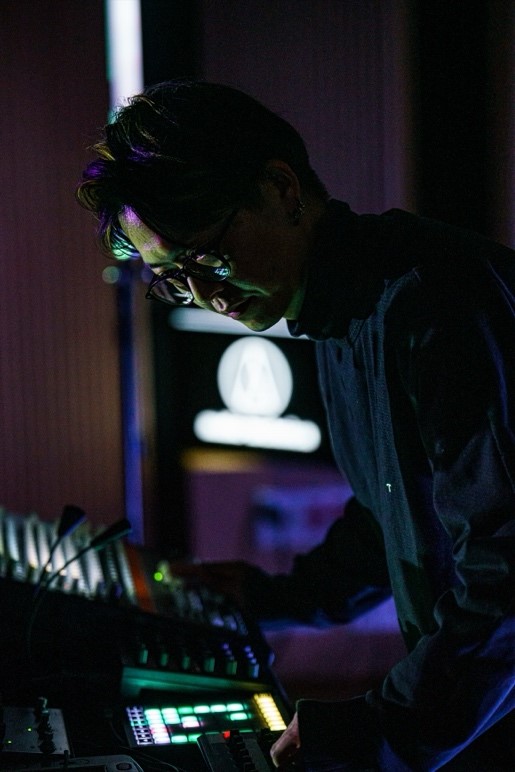
Despite this work being in a space, beyond or outside of traditional methodologies and free from hypotheses and statistical tests, ‘Islet Introspection’ has enabled researchers in the field of diabetes mellitus to reimagine the known and awaken the unseen within it leading to the exploration of previously unconsidered hypotheses. ‘Islet Introspection’ has evoked fresh intuitions and newfound inspiration. Those are the foundations for conducting visionary, pioneering, transformative, forward-thinking, and insightful research.
In the words of Paul Klee, art soothes the mind, allowing a retrograde movement from the realm of exposed science to directly penetrate our consciousness, unveiling that there are other possibilities beyond the familiar ones.
A.R.BT. strives to reunite science with other disciplines, resisting the insular confinement brought on by hyper-specialisation and an overly narrow focus. Mixing science and art pushes aside traditional confines, brings new stimulations and interest whilst being diverse, accessible, transformative and inclusive (key pillars of open-science).
Mixing science and art is not limited to music and sonification. Any artistic media can be embraced and used. This space – less constrained by hypotheses and p-values – may help society; rethink, rediscover and evolve. Mixing science and art is not one-sided but a dialogue between the scientist(s), artist(s) and society. “We all have our words to say.”
Opening a dialogue
Artistic media offer a powerful avenue to explore and express the spaces in between physiology and art. By artistically retranscribing physiology we may ‘broaden our understanding of human health’. It also ‘acts as another lens through which we can examine science’ adding to the list of what art does.
References
A.R.BT. (2024) Artistically Retranscribing Biological Theories. Available at: https://www.cecilejacovetti.com/
(Accessed: 14.06.2025)
Arrigoni F (2023) Transdisciplinary science and art. https://doi.org/10.36866/pn.130.21
Casadevall A, Fang FC. (2014) Specialized science. https://doi.org/10.1128/iai.01530-13
Donnelly C, Menoud V, Kayser B, Regazzi R, Jacovetti C (2025) Downregulation of the mitochondrial tRNA-derived fragment mt-tRF-LeuTAA enhances skeletal muscle insulin sensitivity. https://doi.org/10.1152/ajpendo.00284.2025
Jacovetti C, Sato K (2024) Islet Introspection. Available at: https://www.cecilejacovetti.com/isletintrospection (Accessed: 03.09.2025)
Jacovetti C, Donnelly C, Menoud V, Suleiman M, Cosentino C, Sobel J, Wu K, Bouzakri K, Marchetti 456 P, Guay C, Kayser B, Regazzi R (2024) The mitochondrial tRNA-derived fragment, mt-tRFLeuTAA, couples mitochondrial metabolism to insulin secretion. https://doi.org/10.1016/j.molmet.2024.101955
Paul Klee (1964) La théorie de l’art moderne. Édition et traduction (de l’allemand) par Pierre-Henri Gonthier.
Mohon L (2024) Listen to the Universe: New NASA Sonifications and Documentary. Available at: https://www.nasa.gov/missions/chandra/listen-to-the-universe-new-nasa-sonifications-and-documentary/ (Accessed: 21.06.2025)
Richard Moss (2024) Broken Spectre. Available at: https://www.richardmosse.com/#broken-spectre (Accessed: 21.06.2025)
Sountrive (2025) Kimitoshi Sato Works. Available at: https://www.sountrive.com/ (Accessed: 21.06.2025)
The Nobel prize (2024) Nobel Prize in Physiology or Medicine 2024. Available at: https://www.nobelprize.org/prizes/medicine/2024/summary/ (Accessed: 20.06.2025)
UK Research and Innovation (2025) Ensuring open research. Available at: https://www.ukri.org/what-we-do/supporting-healthy-research-and-innovation-culture/open-research/ (Accessed: 21.06.2025)
World health statistics 2025: monitoring health for the SDGs, Sustainable Development Goals. Geneva: World Health Organization; 2025. Available at: https://www.who.int/publications/i/item/9789240110496
(Accessed: 19.06.2025)