News & Views
Policy Focus: Integrating thermal physiological research into our response to the health impacts of climate change
Tom Addison, Policy and Public Affairs Manager, The Physiological Society
“The Global Climate and Health Summit took place from 16-17 July in the QEII Centre in London and included over 230 in-person participants from across 35 different countries with more joining remotely. The purpose of the Summit was to bring together world-leading experts to tackle the biggest health threat of our time: climate change. It connected science, policy, and lived experience to drive action in three key strands heat, air pollution, and nutrition.”

Tom Addison
Following hot on the heels of the success of Thermal Physiology in Health and Disease: Mechanisms and Therapeutic Applications in Brunel, the Physiological Society had the opportunity to discuss further the key role of thermal physiologists in the response to the health impacts of climate change as a key strand of the Global Climate and Health Summit. Several of the speakers at Thermal Physiology were members of the Summit Steering Group, ensuring that the voice of thermal physiologist members was well represented at both events.
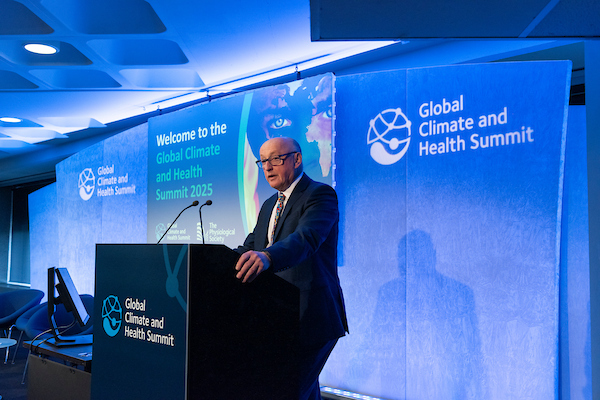
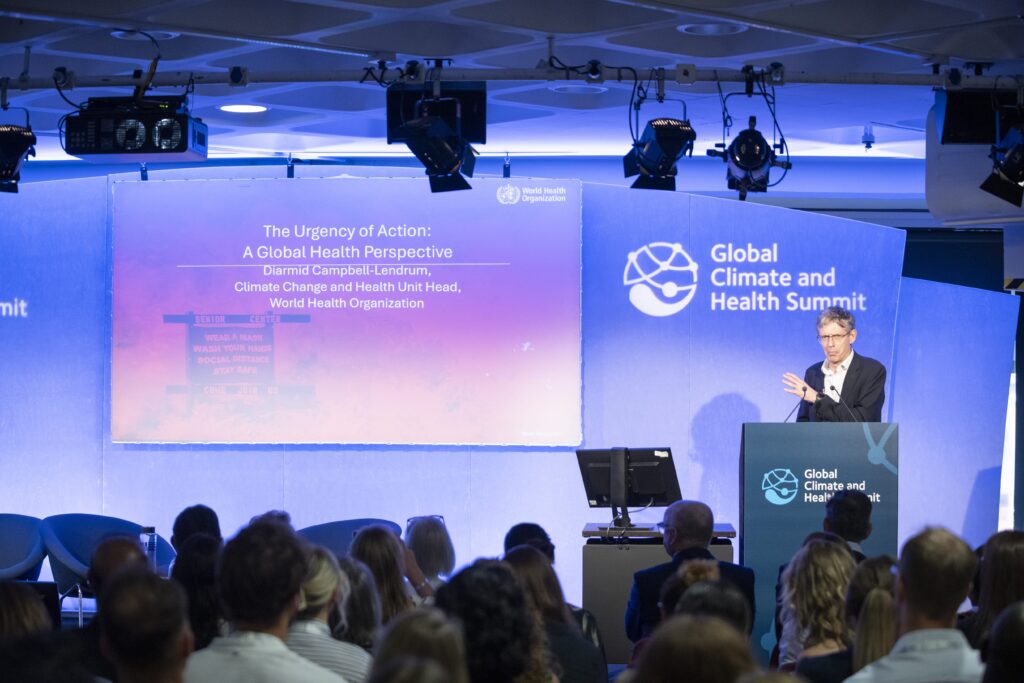
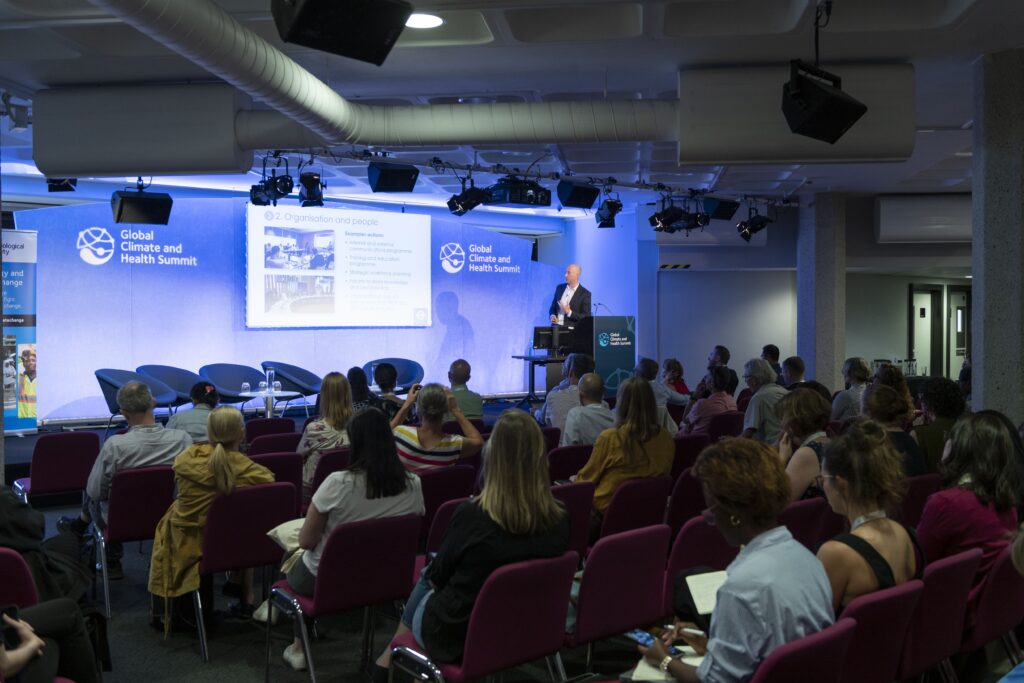
The Global Climate and Health Summit took place from 16-17 July in the QEII Centre in London and included over 230 in-person participants from across 35 different countries with more joining remotely. The purpose of the Summit was to bring together world-leading experts to tackle the biggest health threat of our time: climate change. It connected science, policy, and lived experience to drive action in three key strands heat, air pollution, and nutrition. As the Summit’s Chair, Professor Mike Tipton noted in 2023:
‘The path to comprehensive solutions requires collaborative, integrated action by politicians, policy makers, epidemiologists, engineers, architects, climate change scientists, behavioural psychologists, healthcare professionals, botanists and, physiologists – to provide a fundamental understanding of what humans can tolerate and what needs to be achieved.’
In addition, the Summit sought to reinforce the message that physiological limits describe the point beyond which survival becomes unlikely. Once these limits are exceeded, vital systems fail regardless of health or fitness. It will only be through rapid decarbonisation and other mitigation efforts that we can avoid these limits being breached in different parts of the world. To achieve this, the Summit focused on turning evidence and research into solutions that protect both people and planet.
Climate change, health and thermal physiology
To ensure survival, the body attempts to maintain a relatively narrow safe resting body temperature range of 36.1-37.2°C. The physiological responses to increasing body temperature are supported or challenged by environmental factors and behaviour which make these responses more or less effective. Climate change’s risk to health is also a convergence of interrelated risks where climate impacts such as heat intersect with air pollution, malnutrition, social and structural inequalities. These overlapping pressures compound harm and deepen health disparities. Physiology helps reveal how these combined stresses act through the body, highlighting the need for coordinated action across health, environment, and society.
The heat resilience strand focused on the critical impact of rising temperatures on human health, with an emphasis on physiologically informed thresholds for intervention and the development of scalable, actionable solutions. By integrating physiology, economics, and policy, this strand highlighted opportunities for effective action within different contexts, ensuring both health, wellbeing and productivity in maintaining resilience against extreme heat.
The Summit’s heat strand also focused on how physiology is uniquely placed to take this expertise on thresholds and intervention and work with other stakeholders to successfully integrate and expand upon siloed policies around our response to heat in the workplace and among vulnerable communities such as people with mental health conditions, pregnant women and workers.
The first heat session focused on defining heat thresholds, discussing when action should and can be taken in different settings. The second centred specifically on the role of employers and employees in responding to heat and making the case for a ‘health and wealth’ approach to heat adaptation. The final heat-specific session looked at building a convincing case for heat adaptation and cooling interventions in different settings throughout the world.
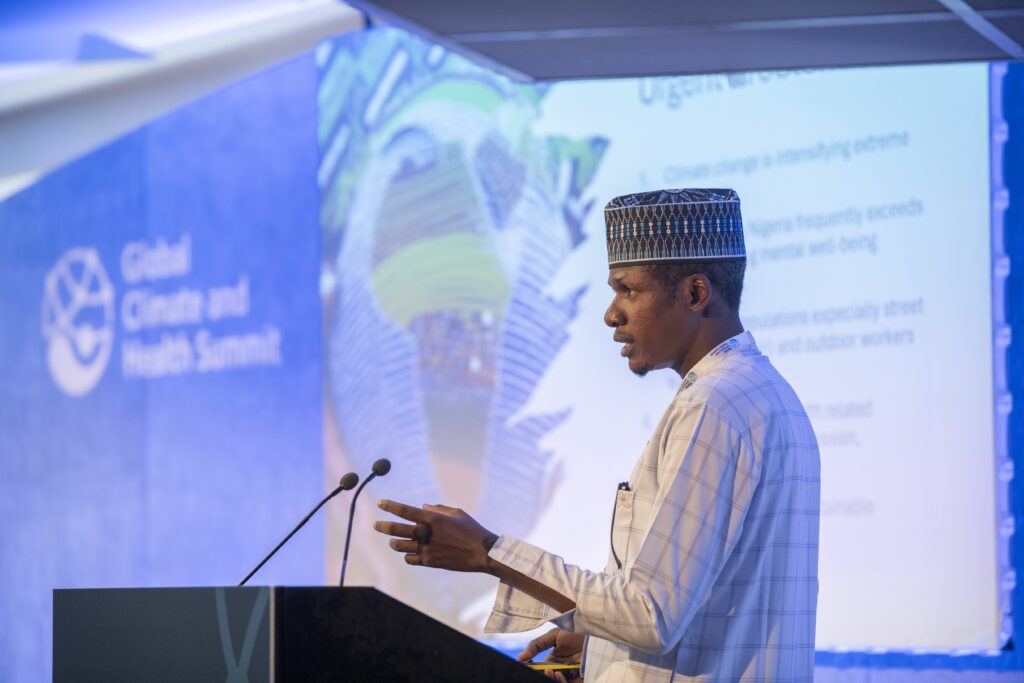
Speakers included thermal physiologists who are members of the Society and sister organisations, mental health specialists, cross-disciplinary research leads, union representatives, Transport for London and clinicians. All the presentations from the heat strand, as well as the other strands and the keynote speakers, can be found at globalclimateandhealthsummit.org
Main takeaways from the heat strand
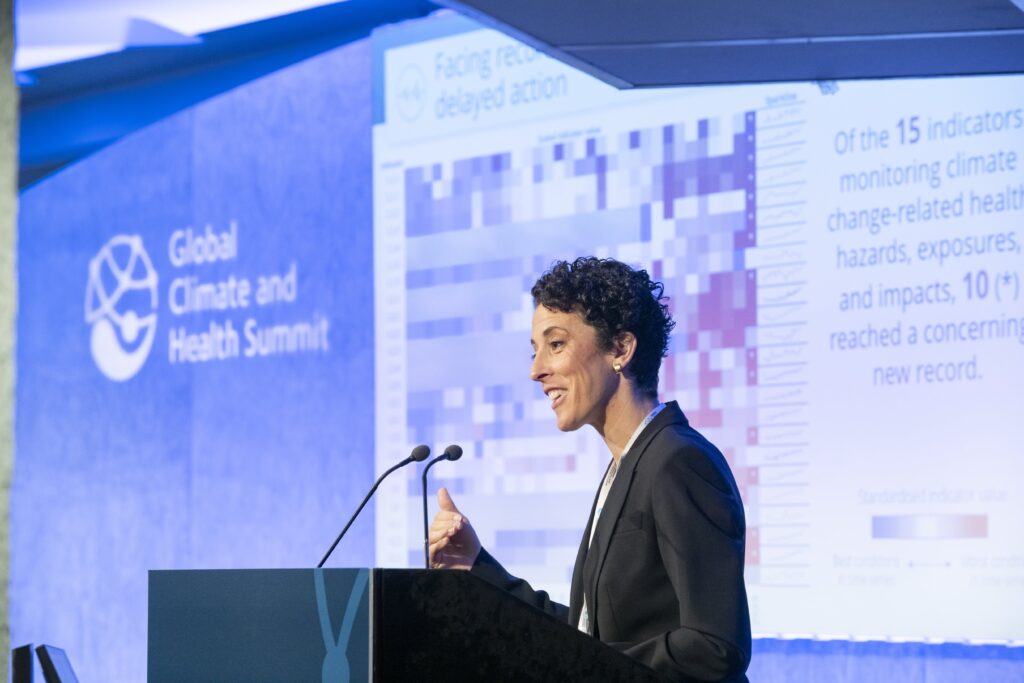
- There is a lack of tailored, local data on the impact and cost of extreme heat, particularly on physiologically or socioeconomically vulnerable populations, making it easy for the risk to be downplayed or ignored.
- Thresholds are either absent, not localised or poorly defined, particularly for vulnerable groups (e.g pregnant women, outdoor workers, people with mental/neurological illness). Where thresholds do exist (e.g., comfort standards, suicide risk per °C), they are inconsistently measured and rarely embedded in policy or enforcement.
- Impactful evidence-based solutions to combat the threat of extreme heat must be context-specific and co-created with target communities.
- Cost-benefit analyses are key to demonstrating both the health and economic risks and rewards of investing in adaptation solutions. Cross-sector costs of extreme heat are rising and should be used to make the economic case for adaptation measures that will, in the long term, reduce disruptions and operational risks (e.g. maintenance issues, systems outages, higher energy costs and losses in health and productivity).
- Workplaces often inadequately and inconsistently adopt modifications that support worker health, safety and productivity in response to extreme heat. Systemic risk management within workplaces (including consideration of psychosocial risks) as well as clearer standards (such as maximum working temperatures) enforced by legislation are needed.
Next steps for the Global Climate and Health Summit and the contribution of thermal physiology
Thermal physiologists will continue to be at the heart of the Society’s work on minimising the health impacts of climate change. The Society recently published its Phase One report in which you can read more about the Summit’s themes as a whole. If you would like to be involved with future work, please join the Climate and Physiological Resilience Network – to connect across science, policy and practice and be among the first to hear about opportunities from the Society and other stakeholders in this area. Central to this will be the follow-up roundtables this year where we will build on the Summit’s key cross-strand themes to develop a Summit Roadmap at the beginning of next year.