

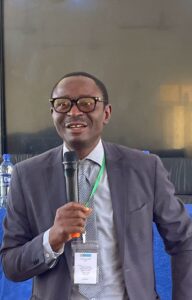
By Professor Bamidele Victor Owoyele,
Society Representative, University of Ilorin, Ilorin, Nigeria.
Bamidele Victor Owoyele. FTPS is a Professor of Physiology specializing in Neuroscience at the University of Ilorin, where he recently concluded a two year tenure as the Dean of the Postgraduate School. With over 26 years of experience in teaching and research, his distinguished career includes a postdoctoral fellowship at Massachusetts General Hospital and Harvard Medical School. He currently leads the Neuroscience and Inflammation Unit at the University of Ilorin and serves as President of the Society for the Study of Pain, Nigeria (SSPN). A Fellow of multiple professional societies, Professor Owoyele’s research focuses on rodent models of acute and chronic pain, as well as neuroinflammatory and neurodegenerative conditions like Parkinson’s and Alzheimer’s diseases.
Professor Bamidele Victor Owoyele was a 2025 Institutional Engagement Award recipient. We followed up with Bamidele to find out more about his event and the outcomes.
A. The 2025 Institutional Engagement Award and the organization of Physiology Week at the University of Ilorin:
I have been privileged to win the Institutional Engagement Award (IEA) a few times over the years as a Society Representative. Each time, the grant has funded slightly different activities. In 2022, we used the grant to organise a training workshop for young academics in the South West region of Nigeria. However, in 2025, it was used to support the Physiology Week celebration in November.
For the 2025 events, we planned and carried out a three-day programme. The first day involved an outreach to a secondary school within the locality of our university. Through careful planning and communication, we engaged up to 60 science-oriented students on the functions of various body parts, the importance of caring for the body, what the body is, and how to become a physiologist.
The second and third days were filled with activities within the university where we invited numerous speakers to discuss topics such as the body functioning like a human battery, both in normal and clinical contexts. Alumni working in various fields—clinical, industrial, and academic—discussed career options for physiology graduates. Two panel sessions allowed students (physiology majors) to ask questions on career choices, further studies, and how to benefit from alumni and mentoring. There was also a business pitch session where students linked their entrepreneurial efforts to physiology. At the end, students received awards and certificates.
B. Outcome of the Physiology Week activities:
Key lessons from the week include:
1. We successfully increased awareness of how the body functions.
2. The students were fascinated and participated actively with questions.
3. We assembled a carefully selected team of undergraduates, postgraduates, and faculty members, which we hope will ensure programme continuity.
4. The positive feedback from students was overwhelming. They became more knowledgeable about physiology and its career paths, which increased their interest and focus.
5. Some students gained direct access to mentors, and networking activities began during the event.
6. We were pleased to receive encouraging feedback from about 150 responses on online forms, including two samples:
“I enjoyed every moment of the event as it opened my eyes to career possibilities that can be explored both during school and after graduation. I hope the department organizes more events like this. I wish I had attended such events in 100 level, but it’s better late than never. I also learned how networking has helped important figures in the department like Prof. B.V. Owoyele, Dr. Abdulmajeed, and representatives from PhySoc UK, among others.”
“The events were enlightening and refreshing. I am very grateful to have attended. I gained a lot, from viewing physiology differently, to potential workplaces, to how to navigate my career, and the importance of networking.”
C. Future plans:
I will continue to organise Physiology Week and other engagement activities because they promote understanding of physiology, empower the community and especially students, with knowledge about physiology and its various career opportunities.
Specifically, I see it as a way of giving back to the community—supporting upcoming physiologists both locally and nationally.
I plan to seek funding from businesses and individuals for these activities and involve students in organising them to make the programmes more participatory.
D. How the Institutional Engagement Award (IEA) supported my activities:
The Institutional Engagement Award has been crucial in helping me organise workshops and outreach events by providing logistical support for organising team members, arranging public address systems, transport, refreshments, lodging for speakers, and sometimes tokens of appreciation. While the Institutional Engagement Award acts like a seed grant in many cases, covering over 60% of the event costs, we cover the remaining expenses.
E. What I learned from undertaking this event:
I am always excited to share impactful experiences with younger colleagues. The enthusiasm of the secondary school and university students continues to motivate me. I also maintain engagement with alumni and current students to promote physiology and dispel misconceptions about its prospects in my country. Above all, the gratitude expressed by students for the exposure is deeply fulfilling.
F. Advice for Future Applicants
Successful Institutional Engagement Award proposals must prioritize audience captivation. I recommend assembling a dedicated team to brainstorm activities that address the immediate needs and interests of your target demographic. Furthermore, ensure your application is original and highly practical; reviewers value feasibility and genuine commitment. Be prepared to invest significant time and resources to guarantee the success of your physiology-related outreach.
Want to apply for an Institutional Engagement Award?