Abstract
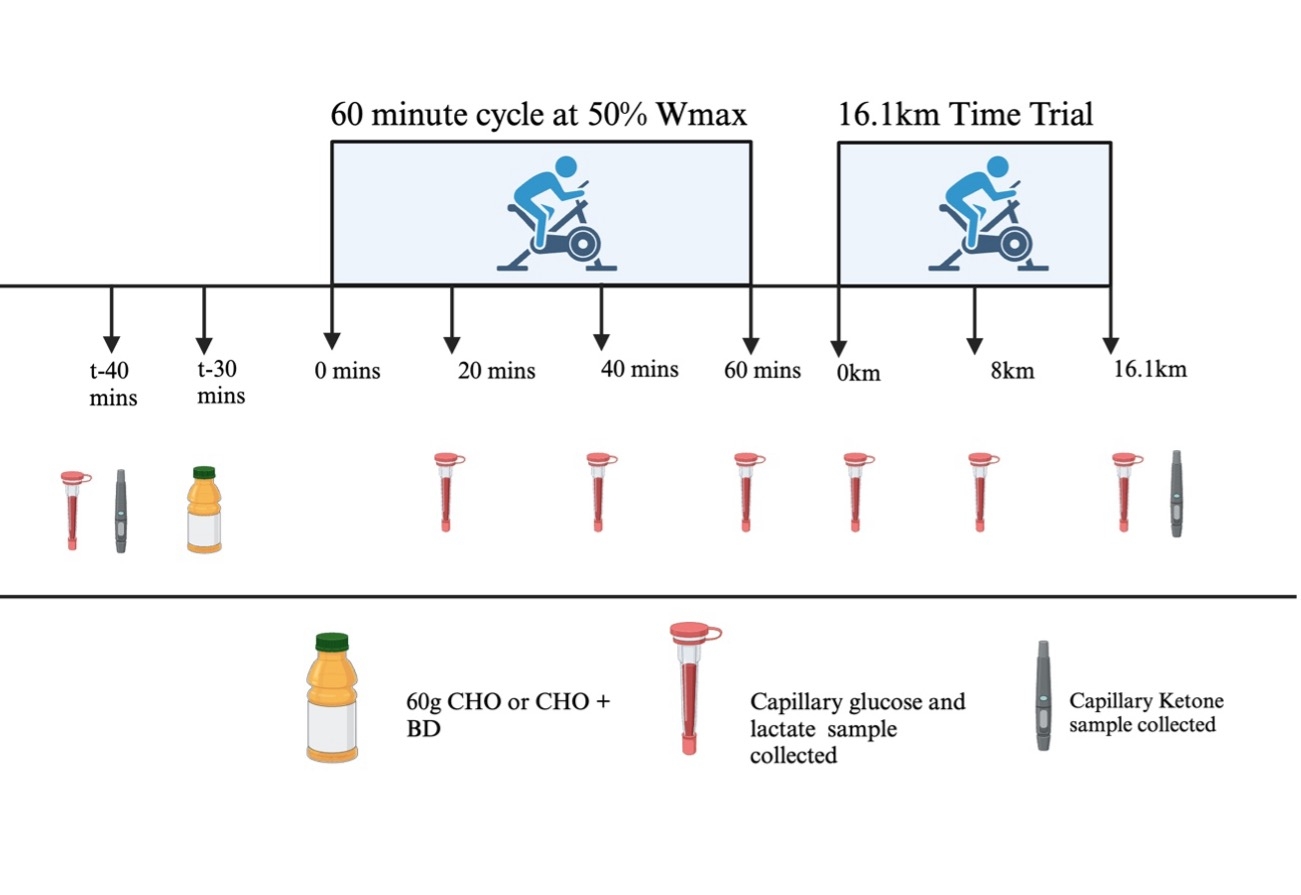
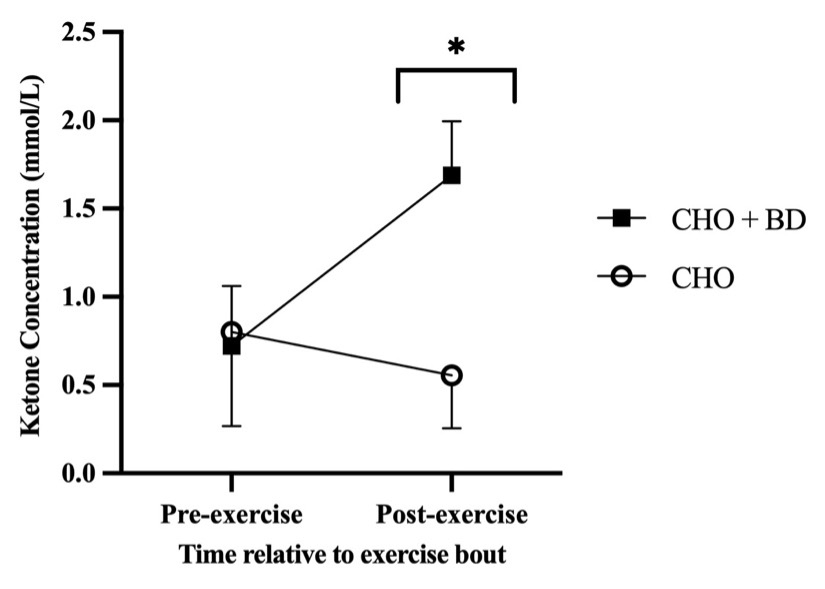
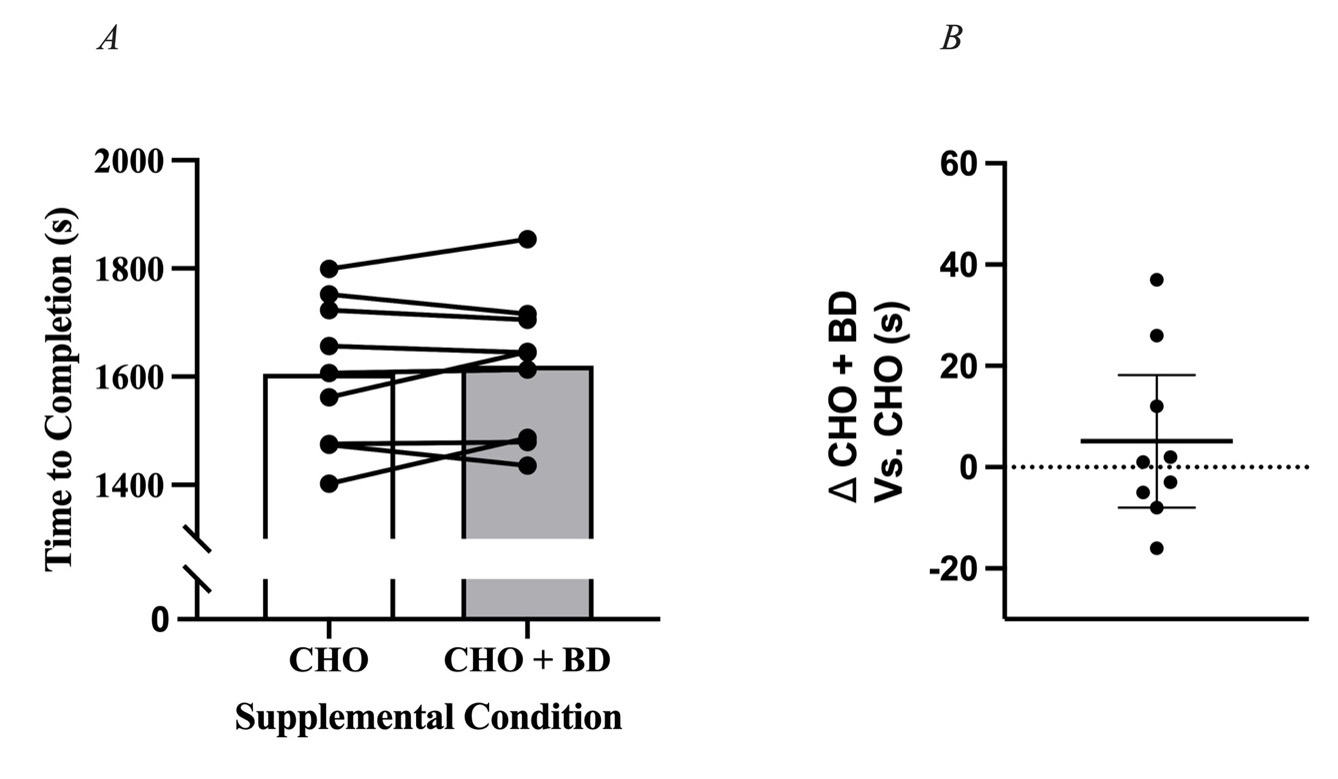
Introduction: Exogenous ketone supplementation (1,3 butanediol) has gained popularity as a potential ergogenic aid due to its theorised role in altering exercise efficiency and muscle metabolism to spare glycogen. Most findings on the effect of pre-exercise exogenous ketone ingestion are equivocal, likely due to the role of exogenous ketones in suppressing glycolytic flux and the low rates of ketone oxidation observed following supplementation. However, there is minimal research investigating the impact of exogenous ketones in ketogenic individuals. Increasing ketogenic enzymes through prolonged ketogenic feeding may enhance the effects of exogenous ketone ingestion and allow for performance enhancement in this cohort. Therefore, the aim of this study was to investigate the impact of increasing circulating ketone bodies through exogenous ketone supplementation on endurance performance in athletes chronically adapted to a ketogenic diet. Methods: Nine recreationally active males (age 42 ± 9 years; stature 176 ± 5 cm; mass 74.4 ± 6.1 kg) chronically adapted (minimum 12 months) to a ketogenic diet (defined as daily carbohydrate consumption was <50g/day, or <10% of total calories) volunteered to take part in the study. Participants visited the lab four times, the first visit determined their V̇O2max, and the second visit accustomed them to test procedures. In a counterbalanced design, visits 3 and 4 involved the consumption of a 60g carbohydrate beverage (CHO), or a beverage comprising 60g carbohydrate and 0.5g/kg 1,3-butanediol (CHO + BD). Participants then completed a 60-minute continuous exercise bout, followed by a 16.1km time trial. This study was approved by Kingston University ethics and all procedures and conduct complied with the Declaration of Helsinki. Results: βHB significantly increased in CHO + BD group compared to CHO (P<0.01). During continuous exercise, there was no effect of supplementation on lactate concentration, substrate oxidation, exercise economy, RPE or heart rate (P>0.05). However, glucose was significantly lower at minute 60 of continuous exercise in CHO + BD compared to CHO (P=0.01). There was no effect of supplemental condition on lactate concentration, substrate oxidation, exercise economy, RPE, heart rate or time to completion during the time trial (P>0.05). Conclusion: This study demonstrated that 1,3-butanediol (1,3BD) supplementation did not enhance 16.1km time trial performance in chronically ketogenic individuals despite a significant increase in blood ketone levels following the CHO + BD condition. Additionally, there was minimal impact on exercise metabolism following CHO + BD ingestion in spite of increased circulating ketones. This is the first study to the authors knowledge, to assess the impact of exogenous ketone ingestion on performance in chronically ketogenic individuals, with no synergistic effect observed between chronic carbohydrate restriction and exogenous ketone ingestion when consumed pre-exercise. The results demonstrate equivocal effects of 1,3BD ingestion on endurance performance in chronically ketogenic individuals. Despite metabolic changes, such as increased βHB concentrations following ketone ingestion, there were no significant changes in substrate oxidation during continuous exercise. Future research should explore the synergy between chronic ketosis and exogenous ketone ingestion to determine whether long-term dietary adaptation influences the impact of exogenous ketones on exercise performance.