

By Dr Roslina Abdul Rahim
Associate Professor, International Islamic University Malaysia, Malaysia
Paton Historical Studies Fund recipient and Member of Physiology News Advisory Board for the Physiological Society.
Dr Roslina Abdul Rahim was a 2024 Paton Historical Studies Fund recipient. We followed up with Roslina to find out more about her project and the outcomes.
Honouring the Past, Inspiring the Future: Reflections on the History of Physiology Competition
As a recipient of the Physiological Society’s Paton Historical Studies Fund, I had the privilege of developing and leading the inaugural History of Physiology Poster Competition at the Kulliyyah (School) of Medicine, International Islamic University Malaysia (IIUM) in February 2025. This grant not only provided essential support for the event but also enabled a deeply rewarding experience that connected students with the rich historical foundations of our discipline and inspired them to view physiology through a wider, more creative lens.
The idea behind the competition grew from a simple but powerful belief: to understand where we are today as physiologists, we must first appreciate the intellectual journeys of those who came before us. Physiology, at its core, is a story of human curiosity — from early understandings of the body in ancient civilizations to the detailed mechanistic insights that define modern integrative science. Yet, this historical context is often missing from formal education, particularly in regions where science curricula focus more on current discoveries than on the foundations that shaped them. I hoped that the competition could bridge this gap.
Understanding the Competition
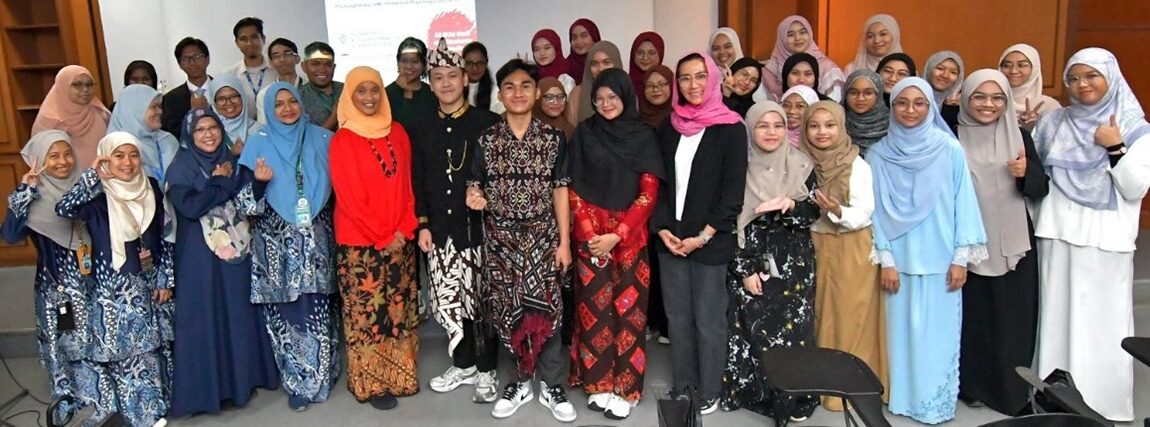
With the support of the Paton Historical Studies Fund, the History of Physiology Poster Competition was held on 20 February 2025 at the Kulliyyah of Medicine, IIUM Kuantan Campus. Designed as a poster competition enhanced with 3D models and short video presentations, the event welcomed 12 teams from institutions in Southeast Asia — including IIUM, Universitas Ciputra (Indonesia), and Universiti Sains Malaysia (USM). Each team was challenged to research and creatively communicate pivotal milestones in the history of physiology.
The competition was structured around two judging rounds. In the first, teams were evaluated on the accuracy and historical relevance of their content, the creativity of their visual presentations, clarity of communication, and the overall impact of their approach. In the second, each team delivered a five-minute oral presentation and participated in a Q&A with our panel of judges. This robust evaluation ensured that participants not only demonstrated factual knowledge but also conveyed their insights with confidence, reflection, and intellectual curiosity.
Educational Impact and Student Development
One of the most significant benefits of receiving the Paton Historical Fund was the opportunity to foster an educational experience outside traditional lectures. The competition enabled students to engage deeply with history — from Islamic Golden Age scholars who preserved and expanded ancient scientific knowledge, to milestones in modern integrative physiology. By doing so, participants gained a more holistic perspective of how physiological science has evolved and how historical innovations still influence current research frontiers.
For many students, this was their first opportunity to conduct historical research, synthesize information from diverse sources, and communicate complex ideas visually and orally. These skills — critical thinking, scientific communication, creative problem-solving — are essential for future scientists but are rarely emphasized within standard coursework. Over the course of preparation and presentation, students developed stronger confidence, improved public speaking abilities, and a deeper sense of ownership over their learning. More importantly, they were encouraged to think beyond textbooks and see their education as part of a larger scientific narrative.
The competition also fostered meaningful networking. Students connected with mentors, peers, and judges from different cultural and academic backgrounds, enriching their understanding of physiology as a global enterprise rather than a localized subject. These interactions often sparked discussions about future research interests and collaborative possibilities — an unexpected but welcome outcome.
Celebrating Achievement and Creativity
The awards ceremony was a highlight, celebrating not just winners but the dedication and creativity of all participants. The top prize went to a team from Universitas Ciputra for their presentation on Ibn al-Nafis and his contributions to understanding pulmonary circulation. Other teams took innovative approaches, from exploring the history of neurophysiology to creatively interpreting the evolution of physiology in social and cultural contexts.
For me, these presentations showcased the imagination and depth that today’s students bring to scientific inquiry. They reminded me that learning history is not about memorizing dates and names, but about understanding how ideas evolve and how the past can inspire future discoveries.
Reflections and Recommendations for Future Applicants
Receiving the Paton Historical Studies Fund was both an honor and a responsibility. The experience enriched my teaching philosophy and reinforced my belief in the importance of creative, interdisciplinary engagement. For future applicants considering this grant, my advice would be: think broadly about impact. The strength of a project lies not just in its academic rigor but in its ability to inspire curiosity, build skills, and include diverse voices in the scientific conversation. Align your proposal with a clear educational goal, demonstrate how your activities will engage your target audience, and consider how you will evaluate the impact of your work.
In conclusion, the Paton Fund enabled an event that not only celebrated the history of physiology but also cultivated a new generation of thinker’s eager to explore both past and future frontiers of our discipline. It was an honor to transform that vision into reality, and I remain deeply grateful for the support of the Physiological Society.