
By Dr Laura Ginesi
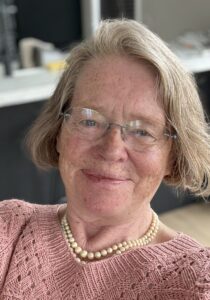
Dr Laura Ginesi is an Applied Physiologist and retired Senior Lecturer who taught physiology, pathophysiology and health sciences to healthcare professionals and others at universities across the UK for more than 40 years. With wide experience of leading programme innovation, curriculum development and supervision of research students across multiple inter-disciplinary programmes, Laura continues to contribute as an associate tutor at the University of East Anglia (UEA) and is currently collaborating with Professor Derek Scott of the University of Aberdeen.
Laura has written many peer-reviewed articles and pieces for health-related charities. She is co-author of Anatomy and Physiology: an Introduction for Nursing and Healthcare published by Lantern Publishing and co-author of Dementia Care at a Glance published by Wiley. Laura contributed a chapter, Health Matters, to Developing Education for Sustainable Development in Further Education published by Palgrave MacMillan in response to the publication of the UN development goals for 2030. She contributed an article The Lasting Impact of COVID-19 on health and well-being to Workplace Wellbeing: 21 Lessons for the New World of Work published by the International Stress Management Association in response to the global pandemic. Laura is the consultant editor for Nutrition Screening for Nurses, to be published by Lantern Publishing in 2027.
We spoke to Laura as part of our 150 voices of physiology series where she told us about her unconventional and fascinating career path.
Dr Laura Ginesi – voices of physiology
My childhood holidays were spent messing about in dinghies and canoes on the Solway Firth in the days before wetsuits were invented. We got shivery and cold, and I wondered why people’s lips went blue? My dad explained cyanosis to me. My uncle was a Royal Navy deep diver[1][2][3] who later had a cardiac arrest and died during an attack of “the bends”– on the day I sat my O-grade Biology exam. Diving suits, decompression sickness and oxygen narcosis became real to me. My career path was set.
I graduated from the University of Glasgow in 1978, having been taught by Ian McGrath, Des Gilmore, Hugh Elder, Otto Hutter, John Durnin, Neil Spurway and others – all inspirational physiologists in their own way. I loved my time there; the subject fascinated me, we had great practicals and I am still in touch with some fellow students. Intrigued by vascular smooth muscle, I went on to the University of Southampton, to Alan Noble’s lab where we worked on renin.
Back in 1982, when I finished my PhD, the role of the renin-angiotensin-aldosterone system (RAAS) wasn’t well-recognised. We had to raise our own antibodies for radioimmunoassay. It’s all very different today: we know that RAAS is ubiquitous and contributes to adjustments in blood volume, electrolyte homeostasis and vascular resistance. Its key role means that a wide range of medications which target RAAS are now available to manage hypertension and heart failure in millions of patients across the world.
After a few years as a post-doc, I had my first baby and soon went on to have two more live births. Childbirth, miscarriages and baby loss gave me a completely different perspective on physiology! In the 1980s, women’s health issues, diversity and mental health were relatively neglected; childcare was impossible to find. Fewer than 10% of members of the Society were women. Opportunities for a newly divorced, single mother to get back into laboratory research were non-existent.
In the meantime, I trained as an antenatal educator – a voluntary role that I continued for many years. A friend suggested teaching… a career I had never previously considered. But when a chance came up to join the science team at City College Norwich, I jumped at it. In the space of a few years, I was promoted from part-timer through to Senior Lecturer responsible for a Human Life Sciences pathway and later for a Combined Arts & Sciences programme. Mostly I was teaching physiology and applied physiology across a wide range of HE and Access students – from biologists to psychologists, through sports scientists, nutritionists and environmental scientists (even in construction and beauty therapy occasionally). In the main, they were people who were having a “second chance” at education; that’s what colleges are all about. Students could be aged from 16 to 75 years and differed widely in ability. They were amazing people – so incredibly motivated to succeed – but innovation in teaching was often needed to keep their interest.
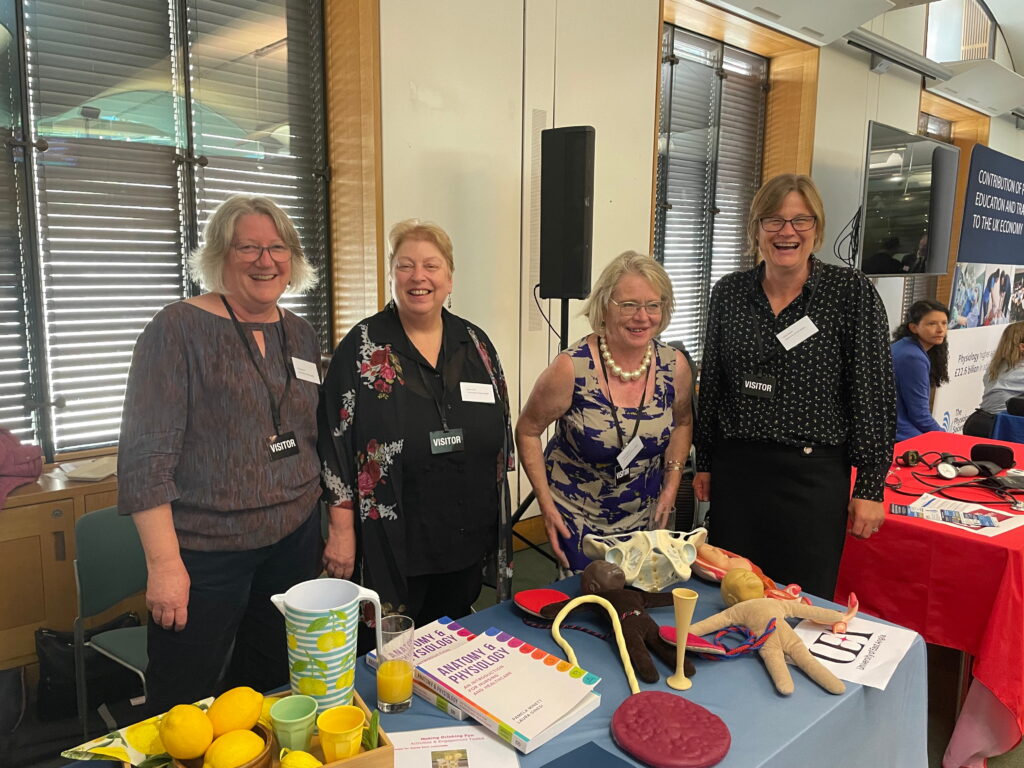
In 2000, I was asked to lead a team of 5 lecturers to develop an Access to Medicine course; the Norwich Medical School at the University of East Anglia (UEA) was being set up. It was an incredible team; despite something like 250 years of experience in education under our belts, we nearly gave up several times. It was hard. That we succeeded in supporting more than 80% of the students who enrolled with no formal background in science in gaining the Distinction grades they needed to secure places in medical schools is one of the projects I’m most proud of. Now UEA has its own foundation year for a 6-year programme.
In no time at all, my daughters “flew the nest” and it was time for me to make a change, so I moved to Birmingham City University (BCU). Teaching pre- and post- registration nurses and allied healthcare practitioners (AHPs) was simultaneously a delight and a challenge. Physiology and pathophysiology may be underpinning disciplines, but there isn’t always enough dedicated time within a packed curriculum. For these students, physiology is something of a “marmite” subject – some love it while others hate it – many find that it’s difficult to grasp even core concepts.
Around that time, the Physiological Society Education Group was inaugurated at a small meeting; 10 of us attended. With a colleague from BCU, the Biosciences in Nurse Education (BiNE, now BioNMAP) got start-up funding [4][5]. I became involved with the International Stress Management Association (ISMAuk ) and started teaching business managers about stress physiology. These groups are about building communities of like-minded educators. Within physiology, there’s still something of an emphasis on teaching science and medical students, but nurses, midwives and allied healthcare professionals are a huge group who are use physiological knowledge and apply skills in physiology – from taking blood pressures through to genomic analysis – every single day with every person they come in contact with. When an opportunity arose, I came back to Norfolk and re-joined the team at UEA. It felt like coming home.
I still enjoy the times I get to network with other physiologists. I remember giving my first presentations in the days when the Society used a ‘traffic light” system to make sure we kept to time. Terrifying. My lovely supervisor Alan Noble – himself a well-respected physiology educator – pointed out Nobel-prizewinners at Society conferences and dinners. Awesome. I vividly remember wondering what on earth I could do when I found myself in a part of the country where there was no physiology department? Yet here I am; almost 70 and being asked to look back over a truly wonderful, if unremarkable career.
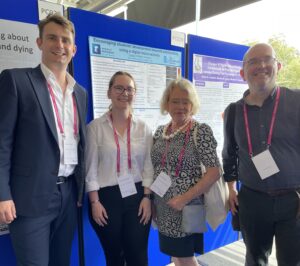
I’m only too aware that my journey hasn’t been a conventional one. For a start, my voluntary work for health charities has run in parallel throughout my career. Yet I’m convinced that doing this has deeply enriched and informed my teaching of healthcare professionals. People are so interesting and they all have their health issue(s) to tell.
At 96 years of age, my parents continue to inspire me; my dad first encouraged me to ask questions and find robust evidence. If he didn’t know the answer, we’d seek it out! My mother (who had been a dietician) taught me and my 6 siblings about good food cooked from scratch. Never turn down an opportunity was her wise advice.
I “retired” a few years ago, so I’ve got more time to write and think… to play golf and make textiles… but I won’t stop loving physiology. I’m (slowly) getting together a series of short podcasts and still collaborate with Derek Scott from University of Aberdeen. Our discipline has such an essential role to play in helping people to understand how our amazing bodies work in health and in disease. Climate change isn’t going to go away, so global heating will continue to affect our children’s children. The world is going to continue to need physiologists and healthcare professionals who understand homeostasis, heat stress and how pathology develops across the lifespan.
I can’t see that changing in the future.
References:
[1] Hoole, RN (2006) HMS Reclaim: a world record-breaker. Available online: https://www.mcdoa.org.uk/HMS_Reclaim_A_World_Record_Breaker.htm
[2] Video: HMS Reclaim | The important little ship you’ve never heard of |
[3] Royal Naval Physiological Laboratory. available online: https://www.jimsuit.com/background.html
[4] https://microsites.bournemouth.ac.uk/flie/2016/10/06/bine-biosciences-in-nurse-education/
[5] Bioscience Network: BioNMAP https://connect.advance-he.ac.uk/topics/15232/home