Introduction:
Skin temperature fluctuates dynamically and reflects complex thermoregulatory mechanisms, including the balance between heat loss and heat gain mechanisms through autonomic control of peripheral blood flow and metabolic factors. While analytical methods have been established to assess skin temperature variability (STV), the potential applications of STV analysis remain an emerging and primarily exploratory field. This systematic review aims to synthesize current evidence on the prognostic role of STV metrics, including short-term fluctuations, circadian patterns, and entropy in predicting clinical outcomes such as mortality. It also seeks to characterise the technical heterogeneity in measurement sites and analytical approaches, and to identify future research directions.
Methods:
Following PRISMA guidelines, a systematic search was conducted across Ovid MEDLINE, EMBASE, and AMED from inception to July 2025. Studies were eligible if they included human participants in any clinical setting and linked dynamic STV measurements to prognostic outcomes. The quality of the included studies was assessed using the QualSyst tool. As this study is a systematic review of previously published data and did not involve new data collection from human participants or animals, no ethical approval was required.
Results:
Of 123 papers screened, a total of 8 studies met the inclusion criteria. Preliminary evidence suggests an association between altered STV and patient prognosis, although the findings are limited by methodological heterogeneity:
1. Population-Level Findings: Large-scale data from the UK Biobank (n=91,462) identified that blunted circadian temperature amplitudes are independent predictors of long-term incident diseases, including Non-alcoholic Fatty Liver Disease (HR: 1.91) and Type 2 Diabetes (HR: 1.69).
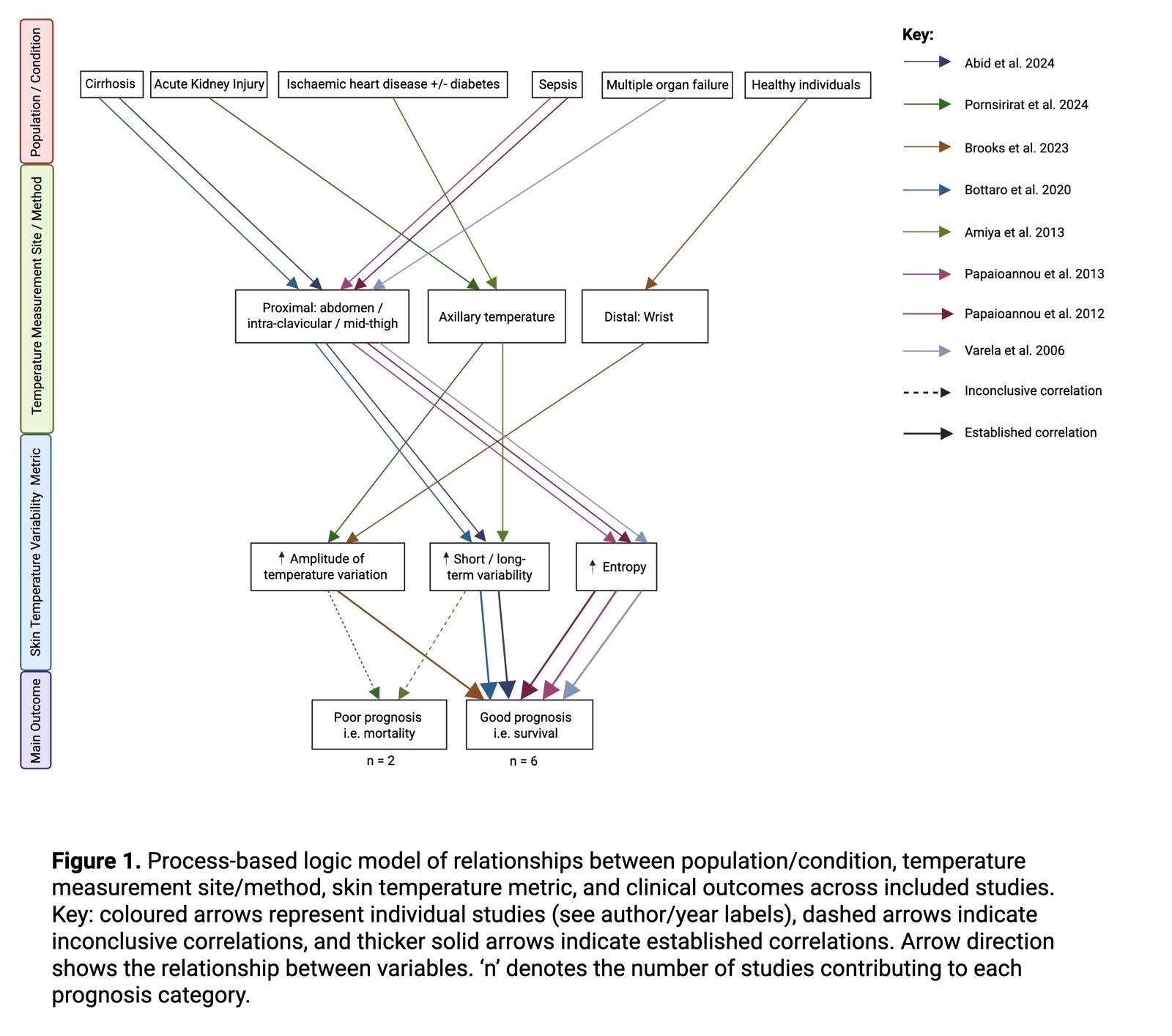
2. Clinical Cohort Findings: Seven smaller observational cohorts (n=21 to 66) demonstrated that reduced signal complexity (entropy), loss of short-term variability, and increased thermal instability were associated with higher mortality risks (OR: 1.41) and lower event-free survival across acute and chronic conditions, including sepsis, cirrhosis, and ischaemic heart disease.
3. Methodological Heterogeneity: Significant variability was observed across studies regarding measurement sites (e.g., axilla, wrist, hypochondrium), sampling frequencies (ranging from every 10 seconds to three times daily), and analytical approaches, including amplitude, entropy, and short- and long-term variability.
A process-based logic model was developed to map the conceptual relationships between patient populations, measurement sites, STV metrics, and clinical outcomes (Figure 1).
Conclusion:
STV analysis shows promise as a non-invasive tool for identifying physiological vulnerability across a wide spectrum of clinical conditions. However, the current evidence is predominantly exploratory and constrained by small sample sizes and high methodological heterogeneity. Future research should focus on large-scale validation studies and standardizing STV metrics to facilitate their integration into wearable technology and real-time clinical monitoring systems.