Dr Simon Cork awarded the Society’s 2026 Widening Participation in Physiology Prize Lecture for his initiatives for fairer access for all students desiring a medical career
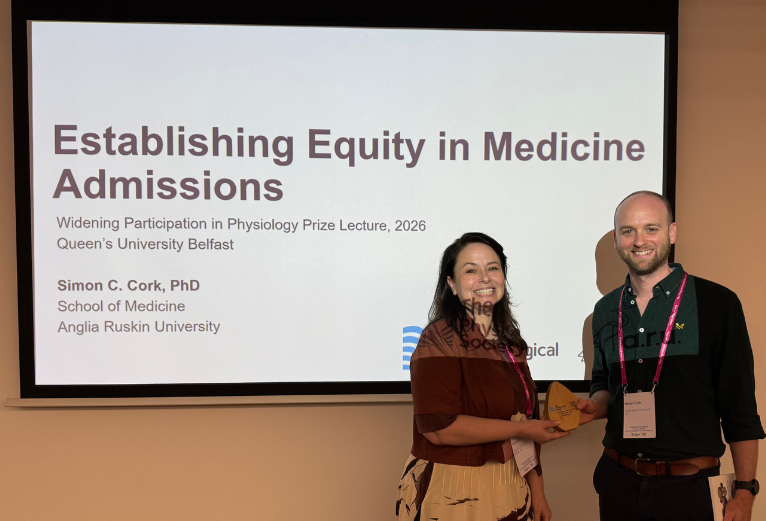
“Across the UK, access to medical school remains challenging for those from non-traditional backgrounds,” states Dr Simon Cork (Anglia Ruskin University School of Medicine, UK). As a board member for both the UCAT consortium and the Medical Schools Council Selection Alliance, Simon advocates for fair access policies at a national level. In his Prize Lecture ‘Establishing equity in medicine admissions’, he informs us of the barriers to equitable medical school admissions and discusses the educational and societal benefits of recruiting students from diverse backgrounds.
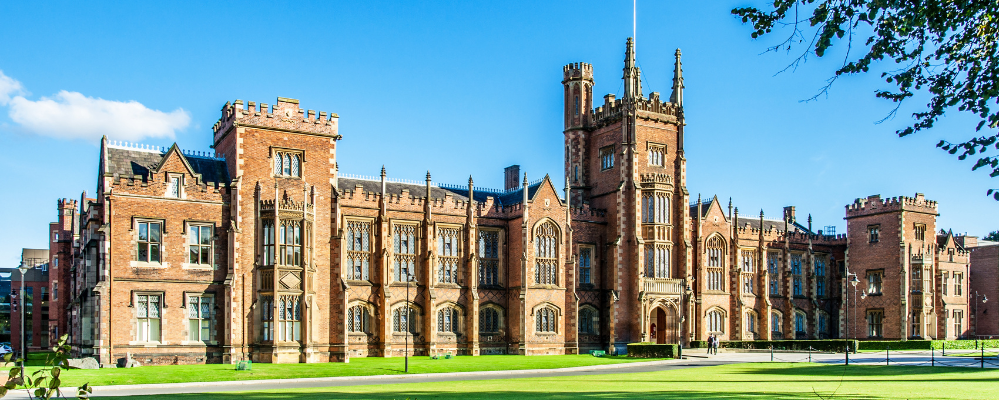
Speaking today at ‘Celebrating Physiology in Northern Ireland’ at Queen’s University Belfast (UK), Simon delivered his Widening Participation in Physiology Prize Lecture. This is the Physiological Society’s annual lecture that celebrates impactful work in increasing the number and diversity of people studying and conducting research in physiology.
Simon stressed that research consistently shows that students from lower socioeconomic backgrounds are less likely to succeed in their applications than those from less disadvantaged backgrounds, with each of the application steps acting as a barrier.
“Applicants from private schools have 1.5x the odds of receiving an offer compared to state school applicants, and applicants from the highest socioeconomic backgrounds make up 75% of entrants.” Simon reports, adding, “establishing equity in admissions to medical school serves not only to promote social mobility, but is implicated in improved patient care”. He argues, “research also shows that a diverse medical workforce leads to better patient outcomes, underscoring the importance of addressing this issue.”
Initiatives for widening access to medical education
Over the years, Simon has implemented several policies at Anglia Ruskin University (ARU) School of Medicine that have widened student participation onto the medicine programme. The institute is now leading recruitment in the sector. His policies include an evidence driven Widening Access to Medicine Scheme, which acknowledges that some students face social and/or educational disadvantage that does not dictate their future potential.
The scheme identifies these candidates at the application stage. Their UCAT score is uplifted by 5% (data from UCAT shows such students achieve on average 5% lower UCAT scores than non-disadvantaged candidates) and they are given a lower offer at A level. Simon points out, “this does not dilute the quality of students we attract”. ARU has one of the highest continuation rates of any medical school in the country.
Research shows that students who receive free school meals or who have experienced care are some of the most disadvantaged when applying to university, particularly to high tariff courses such as medicine. “At ARU, we have implemented a policy of guaranteed interviews for these students, regardless of how well they score on the UCAT. This year we invited over 250 applicants to interview through this scheme.” Simon celebrates how his scheme has opened the door to a medical career for over 7000 students (growing at 30-50% per year).
Broadening participation and increasing diversity
Simon is also working with government and industry bodies. “My hope is that we get to a point of fair access, where people’s chances of getting into university are based on merit.” He stresses, “all too often exceptionally talented people are either put off applying or fail against a system pitted against them”. Simon encourages that both individual students and the nation could significantly benefit when national-level metrics on access is equal across socioeconomic background, ethnicity, disability etc.
“It’s important to be clear that, despite what some critics say, this isn’t about introducing barriers to those who haven’t experienced disadvantage, but about recognising that where there is talent (regardless of where it comes from), there is opportunity,” states Simon.
Regardless of all his hard work and individual achievements, Simon shared with us what matters most to him on receiving the Prize Lecture. “It’s obviously nice to be recognised on a personal level, but I hope this award shines a light on the important work that we’re doing at ARU. Not only to achieve fair access to medicine locally, but to be unashamedly proud of it as an institution.”