

Professor Ming Lei awarded the 2026 Mabel Fitzgerald Prize for Diversity in Physiology
“It is a tremendous honour and a deeply meaningful recognition of my work,” says Professor Ming Lei, upon receiving the Society’s Mabel Fitzgerald Prize Lecture for Diversity in Physiology. Ming delivered his prize lecture ‘PAK1/2 Signalling and Therapeutic Activation in Cardiac Protection’ at our Celebrating Physiology in Cambridge event.
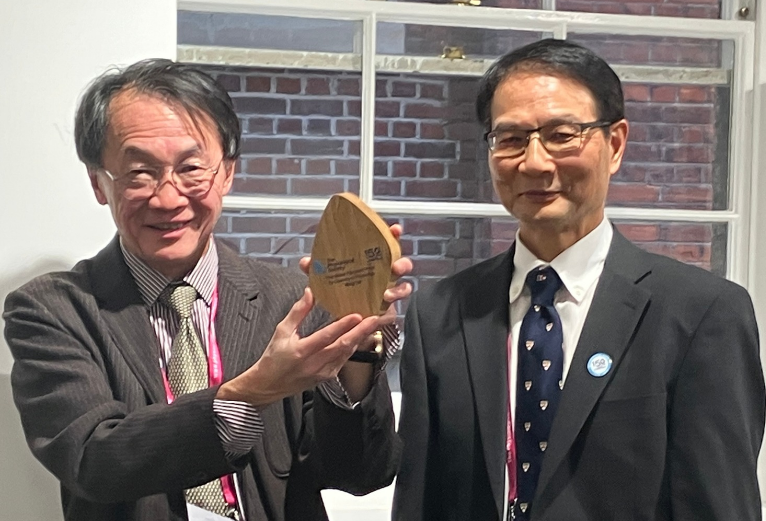
“Professor Mabel Fitzgerald was a pioneering physiologist whose research made important contributions to respiratory physiology and high-altitude adaptation at a time when opportunities for women in science were extremely limited,” says Ming. “I greatly admire not only her scientific contributions, but also the perseverance and integrity she demonstrated throughout her career. It reminds us that physiology advances through both intellectual rigour and personal courage.” He adds, “To be associated with a prize bearing her name is therefore particularly significant.”
Ming explains how his own journey, from medical training in China to an academic career in Oxford (UK), shows how scientific progress benefits from diversity in every sense: diversity of culture, education, experience and perspective. “Different backgrounds encourage different questions, and different questions often lead to the most important discoveries,” declares Ming, concluding that these differences enrich scientific thinking and drive innovation.
Curious how the heart generates and maintains its own rhythm, Ming studied cardiovascular medicine. “My PhD programme at the University of Oxford with Dr Hilary Brown and Professor Denis Noble on sinoatrial node cells was among the most exciting and formative periods of my career,” he tells us. “The experiments were technically demanding and intellectually challenging but deeply rewarding.” It was Dr Brown and Professor Noble’s paper, How does adrenaline accelerate the heart?, that brought Ming to Oxford in 1994. “What had appeared to be a clinical observation became a fascinating physiological puzzle. That paper convinced me that understanding heart disease required understanding physiology,” recalls Ming.
1996 was a momentous year in Ming’s career journey, as he presented his first poster presentation at the Physiological Society Annual Conference, and published his first paper in the Society’s Experimental Physiology. He then received postdoctoral invitations from several leading scientists in the field, including Professor Mark Boyett, a major figure in cardiac pacemaking research. It was this collection of moments that led to Ming pursuing an academic career in cardiac physiology.
His research is focused on the electrical activity of the heart and how its disruption leads to cardiac rhythm disorders. He has made major contributions to understanding how ion channels and signalling pathways regulate the cardiac conduction system and has developed new therapeutic strategies for hypertrophic and arrhythmic heart disease.
Recently, his group developed a novel approach to activate protein kinases, which are an important class of enzymes that control essential cellular processes. Ming explains how he and his group discovered the peptide-guided strategy in his prize lecture. Their finding could open new therapeutic possibilities for a range of diseases, including cardiovascular, metabolic, neurodegenerative and regenerative conditions, all of which currently have limited treatment options available.
“Together with my collaborators, I uncovered the key role of the multifunctional p21 activated kinase type 1, PAK1, as a central signalling hub regulating excitation and homeostasis in cardiomyocytes. This work established PAK1 as a novel therapeutic target and has contributed to the development of a new class of therapeutic agents for hypertrophic heart disease,” says Ming.
Professor Ming Lei is featured in the 150 voices of physiology collection, our 150th anniversary gallery of stories from our community. Read his story on diversity, heart research and working on novel therapeutic targets for heart disease.