Background
Neuroinflammation is generally considered to be a pathological response. However, there is growing evidence suggesting that immune signalling within the central nervous system is a dynamic component of neural plasticity. Neuroinflammatory activity that is appropriately regulated may support memory formation and consolidation, with its effects depending on timing, intensity, and inflammatory state. This systematic review aims to synthesise current evidence on how neuroinflammation influences memory formation and consolidation under pathological and physiological contexts.
Methods
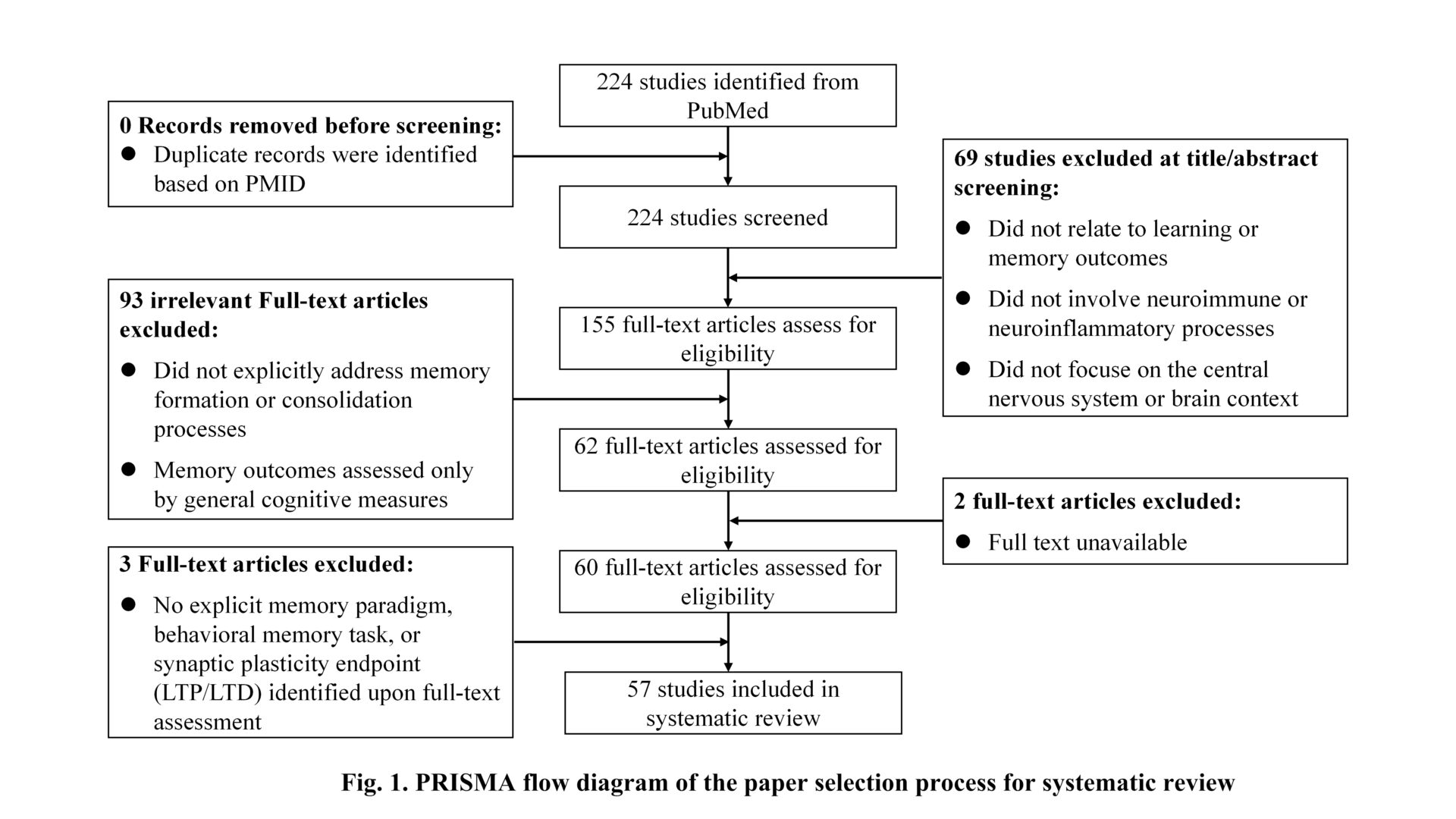
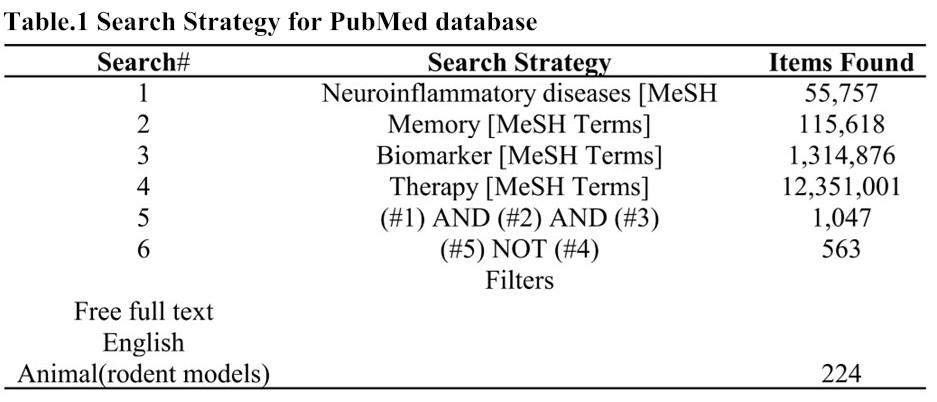
A systematic literature search was conducted in PubMed (Table.1) to identify studies examining neuroimmune and neuroinflammatory mechanisms involved in memory formation and consolidation following PRISMA guidelines (Fig. 1.). Search terms covered learning and memory, neuroimmune/neuroinflammatory processes, and the central nervous system context. Original experimental studies were included if they investigated neuroimmune or neuroinflammatory mechanisms in the central nervous system and assessed memory using explicit behavioural paradigms or synaptic plasticity endpoints (LTP/LTD) in non-human models. Reviews, human studies, and studies lacking memory-related outcomes or accessible full text were excluded. The final search was completed in January 2026, with no restriction on publication year.
Results
In total, 224 records were identified, and 57 animal studies between 2006 and 2026 were included after assessment. The included studies predominantly examined disease- or stress-related conditions, including ageing, injury, inflammation, environmental exposure, or physiological stress. All included studies employed at least one established memory paradigm or synaptic plasticity measure, supporting relevance to memory formation or consolidation. The most frequently used paradigms were the Morris water maze (35 studies) and novel object recognition (23 studies). Measures of synaptic plasticity were commonly reported, including long-term depression (22 studies) and long-term potentiation (18 studies). Additional paradigms included Y-maze, fear conditioning, Barnes maze, passive avoidance, extinction, and spatial discrimination tasks, with several studies applying multiple paradigms within the same experimental design.
Neuroimmune involvement was assessed using a broad range of biomarkers. The most frequently reported categories were cytokines (40 studies) and glial cell–associated proteins (33 studies), followed by neuropeptides/neurotrophins (18 studies) and inflammatory signalling pathways. At the molecular level, TNF-α, IL-6, IL-1β, GFAP, Iba1, and BDNF were the most commonly examined markers. Several studies additionally investigated inflammasome components, complement proteins, Toll-like receptors, microRNAs, or extracellular vesicles.
Across studies, inflammatory alterations were most often characterised by increased pro-inflammatory signalling or glial activation, which frequently coincided with impaired memory performance or disrupted synaptic plasticity. In contrast, studies reporting attenuation of inflammatory responses commonly observed improvements in memory-related outcomes.
Conclusion
Existing evidence indicates that neuroimmune and neuroinflammatory processes play a critical role in modulating memory-related behaviours and synaptic plasticity in animal models. Cytokine signalling, glial activation, and immune-related molecular pathways consistently interact with mechanisms underlying memory formation and consolidation. Future studies should more precisely distinguish immune effects across distinct memory stages to improve mechanistic resolution and translational relevance.