

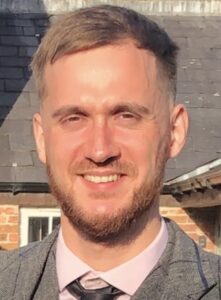
By Dr Daniel Tinnion
Daniel is a Society Representative at Manchester Metropolitan University, where he primarily teaches physiology at levels 3-7 and supervises both undergraduate and postgraduate students. In a research capacity he is particularly interested in skeletal muscle/neuromuscular physiology and he is actively researching ageing populations, master athletes and GLPs/nutritional interventions, as they relate to muscle. His research interests also extend to nutritional interventions (e.g. buffering agents such as sodium citrate) and pedagogical research, with the former representing the topic of his PhD thesis.
Physiology sparking curiousity
Statistically speaking the chances of someone doing a PhD is low, the chances of someone from Cumbria doing a PhD in physiology is almost certainly lower still. Whilst my interest in the science of the human body, often in the context of sport has always been strong, a big reason I took on those odds was to see if I could belong somewhere beyond my hometown of Workington. I very much feel like I belong to and gain a lot from being part of the Physiological Society.
Before my undergraduate sport science degree, I was originally interested in pursuing biology. Predictably, with physiology I found I could still dig into how humans function but keep my sporting hat firmly on. Less generally, I have always been captured by some of the historical images of people like AV Hill, putting Douglas bags and all manner of equipment through their paces in the name of curiosity. This speaks to my own curiosity, but also my fondness for history and tradition too, something the Physiological Society incorporates well.
Inspirational role models
Of the people I have met, I have always drawn great inspiration from top class academics who despite their position or status, have zero ego but plenty of knowledge and personality, freely shared. At Edge Hill, Dr Andy Sparks has made a lasting impact on my way of thinking and attention to detail. His connection with LJMU probably contributed to my decision to pursue a masters degree there, where I greatly enjoyed learning from Professor Claire Stewart, a terrific model of knowledge and humility. In recent times at MMU, I have also learned greatly from Professor Hans Degens, who finally helped me direct my many interests towards neuromuscular physiology, simply by being himself. Little did I know, Claire and Hans have worked extensively together – there is something in that.
Looking to the future
To me, the future of physiology would ideally be the squiggly line between where you come from, who you are and who you want to be. As part of the Physiological Society, I hope to encourage others to not just pursue knowledge and quality, but also the connections and individuality that help pull the whole journey together.