

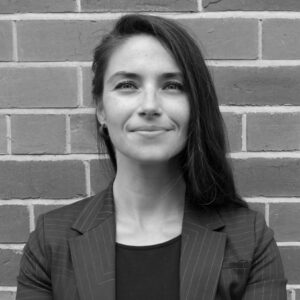
By Dr Elisa Nédélec
Dr Elisa Nédélec is a postdoctoral research fellow in clinical neurophysiology at Northumbria University, where she investigates how menstrual cycle-related hormonal fluctuations influence neuromuscular function, fatigue, and symptom severity in women with multiple sclerosis. She holds a PhD in female exercise physiology and a Master’s in physiotherapy and rehabilitation and worked for eight years as a physiotherapist before moving into research. Her work sits at the intersection of clinical neurophysiology and applied exercise physiology, with a focus on improving health outcomes for female clinical populations. She is also involved in the Period Education project, promoting menstrual health education in schools across the UK.
Dr Elisa Nédélec was awarded an Unlocking Futures Fund grant from the Physiological Society in 2025. We caught up with her to discuss the results of her project as well as any advice she had for future applicants.
Going where the knowledge lives
I am a postdoctoral research fellow at Northumbria University, working on a question that matters to any woman with multiple sclerosis (MS) who menstruates: how fluctuations in reproductive hormones across the menstrual cycle might influence fatigue, neuromuscular function, and nervous system excitability. It is a relatively young area of research, full of methodological challenges and unanswered questions, which is exactly what drew me to it.
Central to that work is the problem of measuring fatigue. Not just asking someone how tired they feel but understanding the physiological and perceptual mechanisms that underpin it. Fatigue in MS is among the most challenging symptoms patients report, and yet it is notoriously difficult to capture in a way that is both rigorous and clinically meaningful. I knew this was an area where I needed to grow.
Brighton, and what I came to learn
In March and May 2026, supported by the Physiological Society’s Unlocking Futures Fund, I travelled to the University of Brighton to spend four weeks working alongside Dr Jeanne Dekerle, an internationally recognised researcher in the psychophysiological investigation of fatigue. Dr Dekerle and I already collaborate on MS-related research, and publications from that work are in progress. But this visit was for something different: dedicated time to immerse myself in the literature and assessment methodologies surrounding perception of effort, proprioception, and cardiac interoception, in both healthy individuals and clinical populations.
The placement is still ongoing as this piece goes online, and the experience has already shifted how I think. The assessment frameworks Dr Dekerle’s group works with sit at the edge of my usual toolkit, one built around neurophysiological and biomechanical assessments, but they ask different and complementary questions of the data. Understanding how people sense and interpret their own bodily states, and how interoception shapes the experience of fatigue, opens up a dimension of the work I had not been able to engage with as fully before. Lab meetings, informal conversations, research group seminars, and hands-on exposure to methods I had only read about have made the learning feel real in a way that reading alone never quite achieves.
What this visit means for the science
The techniques and conceptual frameworks I am developing here will feed directly into the interpretation of our ongoing MS studies. I expect to return to Northumbria with not just new skills but a sharper sense of the right questions to ask, and how to answer them in a way that does justice to the complexity of fatigue in a clinical population. As co-lead of the Neuromuscular Physiology Research Group, I also see this as something to share more broadly. When I return, I plan to bring these perspectives into our group seminars and into the training of the early-career researchers I work alongside, because the benefit of a placement like this should not stop at the person who made the trip.
On funding, and what it enables
For many early-career researchers, the gap between wanting to develop a skill and actually being able to do so is almost entirely a financial one. A four-week placement of this kind simply would not have been possible without external support. The Unlocking Futures Fund filled that gap. But beyond the practical relief, receiving it felt like an acknowledgement that investing in your own scientific education, going to where the knowledge lives, spending sustained time in a different environment, has genuine value, even when it does not fit neatly into a project budget. That recognition matters, especially at a career stage where it can be easy to feel that every hour should be producing outputs.
For anyone considering applying
Identify a genuine gap in your knowledge and be specific about it. The most compelling applications, I suspect, are not the ones that promise the most impressive outcomes, but the ones that make the clearest case for why this particular opportunity, with this particular person, at this particular moment, is the right investment. The process of writing that case is clarifying in itself. I came away from the application with a sharper sense of what I needed and why. And if you already collaborate with the person you want to visit: apply anyway. Being in the room, consistently, for weeks at a time, is a completely different thing from co-authoring at a distance.