

Professor Ole Petersen in conversation with Dr Francesca Arrigoni
As part of her Education and Teaching Award, awarded in 2023, Dr Francesca Arrigoni spoke to Professor Ole Petersen about personal motivations and aspirations, as well as the serendipitous events and the skills that make successful scientists, including being able to adapt to your environment.
They also discuss how non-traditional scientific subjects can influence our comprehension or our approaches to science. Listen to their conversation here:
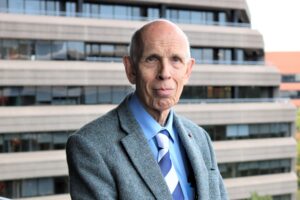
Professor Ole Petersen CBE
Ole Petersen CBE FRS, served as Vice-President of the Royal Society (2005–2006) and is a former President of the Physiological Society (UK) (2006-2008).
He was elected a member of the Academia Europaea in 1988, elected a Fellow of the Royal Society (FRS) in 2000 “for his major contributions to the understanding of the cell physiology of calcium signalling”, and elected Member of the German National Academy of Sciences Leopoldina in 2010. He was appointed a Commander of the Order of the British Empire (CBE) in the 2008 New Year Honours for “services to science”. He received the American Physiological Society’s top prize, the Walter B Cannon Award in San Diego in 2018, the Academia Europaea’s Gold Medal Award in Barcelona in 2021 and the International Association of Pancreatology’s top award, the George E Palade Prize and Medal, in Kyoto in 2022.
Among his many scientific achievements, his career has revolutionised our understanding of epithelial ion transport. Petersen pioneered patch-clamp techniques to record single-channel and whole-cell currents in epithelial cells. Through this work, he discovered ion channels within these cells—structures that allow charged particles (ions) to move across membranes. He showed that these channels are regulated by hormones, intracellular messengers, and voltage changes, and crucially demonstrated for the first time that ion channels control exocrine fluid secretion.
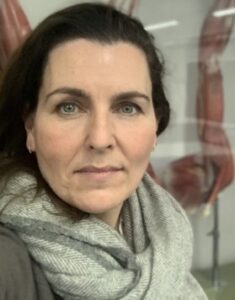
Dr Francesca Arrigoni
Dr Francesca Arrigoni is an Associate Professor in pharmacology and physiology. Her career spans molecular physiology, immunology, and translational pharmacology, with a strong focus on sex differences in health and disease. Francesca’s research examines the biological and social determinants of hypertension, the cardiovascular impacts of menopause, and the role of inflammation and cytokine signalling in chronic disease. She has also worked extensively on sex‑specific cardiovascular risk, integrating laboratory approaches with clinical and public‑health perspectives.
Alongside her scientific work, Francesca has a growing interdisciplinary practice; in 2025 she was awarded an MA in Illustration, strengthening her research at the intersection of biomedical science, visual communication, and public engagement. This dual expertise informs collaborations with archives, museums, and arts organisations to create innovative forms of scientific storytelling.
Francesca is a Senior Fellow of the Higher Education Academy (SFHEA) and the Staff and Educational Development Association (SFSEDA), recognised for her leadership in innovative curriculum design and research‑led teaching.