

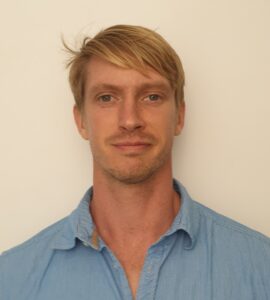
By Dr Ralph Gordon
Dr Ralph Gordon is a Lecturer in Skin Sensing Research in the School of Health Sciences, at the University of Southampton. Ralph is an active researcher within the fields of thermal physiology, neuromuscular function, tissue viability, and thermomechanical interactions at the skin interface. Ralph’s research aims to investigate complex physiological interactions within these fields on the human body, with application to healthy and clinical populations.
Dr Ralph Gordon was a 2024 Research and Knowledge Exchange Award recipient. We followed up with Ralph to find out more about his project and the outcomes.
What were the outcomes/impact of your project? If still ongoing, what will these be?
The aim of this pilot project was to investigate how temperature, interface material properties, and moisture saturation levels modify the physiological tolerance of human skin to mechanical shear stress.
Our objectives were to recruit a cohort of healthy young adults (N=12), and to examine how different levels of cooling (36℃ (no cooling) vs. 16℃), delivered via different interface materials (100% cotton vs. 100% polyester), at different moisture saturation levels (dry vs. 100% saturated), alter the inflammatory and structural responses of the skin of the posterior heel to repeated shear stress, which was delivered via a controlled thermo-mechanical rig.
We used a range of non-invasive techniques, including skin imaging (OCT), biomarker collection (from skin sebum) to characterise the biophysical and immunological pathways that may potentially benefit from cooling the skin in conjunction with skin interactions to shearing under different material and saturation combinations.
The primary outcome variable for this project was the coefficient of friction, which has been directly linked to the pathophysiology of pressure ulcers and is influenced by both moisture and temperature (Schwartz et al., 2018). Our results showed that friction at the heel following controlled mechanical shearing was greatest when the textiles (cotton and polyester) were saturated with water (P < 0.05), compared to being dry. We also observed a temperature effect, where, contrary to our original hypothesis, friction was greater in the cold condition (16 °C) compared to no cooling (36 °C) (P < 0.05). We did not observe, however; any effects of the different textiles (P > 0.05) or subsequent interactions between condition variables (P > 0.05). These increases in frictional forces were likely driven by higher saturation at the skin interface, as demonstrated by our skin conductance data, taken before and after the shearing protocol. These data showed a saturation by time effect (P < 0.05), where skin conductance (an index of skin hydration) was greater post shearing in the wet conditions, compared to the dry. It is unclear why the cooling condition elicited greater frictional forces during saturation, but most likely due to the complex material interaction of temperature and moisture on the textiles used. These data provide insight into, and characterisation of, frictional forces at the heel in vivo at a clinically relevant skin site particularly vulnerable to tissue damage from pressure and shearing induced interactions. This pilot study shows that textile choice may be less of an important factor compared to maintaining dry, warm materials that come into contact with the heel, for example, a patient confined to bed due to immobility, in minimising tissue damage and maintaining tissue integrity.
How did receiving the Research and Knowledge Exchange Award support you in this work?
Without support from the Research and Knowledge Exchange Award the completion of this project would not have been possible. I am extremely grateful to the Physiological Society for awarding the funds to carry out this work, which I intend to continue to further knowledge on the complex interplay between thermomechanical interactions at the skin. The data generated from this study will help to inform understanding of the physiological tolerance of human skin under mechanical shear stress, which has implications for skin sites that are particularly vulnerable to tissue insult, e.g., at the sacrum.
Do you have any advice or recommendations for potential future applicants?
My experience of the Research and Knowledge Exchange Award has been overwhelmingly positive. The three top tips that I would pass on to future applicants considering applying would be:
1. Align with the award’s purpose to make sure the proposal clearly demonstrates how it will foster knowledge exchange and collaboration. Try to demonstrate the benefit of the project to the wider scientific community.
2. Provide a clear and feasible engagement plan. Detail specific activities and where possible, include timelines and logistics to show that your plan is realistic and achievable.
3. Demonstrate value for money and sustainability by justifying your budget carefully.
References
Schwartz, D., Magen, Y. K., Levy, A., & Gefen, A. (2018). Effects of humidity on skin friction against medical textiles as related to prevention of pressure injuries. Int Wound J, 15(6), 866-874. https://doi.org/10.1111/iwj.12937