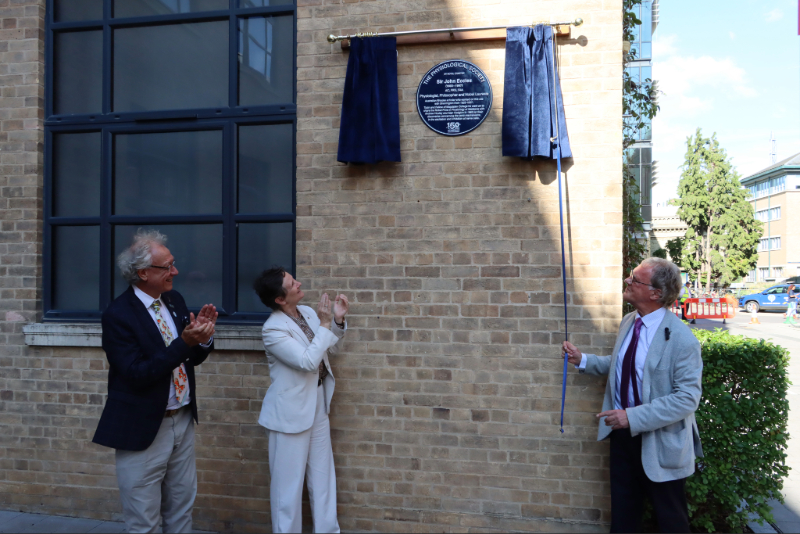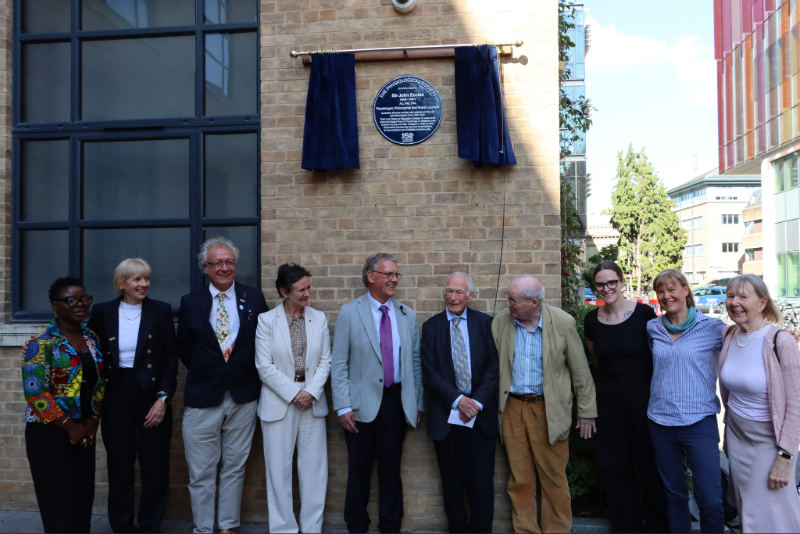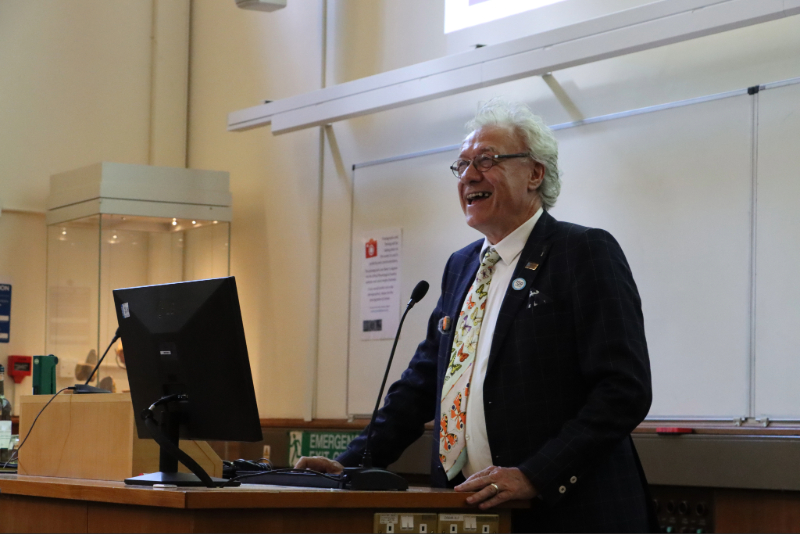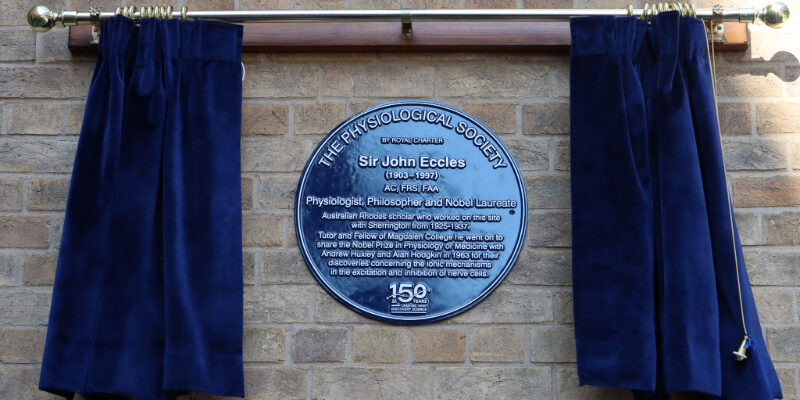
On Thursday 18 June 2026, in honour of the influential neurophysiologist Sir John Eccles, The Physiological Society dedicated a commemorative blue plaque at the University of Oxford. The plaque was unveiled as part of the Society’s Celebrating Physiology in Oxford event to an audience of researchers, students, and those inspired by Eccles’ work.
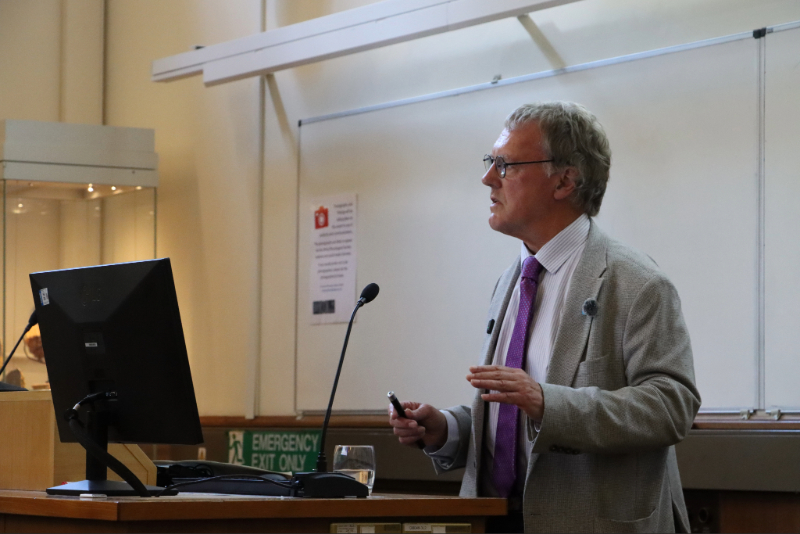
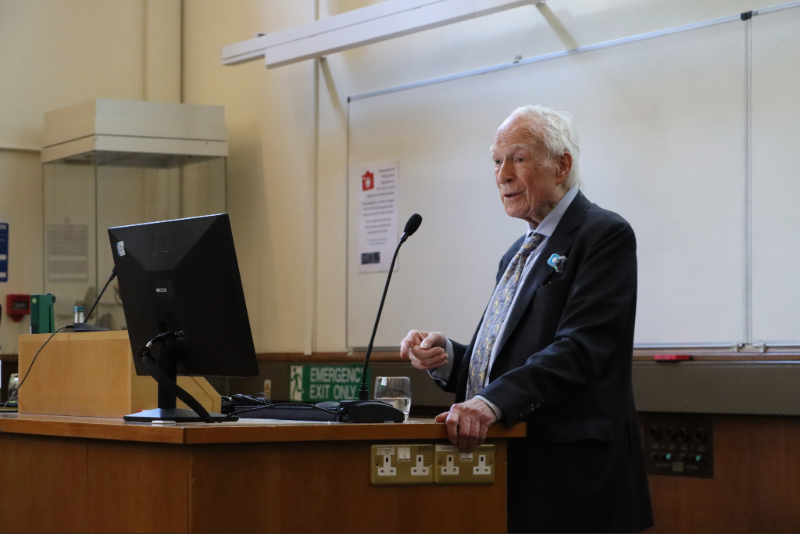
The Celebrating Physiology in Oxford event featured talks from academics, including Professor Sir Peter J Hunter’s (University of Auckland, New Zealand) talk on the biophysical basis of intracellular homeostasis, followed by the history of the Physiological Society from Professor Denis Noble (University of Oxford, UK). Ahead of the plaque unveiling, Professor Sir Peter Ratcliffe (University of Oxford, UK) provided an overview of the work of Sir John Eccles.
Sir John Carew Eccles (1903–1997) was an Australian-born neurophysiologist widely regarded as one of the most influential scientists of the 20th century. Educated in Melbourne, he graduated in medicine with first-class honours before being awarded a Rhodes Scholarship to the University of Oxford, where he completed a PhD under Sir Charles Sherrington in 1929. His time at Oxford was formative, shaping his lifelong interest in the relationship between the mind and the body.
Eccles’ groundbreaking work transformed the understanding of how nerve cells communicate. His research on excitatory and inhibitory postsynaptic potentials (EPSPs and IPSPs) revealed the mechanisms by which signals are transmitted and regulated in the nervous system. Although he initially supported electrical transmission, Eccles played a critical role in establishing chemical synaptic transmission as the accepted model, including clarifying the role of neurotransmitters such as acetylcholine. His discoveries had a profound impact on neuroscience and continue to underpin modern research.
Eccles held leading academic roles across the world, including at the University of Otago, the Australian National University, Northwestern University, and the State University of New York at Buffalo. In 1963, he was awarded the Nobel Prize in Physiology or Medicine for his discoveries concerning the ionic mechanisms involved in excitation and inhibition in nerve cell membranes.
By commemorating Sir John Eccles at the University of Oxford, the Physiological Society reiterates its dedication to recognising key figures in the discipline, celebrating their contributions and highlighting how physiology continues to advance our understanding of the human body and brain.