

Membership
Celebrating the life of Annette Dolphin
By Professor Ole H Petersen CBE FRS
Cardiff University, Wales, UK
Professor Annette Dolphin, our former President, was an outstanding neuroscientist, mentor, colleague and friend to many in the community.
Read the tribute written by Professor Ole Petersen (Cardiff University, UK) in celebration of Annette’s life.
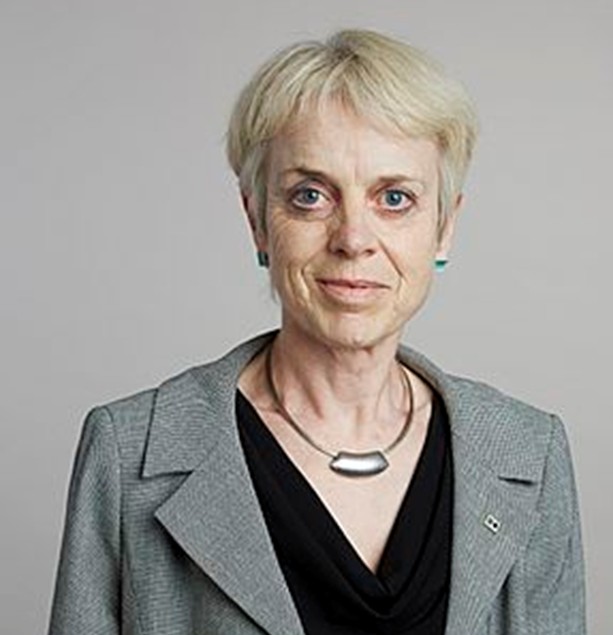
Professor Annette Dolphin FMedSci FRS
Annette Dolphin was internationally recognised as a world leader in the field of neuronal voltage-gated calcium channels. She made ground-breaking discoveries concerning the regulation of calcium channel trafficking and function. Annette was not only an outstanding scientist, but also served in senior positions in many important science organisations.
Annette obtained a 1st class Honours degree in Natural Sciences (Biochemistry) from the University of Oxford in 1973 and her PhD from the Institute of Psychiatry in London in 1977 under the supervision of Professor CD Marsden FRS. Thereafter, she was an MRC-CNRS Post-Doctoral Fellow at the College de France in Paris, under the mentorship of Professors Bockaert and Glowinski, before moving on to the Department of Pharmacology at Yale University in 1978, where she became a Research Associate to Professor Paul Greengard (Nobel Laureate 2000). In 1980, Annette joined the scientific staff at the National Institute for Medical Research (NIMR) in Mill Hill, working closely with Tim Bliss FRS. In 1983, Annette was appointed to a lectureship at St George’s Hospital Medical School in London and was subsequently promoted to Senior Lecturer and then Reader before, in 1990, moving on to become Professor and Head of the Department of Pharmacology at the Royal Free Hospital School of Medicine. The Royal Free Medical School merged with University College London (UCL) in 1997 and Annette then became Professor of Pharmacology at UCL.
Annette’s early work with Paul Greengard was very successful. She was the first to show that the phosphorylation of a major synaptic phosphoprotein, synapsin I (then called protein I), was regulated by neurotransmitters that activate adenylate cyclase. This important result was reported in her first Nature paper (Dolphin and Greengard 1981). Many years later, in a charming autobiographical article published in the Journal of Neuroscience (Dolphin 2021), she paid tribute to Paul Greengard and acknowledged how the postdoctoral research in his laboratory had shaped her scientific career. After her return to the UK to work at the NIMR, she developed a productive collaboration with Tim Bliss FRS and showed that LTP (Long Term 2 Potentiation) was associated with a prolonged increase in glutamate release, resulting in her second Nature paper (Dolphin et al 1982).
Since the beginning of her independent research career, at St George’s in 1983, Annette’s research focussed on the mechanism of G-protein-mediated inhibitory modulation of calcium channels. She made a brilliant start, as her group was the first to show that presynaptic inhibition of glutamate release by agents such as adenosine involved a GTP binding protein (G-protein). The result of this work was published in her third Nature paper (Dolphin and Prestwich 1985). Further studies showed that presynaptic inhibition of transmitter release is caused by G-protein-mediated inhibition of voltage-gated calcium channels. Annette’s group was the first to show that neurotransmitter-mediated inhibition of calcium channels can be mimicked by non-hydrolysable GTP analogues, which activate G-proteins directly and by-pass the receptor. This led to her fourth Nature paper (Scott and Dolphin 1987).
Calcium channels comprise a number of subunits. In addition to the pore-forming α1 subunit, they contain an auxiliary β and an α2δ subunit, and in some tissues a γ subunit. Since the 1990’s, Annette’s group concentrated increasingly on studies of these auxiliary subunits. Her group was the first to show that the subunits have an important role in native neurons. She identified a unique role for the calcium-channel β2-subunit in calcium channel trafficking, involving its phosphorylation via PI3 kinase. Her group also cloned two novel members (γ5 and γ7) of the family of γ-subunits (also called stargazins or TARPS). Annette’s studies of Gβγ modulation of neuronal calcium channels identified an 11 amino acid motif within the intracellular N-terminus that is absolutely required for their modulation by Gβγ. Mutation of only two amino acids in this motif completely prevented G-protein modulation. Further studies showed that the voltage-dependence of G-protein modulation was lost in the absence of a β subunit. Annette suggested the existence of a complex binding pocket for Gβγ and calcium channel β subunits, from which Gβγ would be expelled at positive potentials, resulting in the voltage-dependent loss of G-protein modulation.
Since 2000, Annette’s laboratory worked extensively on calcium channel α2δ subunits, and here she made unique contributions to understanding their biochemical processing, function, involvement in pathophysiology, and their pharmacology as a drug target in the pain pathway. Annette showed that drugs of the gabapentinoid class (used in pharmacotherapy of certain epilepsies, and in alleviation of several forms of neuropathic pain) bind to α2δ subunits, and that this is required for their effectiveness in neuropathy-induced hyperalgesia. She also showed that the gabapentinoid drugs impair the ability of α2δ subunits to promote calcium channel delivery to the plasma membrane, and demonstrated that they inhibit calcium currents when applied chronically, but not acutely, thereby discovering a novel mechanism of drug action. Her work successfully narrowed down the site of action of the gabapentinoid drugs by demonstrating that they prevent recycling of α2δ subunits to the plasma membrane. She identified the important actions of α2δ subunits to enhance vesicular neurotransmitter release at presynaptic terminals and published this in Nature (Hoppa et al 2012).
Annette published the important results from her group in highly ranked scientific journals, including many in PNAS, Journal of Neuroscience and Journal of Physiology. In her later years, Annette reviewed her extensive work in a number of highly cited review articles that continue to shape her research field. The most successful, in terms of citation impact, was the very comprehensive review article in Pharmacological Reviews (Zamponi et al 2015), which has now been cited more than 1300 times, but other highly cited reviews were published in the Journal of Physiology (2016) and Nature Reviews Neuroscience (2020).
Given Annette’s international leadership in the very competitive and rapidly expanding calcium channel field, including her very substantial record of highly cited publications in world-leading journals, it may seem surprising that high-level recognition only happened relatively late in her life. She was elected a Fellow of the UK’s Academy of Medical Sciences in 1999 and gave the Julius Axelrod Distinguished Lecture in Neuroscience in Toronto in 2000, but the crucial election to the Royal Society (RS) was unreasonably delayed. To those who knew her well, she was admired for being extremely supportive and caring about the people in her laboratory as well as being an excellent and inspiring leader, who engendered loyalty, respect and admiration. She was also great company. However, to those who did not know her well, Annette could appear stern and she was not a person seeking favours from anyone. Undoubtedly, like many other prominent women, she suffered from the misogyny that was still much in evidence in the world of science in the early part of this century, and she was – very rightly – not afraid of calling this out. With regard to the RS, it was a privilege for me that I had the opportunity, together with the late David Brown FRS, who was one of the fairest scientists I have ever met, to help rectify the situation and Annette was elected FRS in 2015. This finally gave her the status that she so richly deserved. That same year, she gave the Physiological Society’s Annual Review Prize Lecture (the Society’s highest award) at the annual meeting in Cardiff. A few years later (2018), she was elected Member of Academia Europaea, now the European Union’s official academy of science and scholarship. In her last years, she was President of the British Neuroscience Association (2019-2021), Member of the Royal Society’s Council (2022-2025) and became President of the Physiological Society in 2024. She should have presided over the 2026 celebrations of the Society’s 150th Anniversary, but had to resign late in 2025 due to the severe illness caused by the Lynch syndrome related cancer that led to her untimely death on 26th January 2026.
Annette is survived by her husband William Frith, who paid a memorable tribute to her at the dignified service of celebration for her life, held at Aylesbury on 19th February 2026.